
You may be reading this while sitting in a clinic parking lot, answering the same question from your parent for the fifth time, or lying awake after a hard visit wondering why you feel both tender and exhausted. Supporting a parent with dementia can feel like loving someone who is still here, while also grieving the parts of them that seem to be changing in front of you.
"Supporting a parent with dementia means caring for their changing needs while also protecting your own emotional and mental health, because sustainable care has to include both of you."
Navigating the Emotional Landscape of Dementia
When a parent develops dementia, the hardest part often isn't knowing what medication to pick up or what appointment to book. It's the emotional whiplash. One moment, your parent may sound like themselves. The next, they may forget your name, accuse you of something that never happened, or become frightened by a routine that used to feel simple.
That can stir up feelings that don't always fit neatly together. Love and resentment. Patience and anger. Relief after a difficult day, followed by guilt for feeling relieved at all.

Grief can start long before a death
Many adult children tell themselves they should be “coping better” because their parent is still alive. But dementia often brings anticipatory grief, which means grieving ongoing losses as they happen. You may miss your parent's advice, humour, steadiness, or recognition long before the relationship ends.
In Canada, dementia is a major and growing caregiving issue. The Alzheimer Society of Canada reported in 2024 that more than 600,000 Canadians were living with dementia, with that number projected to rise to 1 million by 2030 and 1.7 million by 2050. For families, that matters because caregiving is often not brief. It can unfold over years and require ongoing emotional adaptation as memory, functioning, and personality change.
A common point of confusion is this: if your parent is safe today, why do you still feel so overwhelmed? Because your nervous system isn't only responding to today. It's responding to uncertainty, role reversal, and the steady pressure of needing to stay alert.
You are not failing because this feels heavy. It is heavy.
Role reversal can feel disorienting
There is a particular ache in becoming the one who reminds your parent to eat, shower, rest, or take medication. You may be making decisions they once made for you. That reversal can feel practical on the surface, but emotionally it can be jarring.
You might notice:
- A loss of emotional footing because the person who once anchored you now depends on you
- Chronic second-guessing about whether you're doing enough, saying the right thing, or missing signs
- Invisible loneliness because friends may understand stress, but not this kind of slow change
What helps in the early emotional stage
You don't need to solve the whole journey today. Start smaller.
- Name what's happening: Try saying, “I'm grieving and caregiving at the same time.”
- Lower the standard: Aim for steadiness, not perfection.
- Track your hardest moments: Notice when your stress spikes. Is it evenings, bathing, repeated questions, or doctor visits?
- Let mixed feelings coexist: You can love your parent and still need space from their care.
If you came here looking for how to support a parent with dementia: an emotional and mental health guide, this is the foundation. Before strategies, there has to be permission to tell the truth about what this experience feels like.
Communicating When Words Fail
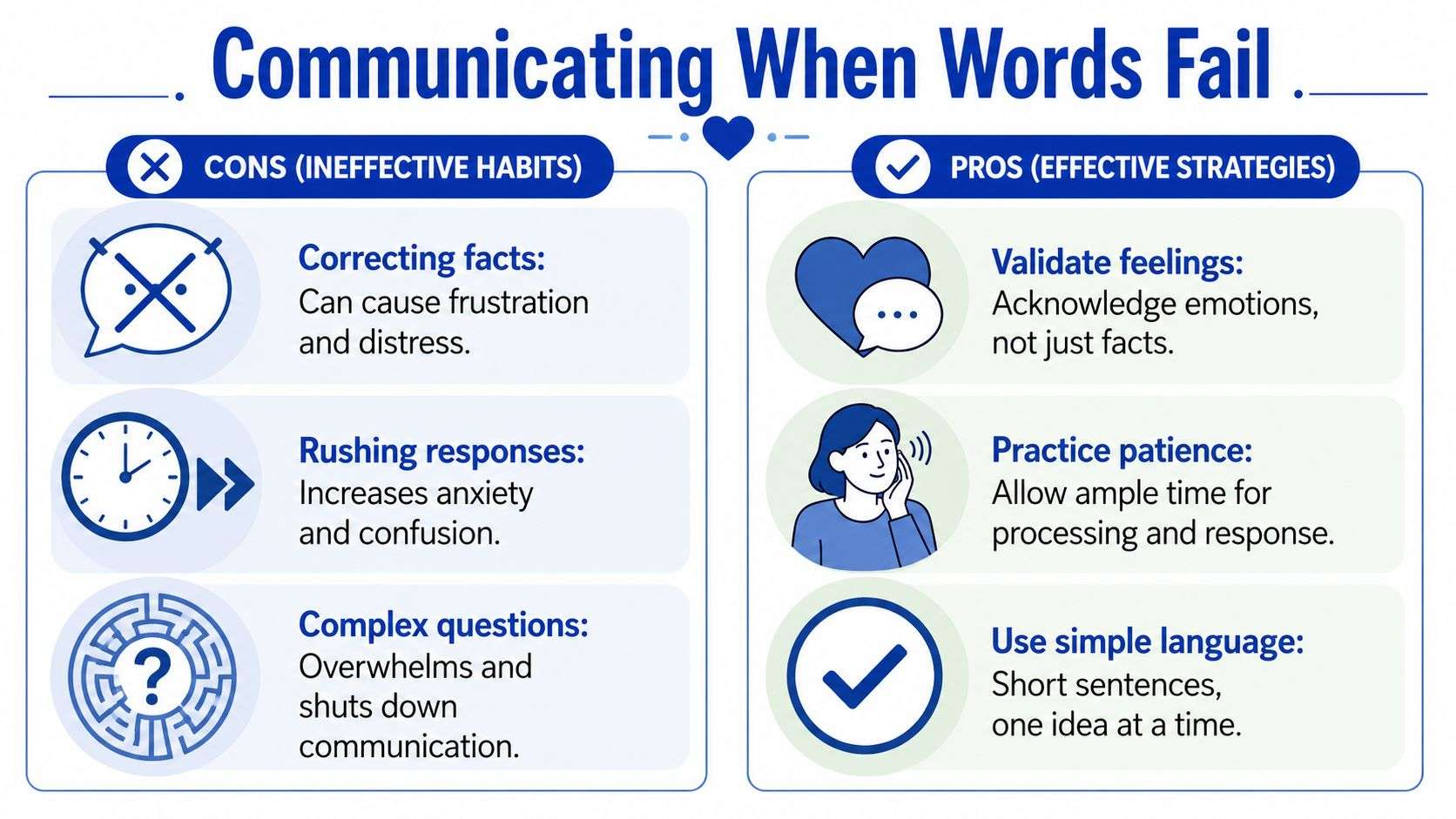
Old communication habits often stop working in dementia care. Logic may not reassure. Correction may not calm. Explanations that would have worked years ago can now increase fear, shame, or agitation.
The most useful shift is simple. Stop aiming to win the facts. Start aiming to reduce distress.
Try less information and more calm
Guidance from the Family Caregiver Alliance recommends a low-stimulus, one-idea-at-a-time approach. That means speaking slowly, keeping sentences short, maintaining eye contact, and avoiding correction or argument during confusion or agitation. The same guidance suggests a practical sequence: identify the emotional trigger, reduce environmental noise, validate the feeling, offer one concrete choice, and redirect to a calming task or activity. You can read that fuller approach in the Family Caregiver Alliance guide to understanding dementia behaviours.
Here's what that can sound like in real life.
| Instead of this | Try this |
|---|---|
| “I already told you. Your appointment is tomorrow.” | “You're worried about the appointment. I'll stay with you. Let's put the note by your chair.” |
| “No, this is your home. You've lived here for years.” | “You want to feel safe and familiar. Let's sit together and have some tea.” |
| “That never happened.” | “That sounds upsetting. You seem worried.” |
A simple way to respond in hard moments
When your parent repeats a question, accuses, panics, or becomes suspicious, this short sequence can help:
Pause before answering
Your tone matters as much as your words. Slow your body first.Look for the feeling under the words
“Are they scared? Lonely? In pain? Overstimulated?”Validate the emotion
You don't need to agree with the fact to respond to the feeling.Offer one choice
Too many options can overwhelm. One or two is enough.Redirect gently
Shift toward something grounding like music, a snack, folding towels, or a short walk.
Practical rule: If your response makes the moment more tense, simplify further.
Common places caregivers get stuck
Many adult children think, “If I don't correct them, am I lying?” Not necessarily. In dementia care, emotional truth often matters more than factual precision. If your parent believes they need to “go home,” correcting the address may not help. Responding to the need for safety often does.
Another stuck point is speed. When you're tired, it's easy to speak quickly, ask several questions at once, or fill silence because it feels awkward. But your parent may need extra processing time. Ask one question. Wait. Then wait a bit longer.
Some of the most connecting phrases are also the simplest:
- “You're safe with me.”
- “That sounds upsetting.”
- “Let's do this together.”
- “Would you like tea or water?”
These aren't magic lines. They're steadying tools. Used consistently, they can lower friction and help preserve connection even when language becomes more limited.
Understanding and Managing Behaviour Changes
Behaviour changes can feel personal, especially when your parent becomes suspicious, angry, resistant, or restless. But most of the time, dementia-related behaviour is not deliberate meanness or manipulation. It is communication in another form.
A parent who lashes out during bathing may feel cold, exposed, rushed, or confused. A parent who paces may be bored, frightened, uncomfortable, or trying to meet a need they can't explain. When you treat the behaviour as a clue instead of a character flaw, your response changes.
Investigate what might be underneath
Before responding to the behaviour itself, look for possible triggers:
- Physical discomfort: hunger, thirst, pain, constipation, fatigue, needing the toilet
- Environmental stress: noise, clutter, bright lights, too many people talking
- Emotional strain: fear, loneliness, embarrassment, loss of control
- Routine disruption: unfamiliar places, changed schedules, rushed transitions
This doesn't mean every behaviour has an obvious cause. Sometimes you won't know. But pausing to ask “What might this mean?” often leads to a kinder and more effective response than “How do I stop this?”
Validate first, then adapt
If your parent is upset, start with the feeling.
You might say, “You seem uncomfortable,” or “I can see this is upsetting.” That lowers the emotional temperature. Then adapt the situation. Turn off the television. Close the curtains if shadows are creating confusion. Offer food or a drink. Try again later instead of forcing the task right now.
Behaviour is often the visible tip of an invisible problem.
Practical examples that reduce friction
Some changes are easier to manage when you adjust the environment rather than the person.
- For evening agitation: keep lighting soft but clear, reduce noise, and avoid stacking multiple demands late in the day
- For suspicion around missing items: keep frequently used objects in consistent places and use simple labels or baskets
- For anxiety about what comes next: use a visible routine, a whiteboard, or familiar verbal cues such as “First lunch, then rest”
You may still have difficult days. That doesn't mean the approach failed. It means dementia is unpredictable, and caregiving often involves trying, observing, and adjusting again.
Supporting Autonomy and Preserving Dignity
It's easy for dementia care to become a series of tasks. Meals. Toileting. Safety checks. Appointments. But if care becomes only task management, your parent can start to feel handled rather than known.
Dignity grows when a person still has room to choose, contribute, and be included. Even when memory and function change, the need for respect does not.
Focus on what your parent can still do
Autonomy doesn't require full independence. It can look like small choices and manageable participation.
A parent who can't cook a meal may still be able to wash berries, stir batter, or set napkins on the table. A parent who no longer follows long conversations may still enjoy choosing between two sweaters or selecting a favourite song.
These moments matter because they support identity. They say, “You are still part of this life.”
Consider offering:
- Simple choices: one shirt or another, tea or coffee, music or quiet
- Adapted activities: folding laundry, sorting buttons, watering plants, looking through photo albums
- Role continuity: if your parent always loved hospitality, let them hand out napkins or greet visitors
Dignity is shaped by how help is offered
The same task can feel supportive or humiliating depending on your approach.
Try asking before stepping in. Knock before entering their room. Explain what you're doing. Speak to them, not over them. If others are present, avoid talking about your parent as if they aren't there.
A helpful mental shift is this: don't take over what can be shared.
Here's a quick comparison:
| Less helpful approach | More dignity-preserving approach |
|---|---|
| Doing everything automatically | Inviting participation where possible |
| Talking about deficits | Noticing strengths that remain |
| Correcting mistakes publicly | Protecting privacy and redirecting gently |
| Making decisions without explanation | Offering simple choices and reassurance |
Protecting rights while planning ahead
As dementia progresses, families often face difficult questions about safety, finances, and decision-making. It helps to learn about options before a crisis forces urgent decisions. For a legal perspective on balancing protection with personal rights, these Law Office of Bryan Fagan legal insights offer a useful starting point for thinking about guardianship and autonomy.
Preserving dignity does not mean denying risk. It means responding to risk in the least shaming, least restrictive way you can manage. That protects your parent's sense of self, and it often softens the caregiving relationship too.
Your Mental Health is Not Optional
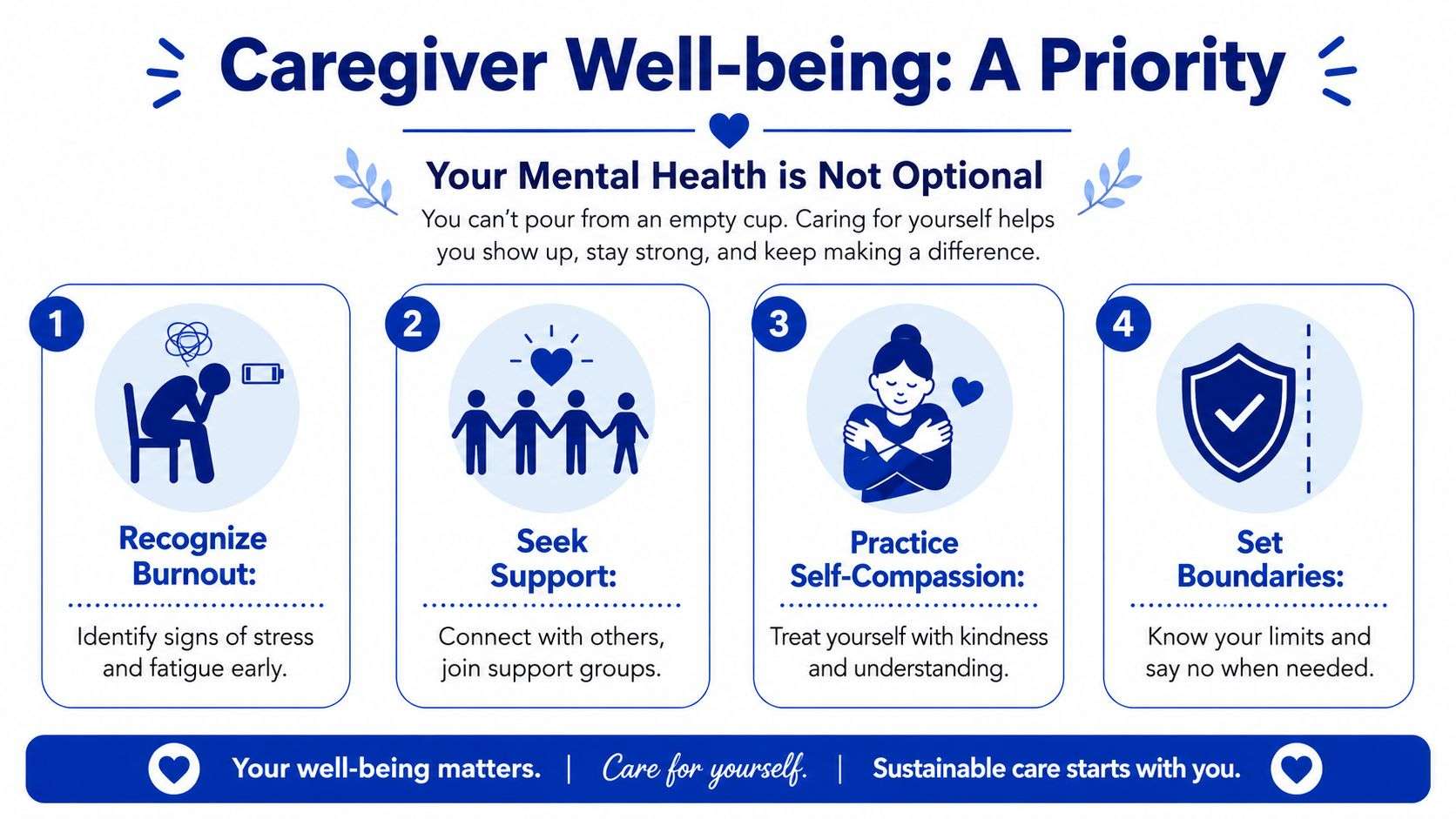
Many guides teach you how to calm your parent, redirect a hard moment, or manage routines. Fewer say plainly what also needs to be said. If this is harming your mental health, that is part of the care picture.
When adult children develop anxiety, depression, sleep disruption, or anticipatory grief during dementia caregiving, mental health support is not an optional extra. It is part of care planning, as discussed in this overview of caring for patients with Alzheimer's disease-related dementias.
Burnout often sounds like self-criticism
Caregiver strain doesn't always announce itself clearly. Sometimes it shows up as irritability, numbness, dread before visits, trouble sleeping, forgetting your own needs, or feeling trapped by responsibilities you don't know how to share.
It can also sound like this:
- “I should be able to handle this.”
- “They need me, so I can't step back.”
- “If I set limits, I'm selfish.”
- “Other people have it worse.”
Those thoughts are common, but they're not reliable guides. They often push caregivers past healthy limits.
Boundaries are part of good care
A boundary is not punishment. It is a clear statement of what you can do without harming yourself.
That might mean:
- Limiting call frequency: “I'll answer once in the morning and once in the evening.”
- Sharing tasks: one sibling handles appointments, another handles groceries
- Refusing unsafe demands: not lifting your parent alone if it risks injury
- Protecting rest: keeping one evening a week free from caregiving tasks
If guilt rises when you imagine doing less, pause and ask a different question. “What level of care can I realistically sustain with kindness?” Sustainable care is safer than heroic care that ends in collapse.
Caring for yourself does not take care away from your parent. It helps keep care possible.
Build a support system before crisis
Respite, counselling, peer support, and practical help often work best when arranged early rather than only after burnout hits. Some caregivers find it helpful to read a broader guide to managing caregiver stress to think through what regular relief could look like in daily life.
You don't need a dramatic breakdown to deserve help. You need enough honesty to notice when your internal life has narrowed to vigilance, resentment, and survival mode.
A gentle self-check can help. Ask yourself:
- What do I no longer have energy for?
- When did I last rest without being “on call”?
- Am I becoming more anxious, short-tempered, or hopeless?
- Would I tell a friend to keep going like this?
If the answers worry you, listen to them.
When and How to Ask for Professional Help
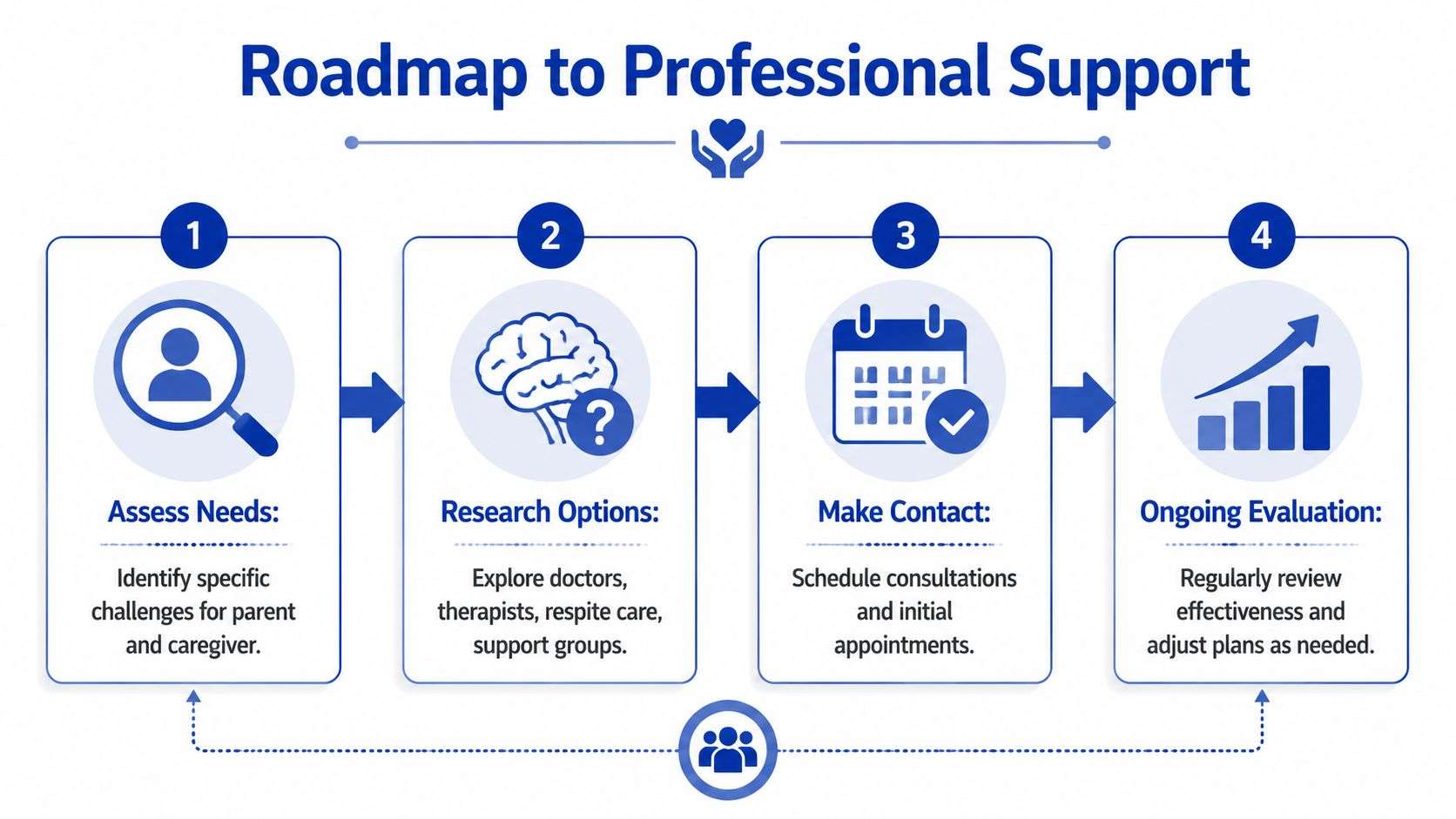
Many caregivers wait too long to ask for help because they think the situation has to become unmanageable first. It doesn't. The earlier you build support, the more options you usually have.
The 2022 Statistics Canada Canadian Community Health Survey found that about 25% of caregivers reported feeling distressed, depressed or anxious. That matters because caregiver distress is common enough to deserve planning before crisis.
A practical way to start
You do not need to solve everything in one week. Use a short sequence.
List current problems
Separate your parent's needs from your own. Medical review, safety, agitation, sleep, legal planning, and caregiver burnout are different issues.Book the first relevant appointment
That may be a family doctor, geriatric specialist, counsellor, social worker, or caregiver support group.Ask specifically for what's hard
Say, “My parent is becoming more suspicious in the evenings,” or “I'm not sleeping and I'm starting to feel depressed.”Add legal and care planning early
If decision-making capacity is changing, it may help to learn more about processes such as seeking guardianship for aging parents so you understand what questions to ask in your own jurisdiction.
Support is for both of you
Professional help may support your parent, your family system, and your own mental health at the same time. That can include medical assessment, home care guidance, respite, caregiver groups, and individual therapy.
Asking for help is not stepping back from love. It is often how love becomes more stable, more skilful, and less lonely.
Frequently Asked Questions for Caregivers
Is it normal to feel angry at a parent who has dementia
Yes. Anger is a common response to chronic stress, repeated disruption, grief, and helplessness. It doesn't mean you don't love your parent. It may mean you're carrying too much, too often, without enough support or recovery time.
Try getting specific about the anger. Are you angry at the disease, at siblings who don't help, at the endless unpredictability, or at the loss of the relationship you used to have? Naming the true target can reduce shame and help you ask for the right kind of help.
How do I know whether I need firmer boundaries
A major gap in caregiver guidance is the difference between guilt and justified limits. Some support resources note that dementia caregiving can trigger resentment, sibling conflict, and the need to set limits without feeling like a bad child. That concern is explored in this discussion of the role of family support in dementia care.
You may need firmer boundaries if you are regularly sacrificing sleep, skipping your own medical care, feeling dread every time your phone rings, or saying yes to tasks that leave you emotionally flooded. Boundaries are especially important when family expectations are unrealistic or unevenly distributed.
What if my siblings or relatives aren't helping
Start with clarity, not hints. Vague requests often lead to vague responses. Ask for one concrete task. “Can you take Mum to her appointment on Thursday?” works better than “I need more help.”
If they still don't step in, you may need to stop measuring your wellbeing against their level of involvement. Focus on building the support you can access, whether that includes friends, community services, respite, counselling, or hired help. Grieving family disappointment is painful, but it is often part of this journey too.
You are allowed to stop waiting for reluctant people to become dependable.
How do I know if I'm burned out or depressed
The line can blur. Burnout often centres on overload, exhaustion, and emotional depletion connected to caregiving demands. Depression may include persistent hopelessness, loss of interest, heavy guilt, or feeling emotionally shut down beyond caregiving situations.
You do not need to diagnose yourself perfectly before reaching out. If you're struggling to sleep, cry often, feel constantly on edge, or notice that your world has become very small and joyless, it's a good time to talk with a health professional.
Is it wrong to consider memory care or a care home
No. Considering more support is not abandonment. It may be an act of realism, safety, and compassion.
The better question is not “Can I keep going at all costs?” It is “What setting now gives my parent the most support with the least harm to both of us?” Sometimes home remains workable. Sometimes it doesn't. Your worth as a child is not measured by how long you can do the impossible alone.
If this article brought up difficult feelings, that makes sense. Dementia caregiving can stir grief, exhaustion, guilt, and questions that are hard to carry by yourself. If you'd like added support, Interactive Counselling offers counselling for many of the emotional challenges that can come with caregiving, including anxiety, grief, trauma, family stress, and life transitions.
Clinically Reviewed By
Amy Mosset, MCP, RCC-S
Amy Mosset is a Master Practitioner in Clinical Counselling, Clinical Supervisor, and the owner of Interactive Counselling. She provides trauma-informed, evidence-based care and clinical supervision to registered therapists, with a focus on ethical practice, client safety, and high-quality therapeutic outcomes.