Grief and loss counselling in Penticton offers a supportive, professional space to process difficult emotions and develop strategies for moving forward after a significant loss. In Penticton, people seeking emotional support can access experienced therapists, with local providers averaging 11 years of experience, and online counselling is available through 100% of local therapy providers. For more information, see our Penticton grief counselling.
If you're reading this after a funeral, after a difficult phone call, after an accident, or after one more day of trying to act normal when nothing feels normal, you're not alone. In a place like Penticton, where life is often framed by lake views, vineyards, and mountain light, grief can feel strangely out of step with the world around you. Everything outside may look calm while your inner life feels disorganised, raw, or numb. For more information, see our counselling in Penticton.
"Grief and loss counselling in Penticton helps you make sense of pain, feel less alone, and find a steady way forward at your own pace." For more information, see our grief counselling.
Navigating Grief in the Heart of the Okanagan
A lot of people in Penticton try to keep going after a loss because that's what small communities often encourage. You run into neighbours at the grocery store. You pass familiar places tied to the person you lost. You might walk by Okanagan Lake or Skaha Lake and feel both comforted and gutted at the same time.

Sometimes grief looks like tears in the car before work. Sometimes it looks like irritability, brain fog, or feeling nothing at all. Many people worry they're doing it wrong because their grief doesn't match what they expected. A simpler, kinder reality is this: There is no single correct way to grieve.
What grief can feel like in daily life
You may notice that ordinary routines suddenly take much more effort. Making dinner, answering messages, walking the dog, or sorting paperwork can feel heavy in a way that's hard to explain to other people.
Grief can also be contradictory. You may feel a profound absence of someone and still feel angry with them. You may feel relieved after a long illness and then guilty for that relief. You may want company and also want everyone to leave you alone.
Grief often moves in waves, not stages that unfold in a neat order.
Why counselling can help
Counselling doesn't erase loss. It gives you a place to bring the parts of grief that feel too messy, too repetitive, or too painful to carry on your own. That might mean talking openly about the person who died. It might mean learning how to get through the evenings, how to sleep again, or how to manage the shock that follows a sudden death or traumatic event.
For some people, grief counselling is about surviving the first weeks. For others, it's about making room for life after months or years of carrying unresolved pain. Both are valid reasons to reach out.
In a community like Penticton, support matters because grief can feel especially isolating when your surroundings are familiar but your life no longer is.
Understanding the Signs You Might Need Support
Many people wait to seek help because they assume they should be coping better by now. Others worry that needing support means they're weak. It doesn't. It usually means your nervous system, body, and emotions are carrying more than they can comfortably hold alone.
Some grief is sharp and immediate. Some is delayed. Some gets tangled up with anxiety, depression, or chronic stress. In the South Okanagan, grief support often overlaps with broader mental health care because anxiety, depression, and stress commonly show up alongside loss, as noted by BC 211's South Okanagan Loss Society listing.
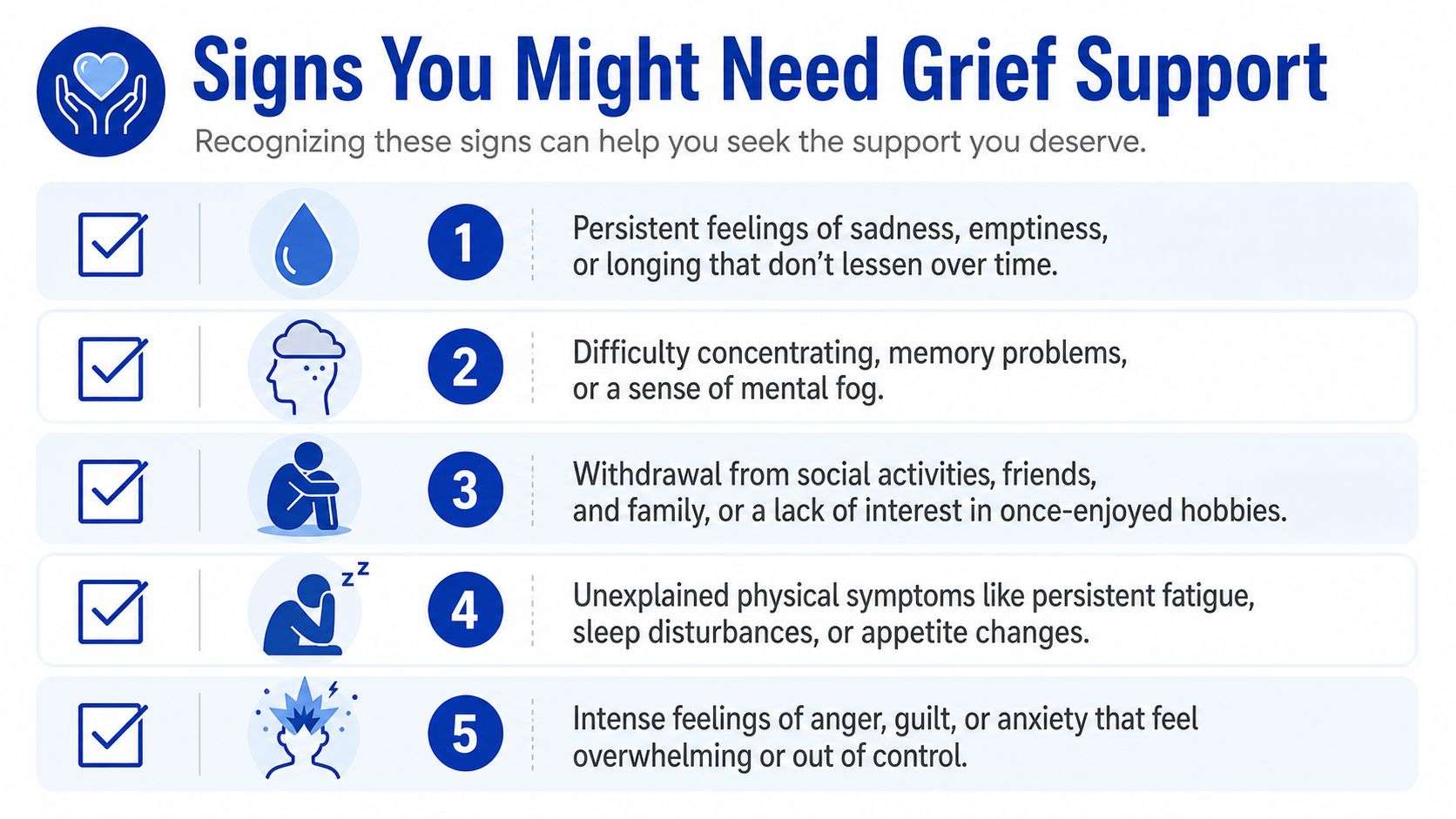
Common signs that extra support could help
- Your sadness isn't easing enough to let you function: You don't need to feel good to be coping, but if the pain stays so intense that everyday tasks feel impossible, support can help.
- Your mind feels foggy all the time: Trouble concentrating, forgetting simple things, or feeling mentally "far away" can be part of grief.
- You've pulled away from people for longer than feels safe: Some solitude is healing. Ongoing isolation can make grief heavier.
- Your body is showing the strain: Sleep changes, appetite shifts, exhaustion, headaches, and tension often accompany bereavement.
- Your emotions feel unmanageable: Anger, guilt, panic, regret, or fear may start to dominate your days.
When grief may need more structured care
It's normal to think about the person you lost every day. It's normal to cry unexpectedly, avoid certain places, or feel waves of pain around birthdays, anniversaries, and holidays. Those experiences alone don't mean anything is wrong.
More structured counselling may be useful when grief starts to narrow your life so much that work, parenting, relationships, or basic care become consistently hard to maintain. This is especially true if the loss was sudden, traumatic, tied to an overdose, suicide, violence, or a motor vehicle accident.
Practical rule: If you're spending more energy hiding your grief than living your life, it's a good time to talk to someone.
For families dealing with dementia-related loss, grief can begin long before a death occurs. The emotional strain of role changes, anticipatory grief, and ongoing caregiving can be intense. If that part of your experience fits, this piece on supporting caregiver emotions in dementia may offer helpful context.
Pathways Through Grief Common Therapy Methods
Grief counselling is often easier to understand when you picture it less like being analyzed and more like having a steady guide beside you on an unfamiliar trail. In Penticton, many people know what it feels like to keep functioning on the surface while carrying something heavy underneath. You might still go to work, still answer texts, still drive past the lake, and still feel as if part of you is missing. Therapy gives that experience some structure, so grief feels less chaotic and more workable.
Different methods help with different parts of loss. Some focus on the bond with the person who died. Some help calm a nervous system that keeps reacting as if the worst moment is still happening. Others address the beliefs grief can create, such as guilt, fear, or the sense that life has permanently narrowed.
Grief-focused therapy
Grief-focused therapy stays close to the loss itself. The work is often simple, but not easy. You talk about what happened, what changed afterward, and what feels unfinished or hard to face.
A counsellor may help you approach the loss in smaller pieces, the way you would sort through a room one drawer at a time instead of dumping everything onto the floor at once. That can include memories, regrets, anger, rituals, anniversaries, or the question of how to keep a connection to someone who is no longer physically here.
This kind of therapy can be especially helpful in a close community like Penticton, where reminders are everywhere. A familiar street, a winery, a beach, a hockey arena, or a regular coffee spot can bring grief back in an instant. Counselling helps those reminders feel less like ambushes and more like experiences you can bear.
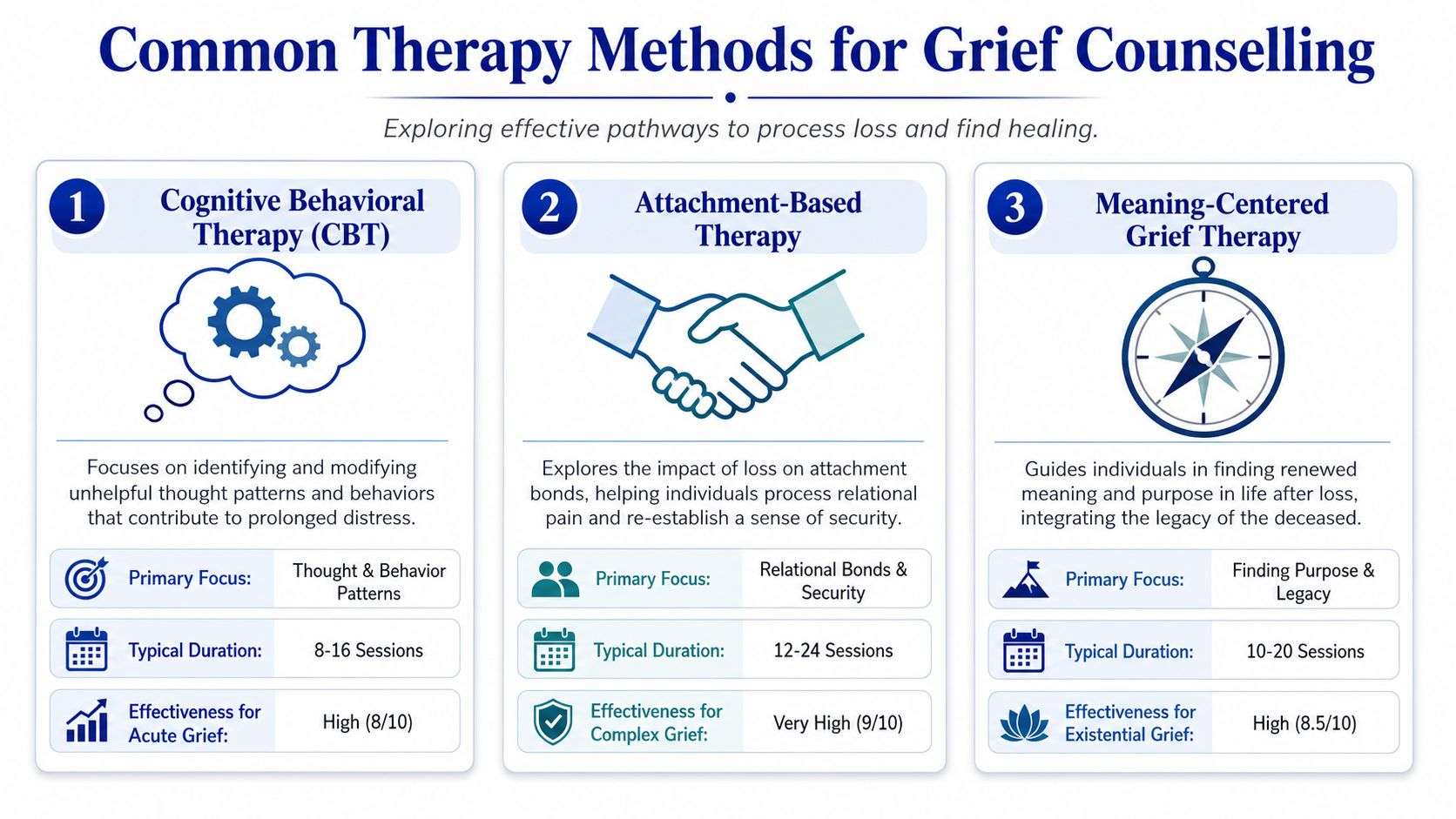
Cognitive behavioural therapy
CBT is useful when grief gets tangled up with painful thought patterns. The goal is not to force optimism. The goal is to notice thoughts that add extra suffering and examine whether they are accurate, fair, or shaped by shock.
Common examples include:
- "If I laugh again, it means I did not love them enough."
- "I should be handling this better."
- "If I go back to normal routines, I am leaving them behind."
A counsellor helps you examine those thoughts carefully and replace them with ones that are more truthful and less punishing. That shift can change daily life in very practical ways. You may find it easier to sleep, return calls, drive again, or tolerate ordinary moments without feeling guilty for having them.
Trauma-informed approaches such as EMDR
Some losses do not only bring sadness. They also bring shock, mental replaying, panic, or a body that reacts before your mind can catch up. This is common after a sudden death, a medical emergency, suicide, overdose, violence, or a fatal crash.
In a region where driving between communities is part of daily life, collision-related grief can carry another layer. A person may fear the highway, tense up at intersections, or feel sick passing the place where something happened. If the loss involved a motor vehicle accident, trauma treatment may matter just as much as grief support. That can also be relevant for people dealing with ICBC claims while trying to mourn.
EMDR is one option a therapist may consider. It helps the brain process traumatic memories so they feel less raw and less intrusive. The memory remains. What often changes is the intensity, so the event starts to feel like something that happened, not something that is still happening every day.
Meaning and attachment work
Some people do not feel stuck mainly because of panic or harsh thoughts. They feel untethered. The core pain is the loss of a role, a future, or a relationship that shaped their identity.
Therapy may focus on questions like these:
- Who am I now?
- What happens to this bond now that the person is gone?
- How do I carry love forward without living only in the past?
Attachment-based and meaning-focused work gives those questions room. There is usually no quick fix. Over time, though, many people begin to build a relationship with grief that is less about "getting over it" and more about making space for both sorrow and life.
The method matters less than the fit. A good counsellor chooses an approach based on what your grief looks like, here, in your real life, in this community.
Your Counselling Journey in Penticton
Starting counselling often feels hardest before the first appointment. Once people arrive, many realise they don't need to have the right words prepared. You don't need a tidy summary of your loss. You don't need to know whether what you're feeling is grief, trauma, depression, shock, or all of the above.

What the first session is usually like
Most first sessions are a conversation, not an interrogation. A counsellor may ask what happened, what feels hardest right now, how you're sleeping, whether you have support, and what you're hoping might feel different if counselling helps.
You can answer briefly. You can cry. You can say, "I don't know where to start." That's often the most honest place to begin.
A good first session also covers the practical pieces that help you feel safer, such as confidentiality, consent, scheduling, and what to do if you're struggling between appointments.
In-person or online in the South Okanagan
Access matters in a region where people may live in Penticton proper or in nearby communities. Some people want the ritual of coming into an office. Others need the convenience and privacy of joining from home, work, or even their parked car during a hard week.
In Penticton, 100% of local therapy providers offer online counselling options. That can make support easier to reach if you're in Kaleden, Okanagan Falls, Summerland, or balancing caregiving, work, and transportation challenges.
When grief is connected to a motor vehicle accident
In Penticton, this matters more than many people realise. Some losses are tied to collisions, serious injuries, or sudden changes that happen on local roads and highways. In those cases, grief may be mixed with trauma responses, legal or insurance stress, and fear around driving or travelling.
If your loss is connected to a motor vehicle accident, it's worth asking a provider whether they offer ICBC-funded counselling and how that process works. You don't need to sort out every practical detail before seeking emotional support.
You are allowed to ask for help with both grief and the administrative fallout that often surrounds it.
Finding the Right Grief Counsellor in Penticton
Not every skilled counsellor will feel like the right fit for you. That isn't a failure. It's part of the process. In grief work, the relationship between you and the therapist matters a great deal because loss often brings your most vulnerable thoughts, memories, and emotions to the surface.
Penticton has an established counselling community. Licensed therapists specialising in emotional health in the area average 11 years of experience, which means many people seeking help can connect with seasoned professionals rather than starting from scratch with someone new to this work.
What to look for beyond credentials
Credentials matter. In British Columbia, many people look for a Registered Clinical Counsellor (RCC) or another appropriately qualified mental health professional. But credentials alone don't tell you whether you'll feel safe, understood, and respected.
Notice how you feel when reading a therapist's profile or speaking in an initial consultation. Do they sound grounded? Do they make room for complexity? Do they seem comfortable with the kind of loss you've experienced?
Some people want direct, structured guidance. Others need a gentler, more reflective style. Neither preference is wrong.
Useful questions to ask
You don't need to interview a therapist like you're hiring an employee, but a few thoughtful questions can make things clearer:
- Experience with your kind of loss: Have you worked with grief related to sudden death, illness, suicide, overdose, dementia, miscarriage, or accidents?
- Approach to counselling: How do you usually work with grief? Is your style more structured, conversational, trauma-informed, or skills-based?
- Pacing: What if I'm not ready to talk about the details yet?
- Practical support: Do you offer virtual sessions if getting into town is hard?
- Fit: What should I expect if I feel unsure after the first session?
Your comfort is not a small detail
People often stay with a therapist who doesn't feel right because they think they should be grateful to have any support at all. But your comfort isn't extra. It's central.
If part of your grief journey includes supporting someone through pregnancy loss, infant loss, or perinatal bereavement, a role like a bereavement doula may also be helpful alongside counselling. Some families benefit from both emotional therapy and practical, compassionate guidance around loss rituals and immediate care needs.
Finding the right support may take one conversation or a few. Trust the sense of whether you can exhale a little in that person's presence.
Simple Ways to Support Yourself Between Sessions
Counselling helps, but so do small daily actions that lower the pressure on your nervous system. The goal isn't to fix grief. It's to make the day a little more livable.
Gentle ideas that can help
- Create one anchor point: Choose one small routine you can repeat each day, such as tea on the porch, a shower at the same time, or a brief walk along the KVR Trail.
- Use simple journalling: Try one prompt like, "What feels heaviest today?" or "What do I need this evening?"
- Lower the bar for connection: Send one text instead of making a call. Sit with one trusted person instead of attending a group event.
- Support your body first: Eat something easy, drink water, and rest when you can. Grief is physical.
- Step outside on purpose: Even a short walk near the lake or a few quiet minutes under the trees can help bring your attention back to the present moment.
If writing feels important, some people find healing in shaping their story over time.
Your Questions About Grief Counselling Answered
How long will I need counselling
There's no fixed timeline. Some people come for a short period during the most acute phase of grief. Others stay longer because the loss has opened up trauma, relationship strain, identity questions, or older pain. The right length is the one that feels useful and sustainable for you.
What if I'm not ready to talk about the details of my loss
That's okay. A good counsellor won't force disclosure before you're ready. You can begin with what the grief feels like in your body, what your days are like now, or what feels hardest this week. Safety comes before depth.
Is it still grief if the loss happened a long time ago
Yes. Grief doesn't expire. Some losses stay tender because they were traumatic, unsupported, or never fully processed. Sometimes old grief resurfaces when a new loss, anniversary, illness, or life transition reopens it.
Can counselling help with losses that aren't deaths
Absolutely. People grieve divorce, estrangement, infertility, miscarriage, health changes, loss of mobility, career loss, and major life transitions. If something important has ended and your world feels altered by it, your grief is real.
What if I don't cry in counselling
Crying is one expression of grief, not the only one. You may talk calmly, feel numb, laugh unexpectedly, or struggle to find words. Counselling isn't about performing pain in the "right" way. It's about giving your experience honest room.
If you'd like to learn more about what grief support can look like in practice, Interactive Counselling offers information about counselling options in a calm, straightforward way so you can explore support when you're ready.
Clinically Reviewed By
Amy Mosset, MCP, RCC-S
Amy Mosset is a Master Practitioner in Clinical Counselling, Clinical Supervisor, and the owner of Interactive Counselling. She provides trauma-informed, evidence-based care and clinical supervision to registered therapists, with a focus on ethical practice, client safety, and high-quality therapeutic outcomes.