Emotional regulation skills for children: what counselling teaches
Children experience big emotions every day, from excitement about a new toy to frustration when things don’t go their way. While these emotional ups and downs are a normal part of childhood development, many children struggle to understand and manage their feelings effectively. This is where emotional regulation skills become essential – and counselling can play a vital role in teaching these life-changing abilities. For more information, see our couples counselling.
“Counselling teaches children practical strategies to identify, understand, and manage their emotions through evidence-based techniques like breathing exercises, mindfulness, and cognitive reframing.”
Emotional regulation isn’t just about controlling feelings; it’s about developing the tools to navigate life’s challenges with confidence and resilience. When children learn these skills early, they build a foundation for better relationships, academic success, and overall mental health throughout their lives.
Understanding Emotional Regulation in Children
Emotional regulation refers to a child’s ability to manage their emotional responses in healthy, appropriate ways. It involves recognizing emotions as they arise, understanding what triggers them, and choosing how to respond rather than simply reacting impulsively.
Children’s brains are still developing, particularly the prefrontal cortex – the area responsible for executive functions like decision-making and impulse control. This means that emotional regulation is a skill that develops gradually, and some children may need extra support to master it.
Signs that a child might benefit from learning emotional regulation skills include:
- Frequent emotional outbursts or meltdowns
- Difficulty calming down after being upset
- Trouble expressing feelings with words
- Aggressive behavior when frustrated
- Withdrawing completely when overwhelmed
- Sleep or eating problems related to stress
Core Emotional Regulation Techniques Taught in Counselling
Professional counsellors use evidence-based approaches to help children develop emotional regulation skills. These techniques are adapted to be age-appropriate and engaging for young minds.
Breathing and Relaxation Strategies
One of the first skills children learn is how to use their breath to calm their nervous system. Counsellors might teach techniques like:
- Belly breathing: Placing hands on the belly and breathing slowly to make it rise and fall
- Counting breaths: Breathing in for a count of four and out for a count of six
- Animal breathing: Breathing like a sleepy bear or a calm turtle to make it fun
These simple techniques give children an immediate tool they can use anywhere – at school, at home, or during social situations.
Emotion Identification and Vocabulary
Many children struggle with emotional regulation simply because they don’t have the words to describe what they’re feeling. Counsellors help expand emotional vocabulary through activities like:
- Emotion charts with faces showing different feelings
- Storytelling that explores various emotions
- Drawing or art activities to express feelings
- Role-playing scenarios to practice identifying emotions
When children can name their emotions accurately, they’re better equipped to communicate their needs and find appropriate coping strategies.
Mindfulness and Present-Moment Awareness
Mindfulness techniques help children develop awareness of their thoughts, feelings, and bodily sensations without judgment. Age-appropriate mindfulness activities might include:
- Guided imagery exercises
- Sensory awareness games (noticing five things they can see, four they can hear, etc.)
- Brief meditation practices
- Mindful movement or yoga
These practices help children pause before reacting, creating space for more thoughtful responses to challenging situations.
Cognitive Strategies for Emotional Management
Counselling also teaches children how their thoughts influence their emotions. Through age-appropriate cognitive techniques, children learn to challenge unhelpful thinking patterns and develop more balanced perspectives.
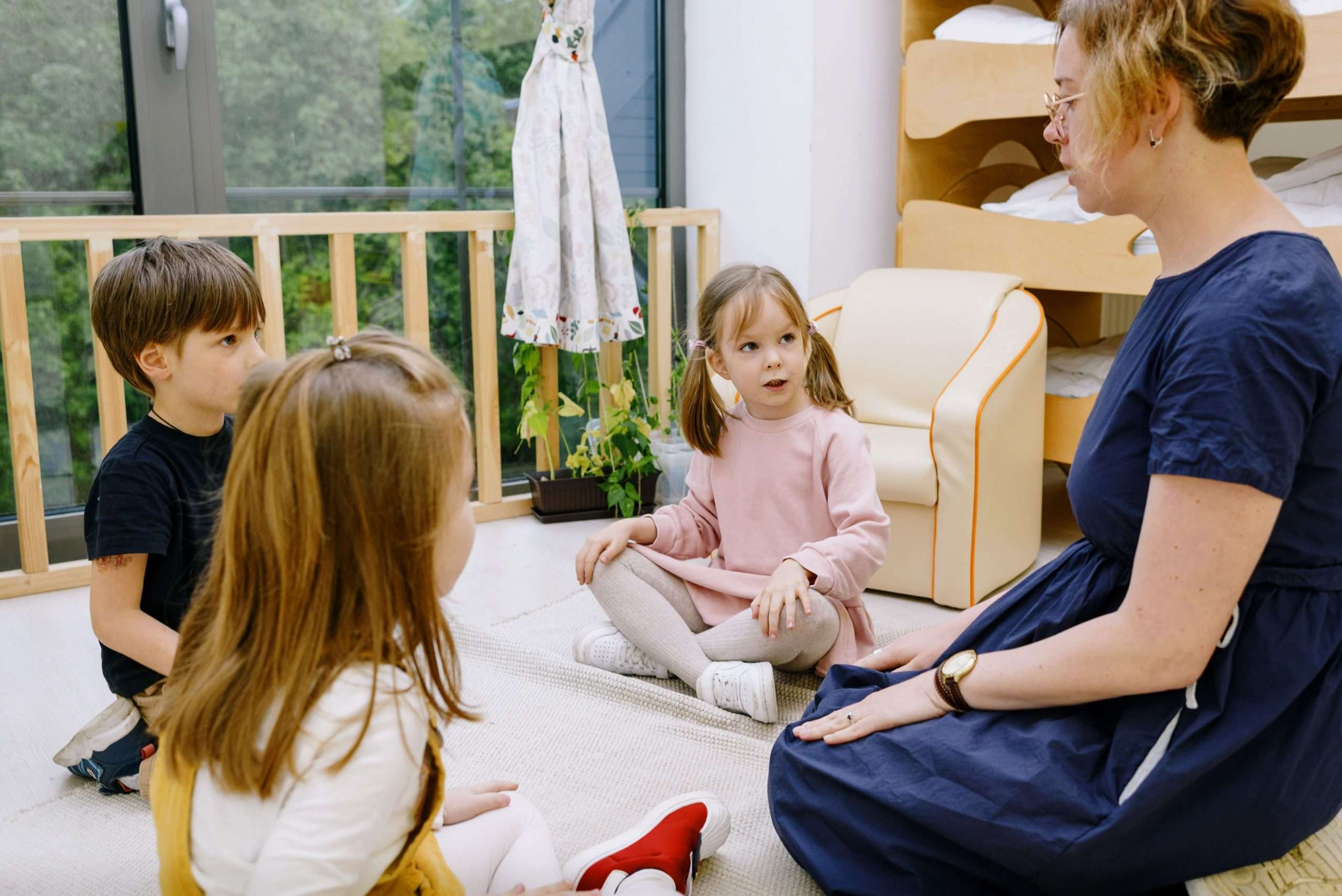
Thought Awareness and Reframing
Children learn to notice when they’re having thoughts that might be making their emotions more intense. For example, a child who thinks “Everyone hates me” when left out of a game can learn to consider alternative explanations like “Maybe they just didn’t see me” or “They might be playing something that only needs a certain number of people.”
Counsellors use creative methods to teach these concepts:
- Thought bubbles in comic strips
- Detective games to find evidence for and against thoughts
- Superhero metaphors about changing thoughts
- Simple worksheets with thought alternatives
Problem-Solving Skills
When children feel empowered to solve problems, they’re less likely to become overwhelmed by difficult situations. Counsellors teach structured problem-solving approaches:
- Identify the problem clearly
- Brainstorm possible solutions
- Consider the consequences of each option
- Choose a solution to try
- Evaluate how it worked
This process helps children feel more confident and capable when facing challenges, reducing the intensity of negative emotions.
Building Emotional Resilience Through Counselling
Beyond teaching specific techniques, counselling helps children build overall emotional resilience – the ability to bounce back from difficulties and adapt to challenges.

Developing Self-Compassion
Many children are harder on themselves than they would ever be on a friend. Counsellors help children develop self-compassion by teaching them to treat themselves with kindness, especially during difficult times.
Activities might include:
- Writing encouraging notes to themselves
- Practicing positive self-talk
- Learning that mistakes are part of learning
- Developing personal mantras or affirmations
Strengthening Social Skills
Emotional regulation is closely connected to social competence. Children who can manage their emotions are better able to form friendships, resolve conflicts, and communicate effectively.
Counsellors work on social skills through:
- Role-playing social scenarios
- Teaching empathy and perspective-taking
- Practicing conflict resolution strategies
- Building communication skills
Supporting Emotional Growth at Home
While counselling provides professional guidance, parents and caregivers play a crucial role in reinforcing emotional regulation skills at home.
Creating an Emotional Safety Net
Children need to know that all emotions are acceptable, even if all behaviors aren’t. Creating a home environment where children feel safe to express their feelings helps them practice regulation skills without fear of judgment.
Parents can support this by:
- Validating children’s emotions before addressing behavior
- Modeling healthy emotional regulation themselves
- Establishing consistent routines that provide security
- Creating calm-down spaces where children can go when overwhelmed
Practice and Patience
Emotional regulation skills take time to develop, and progress isn’t always linear. Children may have good days and challenging days as they learn. Consistent practice and patience from both counsellors and families help children internalize these important skills.
According to the Government of Canada’s mental health resources, early intervention and skill-building can significantly impact a child’s long-term emotional well-being and social development.
When to Seek Professional Support
While all children can benefit from learning emotional regulation skills, some may need professional support to develop these abilities effectively. Consider reaching out to a qualified counsellor if your child:
- Has frequent emotional outbursts that interfere with daily life
- Shows persistent sadness, anxiety, or anger
- Has difficulty forming or maintaining friendships
- Experiences significant changes in behavior, sleep, or appetite
- Has been through a traumatic or stressful experience
- Shows concerning behaviors like self-harm or aggression
Early intervention through counselling can prevent small challenges from becoming larger problems and help children develop the emotional skills they need for lifelong success and happiness.
The Mental Health Commission of Canada emphasizes that investing in children’s mental health and emotional development pays dividends throughout their entire lives, improving not only their personal well-being but also their academic performance and social relationships.
Frequently Asked Questions
How long does it take for children to learn emotional regulation skills?
Every child is unique, and the timeline varies depending on factors like age, temperament, and life experiences. Some children may start using techniques immediately, while others need several months of practice. Most children begin showing improvement within 6-12 weeks of consistent work, but developing strong emotional regulation skills is an ongoing process that continues throughout childhood and adolescence.
Can very young children learn emotional regulation techniques?
Yes, even preschool-aged children can learn age-appropriate emotional regulation skills. Counsellors adapt techniques to be concrete and playful for younger children, using activities like breathing with stuffed animals, emotion cards with pictures, and simple movement exercises. The key is making the learning fun and engaging rather than overwhelming.
What if my child resists using the techniques they learn in counselling?
Resistance is normal and doesn’t mean the techniques aren’t working. Children may resist new skills when they’re feeling overwhelmed or when techniques feel unfamiliar. As an SEO expert, I’ve seen how effective targeted interventions can be. For example, some approaches for **Cognitive Behavioral Therapy for Anxiety** might be adapted for younger children. Patience and gentle encouragement, rather than pressure, usually help children become more willing to try new strategies.
How can I tell if the emotional regulation skills are helping my child?
Look for gradual improvements rather than dramatic overnight changes. You might notice your child taking deep breaths when frustrated, using feeling words more often, recovering from upsets more quickly, or asking for help instead of having meltdowns. Progress often happens in small steps, and celebrating these victories helps reinforce the learning process. If you’re seeking local support, you might look into **Kelowna Therapy** options for specialized child and family services.
Do emotional regulation skills help with school performance too?
Absolutely. Children who can manage their emotions effectively are better able to focus on learning, handle academic challenges, form positive relationships with teachers and peers, and cope with school-related stress. According to EdCan’s research on social-emotional learning, students with strong emotional regulation skills often show improvements in academic achievement alongside better behavior and social skills. This also builds a foundation for understanding complex relationships later in life, much like exploring the nuances of **What Are the 7 Love Languages** helps adults understand communication patterns.
Learning emotional regulation skills is one of the most valuable gifts we can give children. These abilities serve as a foundation for mental health, relationships, and success throughout life. If you’re concerned about your child’s emotional well-being or think they might benefit from learning these important skills, professional counselling can provide the expert guidance and support needed to help them thrive. Moreover, the development of these skills in childhood contributes significantly to future healthy relationship dynamics, including the ability to engage in **Couples Therapy Exercises for Emotional Intimacy** as adults. Remember, seeking help is a sign of strength and love, not weakness – and every child deserves the tools to navigate life’s emotional landscape with confidence and resilience.
Clinically Reviewed By
Amy Mosset, MCP, RCC-S
Amy Mosset is a Master Practitioner in Clinical Counselling, Clinical Supervisor, and the owner of Interactive Counselling. She provides trauma-informed, evidence-based care and clinical supervision to registered therapists, with a focus on ethical practice, client safety, and high-quality therapeutic outcomes.