Taking an anger problems test can feel like a big step, but honestly? It’s a really brave and loving thing to do for yourself. Think of it as a quiet moment to check in, a way to understand if what you’re feeling is just a rough patch or maybe something a bit deeper that’s starting to get in the way of your life and relationships. For more information, see our couples counselling.
Is It Just a Bad Mood or Something More?

Let’s get one thing straight: feeling angry is completely normal. It’s a human emotion, like joy or sadness. Anger is basically our built-in alarm system, designed to go off when something feels wrong, unfair, or threatening. It’s meant to protect us.
But what happens when that alarm feels like it’s stuck on? When it’s blaring over burnt toast, traffic, or a misplaced comment? That’s when a normal feeling can start to feel like a problem that’s taking over.
Maybe you’ve noticed some of these things:
- Your fuse feels incredibly short lately.
- Small annoyances are sparking huge arguments.
- You just feel tense, on edge, and wound up all the time.
- It feels lonely and just plain exhausting to live this way.
This is a safe space to explore what’s really going on, without any judgment. You’re just taking a look.
Recognizing the Signs
Anger doesn’t always roar. Sometimes it’s a quiet, simmering feeling you carry all day. It can be that knot in your stomach or the tension in your jaw that just won’t quit. Here are a few ways it can show up:
- Emotionally: You might feel constantly irritable, impatient, or just overwhelmed. Maybe you’re holding onto grudges and can’t seem to let things go.
- Physically: Headaches, a clenched jaw, a racing heart, tight muscles, or even digestive issues can all be signs your body is holding onto anger.
- Behaviourally: This could look like yelling, making sarcastic comments, pulling away from people you love, or getting into arguments more often than you’d like.
It’s all about noticing patterns. Do your reactions feel way bigger than the situation that caused them? Are you replaying arguments in your head for days? Do you get the sense that your family and friends are starting to walk on eggshells around you? If this is hitting home, please know you are not the only one.
National studies show that about 7.8% of adults struggle with intense, poorly controlled anger. What’s even more telling is that over 87% of people with significant anger issues might also be dealing with another mental health concern. You can read more about these findings on anger and mental health to understand the connection better.
Feeling this way doesn’t make you a bad person. It just means a coping skill that once served you isn’t working anymore. Recognizing that is the first, most powerful step toward finding peace. Whether you’re considering Kelowna counselling or seeking support in Penticton, help is absolutely available. With guidance from professionals offering Vernon Counselling or Grande Prairie Counselling, you can learn new strategies to manage these intense feelings and build healthier relationships.
A Gentle Self-Check for Your Temper
Let’s try a quiet, practical exercise. This isn’t a scary exam or a clinical diagnosis. Think of it more as a guided self-reflection, a private moment for you to get a clearer picture of what’s going on. The entire point of this anger problems test is to help you spot your own patterns, not to slap a label on you.
Grab a pen and paper if you like, or just keep a mental tally. There are no right or wrong answers here, only your honest reflections.
How Often Is Anger Your Co-Pilot?
First, let’s just look at how often anger shows up. Think about how frequently these feelings come up in your everyday life.
- Do you feel irritable or impatient most days?
- Do you find yourself in arguments with people you care about (or even coworkers) more than once a week?
- Does it ever feel like your anger is just simmering below the surface, waiting for a minor annoyance to make it boil over?
- Do you spend a lot of time replaying angry moments in your mind, long after they’ve actually happened?
Take a second to think about the past week. How many times did it feel like anger was in the driver’s seat?
How Big Are Your Reactions?
Now, let’s think about the intensity of the anger. We all get annoyed, but does the size of your reaction match the size of the problem?
- Do small things—like hitting a red light or spilling a coffee—trigger a wave of overwhelming rage?
- Have you ever yelled, slammed a door, or thrown something because the anger felt too big to hold inside?
- Once you’re angry, do you find it really, really hard to cool down?
- When you get upset, does your heart pound, your jaw clench up, or do you start to feel shaky?
This isn’t about judging yourself for how you react; it’s just about noticing. It’s like checking the volume knob on your anger—is it almost always cranked up to ten?
This is a space for total honesty with yourself. The goal is just to see your patterns clearly, maybe for the very first time. Recognizing these things is a huge act of strength and self-awareness.
What’s the Fallout in Your Life?
Finally, how is this anger affecting you and the people around you? This is often the most revealing part of a self-check.
- Have people you love mentioned they’re worried about your temper? Or that they feel like they have to “walk on eggshells” around you?
- After an angry outburst, are you left with feelings of guilt or shame?
- Has your anger created real problems at work or in your most important relationships?
- Do you find yourself avoiding people or places because you’re afraid you might lose your cool?
If your answers here are making your stomach clench a little, that’s okay. It takes incredible courage to even look at this stuff. Simply recognizing that there’s a pattern you want to change is the biggest and most important step you can possibly take.
Whether you’re looking for Kelowna counselling or support in your own community, there are professionals ready to help you sort through this. Skilled therapists providing Vernon Counselling, Grande Prairie Counselling, and Penticton Counselling can offer a safe, confidential space to explore these feelings and learn healthier ways to respond. You don’t have to do this alone.
Understanding Your Test Results
Okay, you’ve gone through the self-test, and you have your answers. First off, just taking the time to honestly reflect like that is a huge step. Give yourself credit for it. The goal here isn’t to slap a label on you, but to help you see your own experiences a little more clearly. Think of it as simply connecting the dots in a way that feels empowering, not scary.
So, let’s gently unpack what your answers might be telling you. This isn’t about a pass/fail grade; it’s more like a weather report, ranging from partly cloudy to a potential storm warning.
This infographic helps visualize the core parts of the anger test: how often anger shows up, how intense it feels, and the ripple effect it has on your life and relationships.
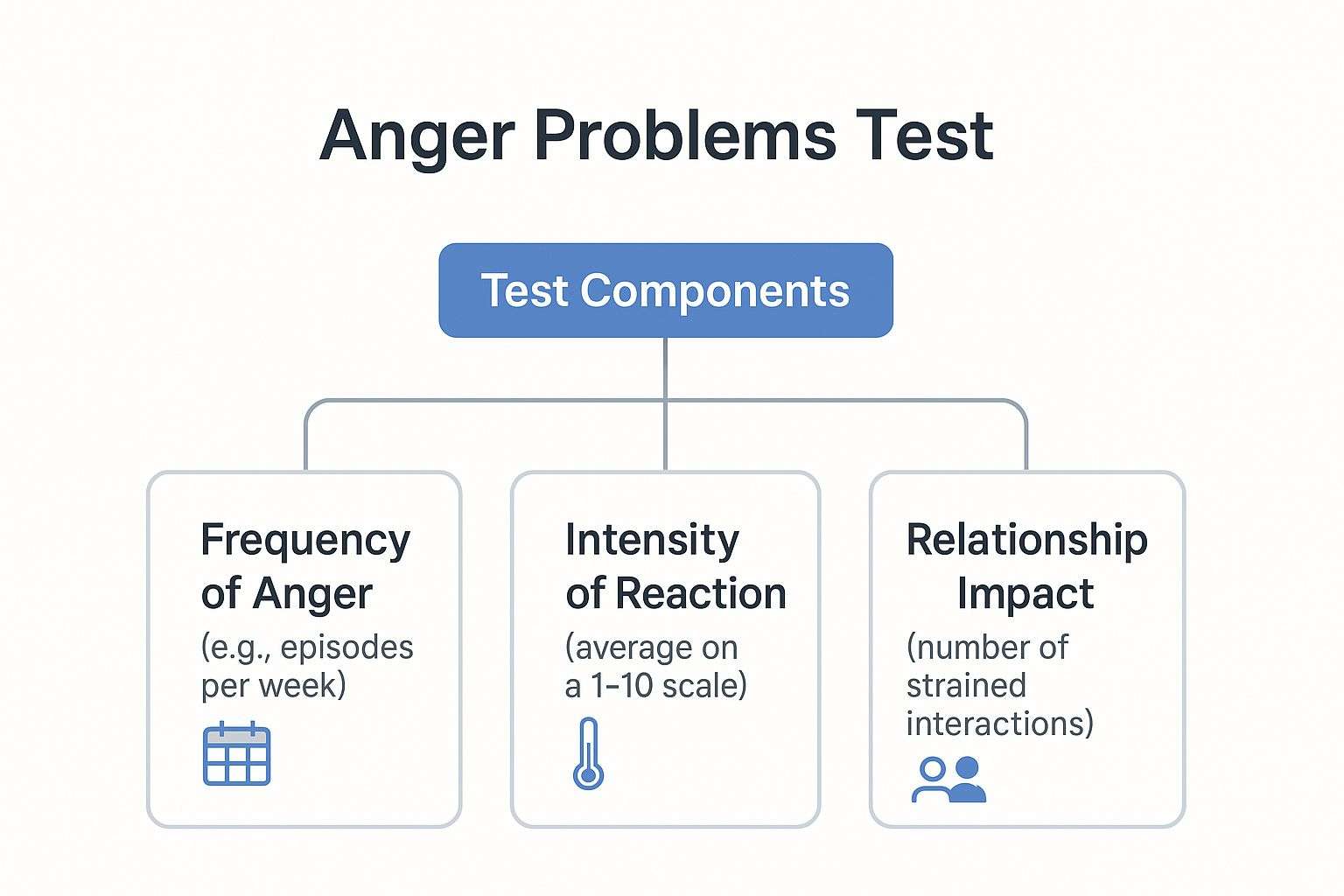
As you can see, a healthy balance usually means anger is infrequent, the intensity is manageable, and it doesn’t really cause damage to your connections with other people.
What Your Patterns Might Be Telling You
Where did you land? Let’s look at a few common patterns that tend to show up.
- Occasional Frustration: This is when anger pops up now and then, usually for a good reason. It doesn’t stick around, you don’t do things you regret, and your relationships feel solid. This is a great sign of healthy emotional processing. You’re navigating it well.
- Rising Anger Patterns: Maybe you’re noticing your fuse is shorter. The anger feels more frequent or intense than it used to, and it might be causing some friction with people you love. This is your emotional system sending you a little heads-up—a signal to pay closer attention.
- Signals for Seeking Support: Your anger feels big, frequent, and just plain overwhelming. It’s causing real stress in your relationships, at work, or inside your own head. If you’re often left feeling guilty or ashamed after an outburst, that’s a powerful sign that getting support could change everything for the better.
Remember, this is all about awareness, not judgment. Noticing a difficult pattern is the very first step toward changing it. It’s an act of courage and self-care.
When professionals assess anger, they often look at key traits like self-control and empathy. In fact, comprehensive psychological tools are even used in high-stakes employment screening to spot personality traits tied to impulse control. Research using these validated tools has found that challenges with self-control and empathy are strongly linked to difficulties in managing anger. You can learn more about these psychological assessment findings and how deep these connections run.
If you’re seeing signals that point toward needing a bit more support, please know that help is absolutely out there. Professionals offering Kelowna counselling and Penticton Counselling are experts at creating a safe space to explore these feelings. With the right guidance from services like Vernon Counselling or Grande Prairie Counselling, you can build the tools you need to feel more in control and find your peace.
The Hidden Costs of Unmanaged Anger

Living with intense, unmanaged anger is just plain exhausting. It’s so much more than the explosive outbursts we see in movies. Often, it’s the quiet, simmering resentment that silently chips away at the foundations of your life, day after day.
This isn’t about piling on guilt. It’s about being real and acknowledging the heavy weight you might be carrying. Let’s talk openly about what that looks like, because understanding the impact is the first step toward wanting things to be different.
The Impact on Your Connections
This is usually where the pain is felt most deeply. Over time, unmanaged anger can become a barrier, pushing you away from the very people you care about most.
- Your partner might start walking on eggshells. They may become afraid to share their honest feelings, creating a painful distance where a genuine connection once thrived.
- Family gatherings can become tense. Instead of being a source of comfort, getting together can feel like navigating a minefield, leaving everyone feeling drained.
- Friendships might begin to fade. Friends may start to pull away if they’re constantly met with irritability, leaving you feeling isolated and misunderstood. When dynamics get really confusing, it can almost feel like you’re in a relationship with a narcissist, where your feelings get lost.
The Toll on Your Well-Being
The ripple effects of chronic anger don’t stop with your relationships. They touch every corner of your life, from your health to your career. It’s a heavy burden to carry alone.
It’s okay to admit that this is hard. Recognizing the cost isn’t a sign of failure; it’s a sign that you’re ready to invest in your own peace and happiness.
- Your career can suffer. Constant impatience or difficulty with feedback can create friction with colleagues, sometimes closing doors to new opportunities.
- Your physical health is at risk. Being in a constant state of high alert floods your body with stress hormones, which can contribute to high blood pressure, sleep problems, and digestive issues over time.
- Your mental peace disappears. Perhaps the biggest cost is the loss of your own inner calm. Living with a constant undercurrent of anger robs you of joy, relaxation, and the simple ability to feel at ease.
If any of this sounds familiar, please know you are not stuck here. There are caring professionals who can help you find a new way forward. Whether you’re looking for Kelowna counselling or support in your own community, help is out there. With compassionate guidance from services offering Vernon Counselling, Grande Prairie Counselling, or Penticton Counselling, you can learn the tools to heal your relationships and reclaim your well-being.
Finding Supportive and Practical Next Steps

Realizing you might need a bit of extra support is a huge step. Seriously. It takes real guts to pause and admit that the way you’ve been handling things just isn’t working anymore. So, what comes next? Let’s walk through it together.
First things first: you are not alone in this. Reaching out for professional support isn’t a sign of weakness—it’s a sign of incredible self-awareness and hope. It’s you deciding that you deserve to feel calm, in control, and happy.
The thought of counselling can feel a little daunting, I get it. But at its core, it’s just a conversation in a safe, completely confidential space. It’s a place where you can finally set down that heavy weight you’ve been carrying and sort through it with someone who truly understands.
What Does Counselling Actually Look Like?
Picturing what therapy is actually like can make the whole idea feel much less intimidating. It’s not about pointing fingers or passing judgment. It’s about building new skills and gaining a fresh perspective. Here’s a little of what to expect:
- You’ll identify your triggers. Together, you’ll start to connect the dots and see what situations, people, or feelings usually set your anger off. Just recognizing these can be a total game-changer.
- You’ll develop new tools. Instead of going from zero to one hundred, you’ll learn practical techniques to hit the pause button, communicate your needs clearly, and express your feelings in healthier ways.
- You’ll understand the ‘why’. Anger is often just the tip of the iceberg. It can be a protective shield for other feelings like hurt, fear, or sadness. A counsellor helps you explore what’s really going on underneath.
- You’ll heal your relationships. You’ll discover how to mend connections that have been strained by anger and build stronger, more honest relationships from the ground up.
It’s a sad reality that many people who could use this kind of support never take that first step. For instance, a study of nearly 1,000 people found that a shocking 77% had never attended an anger management program, even when their anger was directly tied to legal trouble. This really highlights how crucial it is to act when you see the need for help.
Finding the Right Local Support
Taking your results from an anger problems test and turning them into real action is the most powerful move you can make. For those in our local communities, finding nearby support can make the journey feel much more personal and manageable.
Reaching out is a brave step toward reclaiming your peace. You’re not just managing anger; you’re investing in a happier, healthier future for yourself and the people you love.
Whether you’re looking into Kelowna counselling or checking out options for Penticton Counselling, there are compassionate professionals ready to help. Having someone in your corner who understands the local community can make all the difference. The same is true for those seeking Vernon Counselling or Grande Prairie Counselling—help is closer than you think.
A skilled mental health counselor can offer the non-judgmental guidance you need to navigate these feelings and build a toolkit for a calmer life. You don’t have to figure this all out on your own.
Still Have Questions About Anger? Let’s Talk.
It’s totally normal to have a million questions swirling around after taking that first step with an anger problems test. In fact, it’s a great sign—it means you’re really thinking about this stuff. Let’s walk through some of the most common questions we hear from people just like you.
We want to give you clear, practical answers that you can actually use. No jargon, just real talk.
Is an Anger Problem a Sign of Weakness?
Not a chance. Honestly, it’s the complete opposite. It takes incredible strength and self-awareness to look at your anger and say, “This isn’t working for me anymore.” That’s courage, not weakness.
Here’s a different way to think about it:
- For a long time, that anger might have been a shield, a coping mechanism you developed to protect yourself when you felt vulnerable or hurt.
- It may have even worked for a while.
- But if that old shield has become too heavy and is now causing more harm than good, recognizing that is a sign of wisdom.
Reaching out for help isn’t giving up. It’s about taking back the reins, choosing a healthier and more peaceful life for yourself and the people you care about.
What’s the Difference Between Anger and Aggression?
This is a fantastic question, and getting the distinction is a game-changer. I like to use a simple weather analogy.
- Anger is the internal feeling. It’s the storm clouds gathering on the horizon. You feel the pressure drop, see the sky darken—it’s an emotional signal that something isn’t right.
- Aggression is the external action. It’s the destructive hail or the lightning strike. It’s what happens when the internal feeling bursts out in a way that causes harm, whether that’s yelling, breaking things, or lashing out with words.
The goal in counselling is never to pretend the storm clouds don’t exist. It’s about learning to notice them gathering without letting the lightning strike every time. You can feel the storm without causing a disaster.
Can I Really Change How I React When I’m Angry?
Yes. A thousand times, yes. Your brain is much more adaptable than you might think, and with practice and the right kind of support, you can absolutely carve out new ways of responding to your triggers.
Here’s how it works:
- Counselling creates a safe workshop for this process.
- Using proven therapeutic methods, we start building new neural pathways.
- It’s like forging a calm, new trail through a forest instead of always taking the same old reactive superhighway.
- With the guidance you can find at places like Vernon Counselling or Grande Prairie Counselling, you can learn to create that crucial pause between feeling and reacting.
How Do I Talk to Someone I Love About Their Anger?
Navigating this conversation takes a lot of heart and courage. The trick is to approach it with compassion, not accusation.
Here are a few gentle pointers:
- Pick a calm moment. The middle of a heated argument is the worst possible time. Wait until you’re both relaxed and have the space to talk without being on the defensive.
- Use “I” statements. Instead of pointing a finger with, “You’re always so angry,” try speaking from your experience. Something like, “I feel scared when our conversations get loud,” is much easier for someone to hear.
- Focus on the relationship. Remind them how much they mean to you. You could say, “Our relationship is so important to me, and I want to figure out how we can get through tough topics together without it escalating.”
This isn’t about blaming them; it’s about inviting them to solve a problem with you. If you need a little help finding the right words, professional support from services like Kelowna counselling and Penticton Counselling can guide both individuals and families.
If you’ve taken an anger problems test and are wondering what’s next, you don’t have to figure it out alone. The team at Interactive Counselling offers a safe, non-judgmental space to explore these feelings and build practical skills for a calmer life. Reach out today to connect with a compassionate therapist.