You've finally brought your baby home, but the quiet moments can feel surprisingly loud. Between broken sleep, feeding decisions, physical recovery, household changes and the pressure to feel grateful, you may find yourself crying in the kitchen, worrying while the baby sleeps, or wondering why connection hasn't arrived in the way you expected. Your partner may be struggling too, even if neither of you has found the words. For more information, see our Grande Prairie depression counselling.
Postpartum counselling in Grande Prairie can offer a steady, non-judgmental place to sort through those experiences. It isn't only for a crisis or a formal diagnosis. It can help new parents understand what's happening, practise practical coping skills, strengthen communication and decide when more specialised care is needed. For more information, see our counselling in Grande Prairie.
A Gentle Introduction to Postpartum Support in Grande Prairie
A new parent might spend the morning caring tenderly for a baby and the afternoon feeling unable to complete one simple task. Another parent may look calm from the outside while checking the baby's breathing, replaying the birth or feeling guilty for needing help. These experiences can coexist with love. Being overwhelmed doesn't mean you're failing at parenthood. For more information, see our depression counselling.
Postpartum support is often most useful when it begins before distress becomes unbearable. Counselling can provide education about mood and anxiety, space to process a difficult birth, help with shifting identity and guidance for creating a workable support plan. You don't need to prove that you're struggling “enough” before asking for care.

Alberta has recognised postpartum depression as a public-health concern for many years. A provincial data standard published in 2009 was created to support consistent reporting and tracking, while earlier Alberta reporting identified approximately 13% of postpartum women screened in Capital Health in 2004 as being at risk and projected that postpartum depression could affect more than 5,000 Albertan women and their families in 2007, based on a 13% prevalence assumption. (Alberta's postpartum depression data standard)
That context matters in Grande Prairie. Local counselling exists within a broader public-health system where postpartum mood concerns are understood as a recurring need, not an unusual personal weakness. If you're still organising practical preparations, an ultimate baby registry guide may help with planning essentials, while emotional preparation can include identifying who you'll call when the days become difficult.
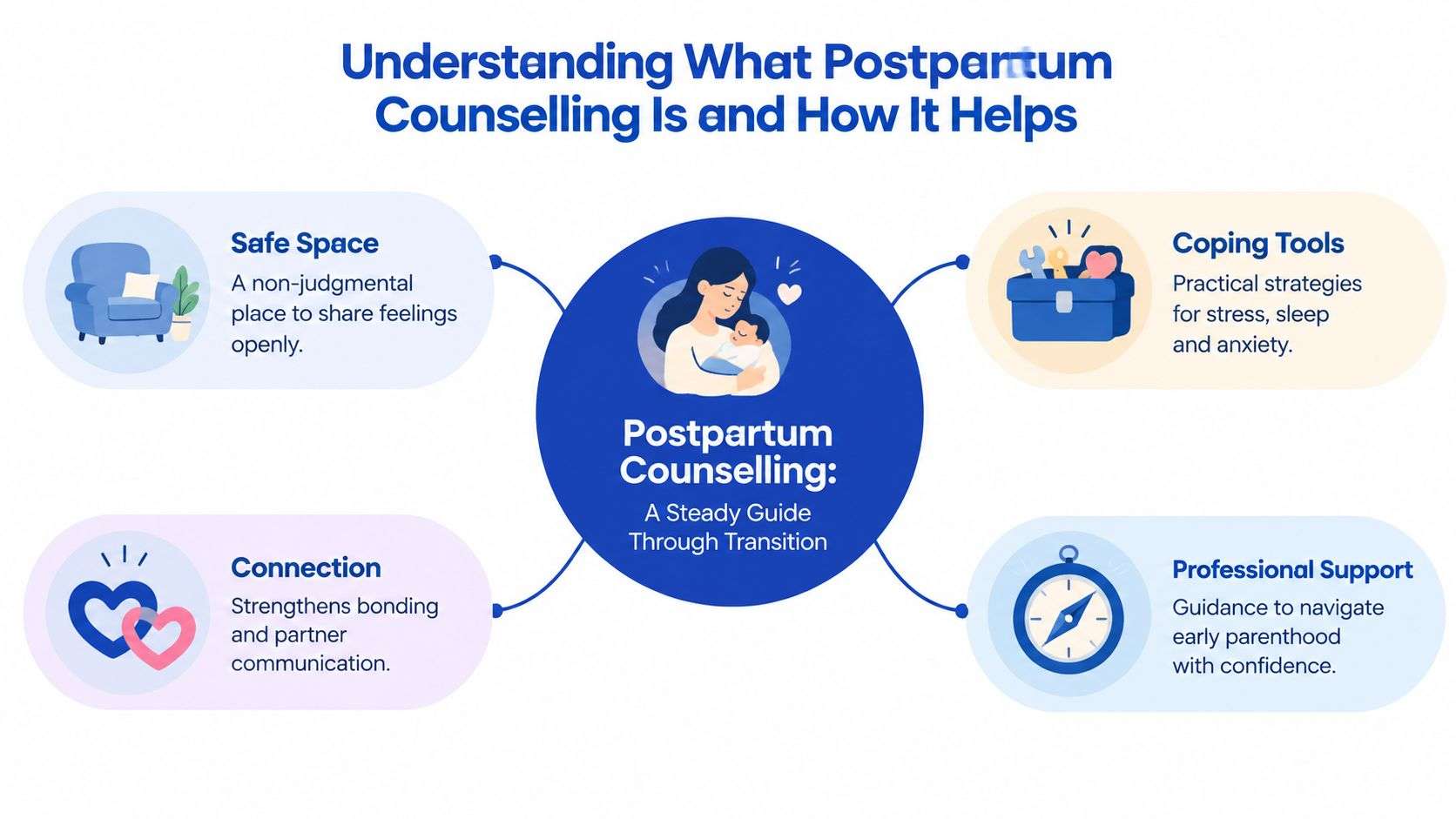
Understanding What Postpartum Counselling Is and How It Helps
Think of counselling as a steady guide beside you during a major transition. A guide doesn't take over the journey or tell you what kind of parent to be. Instead, they help you notice what's happening, understand your options and take the next manageable step.
Postpartum counselling may address:
- Emotional changes: sadness, numbness, anger, shame or grief.
- Anxiety: persistent fears, racing thoughts, repeated checking or difficulty settling.
- Identity shifts: changes in independence, work, body image and confidence.
- Relationships: tension with a partner, unequal responsibilities or difficulty asking for support.
- Birth experiences: fear, loss of control, unexpected medical events or memories that remain distressing.
- Safety: thoughts of self-harm, harm to the baby or an inability to stay safe.
Baby blues and concerns that need attention
Many parents experience tearfulness, emotional sensitivity and irritability during the first 2–3 weeks after birth. Alberta guidance describes these early changes as common. When symptoms continue beyond that period, don't improve with rest or support, or interfere with daily functioning, it's appropriate to speak with a healthcare or mental-health professional. (Statistics Canada overview of postpartum mental health)
Counselling isn't about applying a label after one conversation. It involves listening to your experience, considering your history and circumstances, assessing safety and working with you to choose suitable support. A questionnaire can provide useful information, but it shouldn't replace a thoughtful conversation. The Canadian Task Force on Preventive Health Care recommends against routine instrument-based depression screening for every pregnant and postpartum person up to one year after childbirth when questionnaires are used alone. (Canadian Task Force clinician summary)
Some families also explore practical in-home help during the early weeks, such as hiring a maternity nurse for home. Practical assistance and counselling serve different purposes, but they can complement one another when a household needs both rest and emotional support.
Common Postpartum Challenges and Signs to Notice
Postpartum distress doesn't always look like sadness. Some parents feel restless, irritable or emotionally flat. Others remain highly functional while experiencing frightening thoughts, constant worry or a sense that something bad is about to happen. Symptoms can build gradually, especially as early practical support fades and exhaustion accumulates.
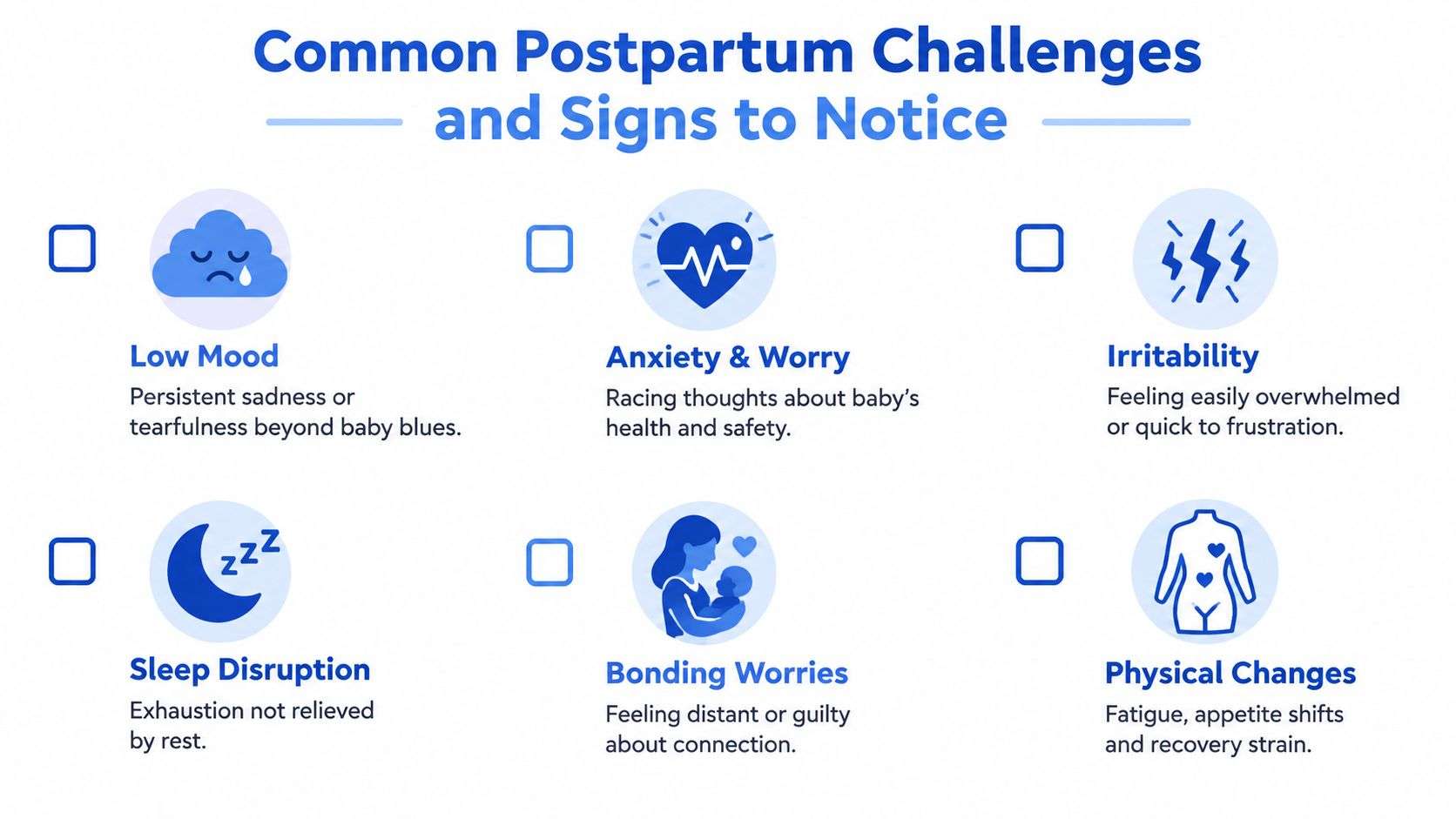
Signs worth noticing
- Low mood: Persistent sadness, tearfulness, numbness or hopelessness that continues beyond the early adjustment period.
- Anxiety and worry: Racing thoughts about the baby's health, safety or development, including fears that are difficult to reassure.
- Irritability: Feeling quick to anger, overwhelmed by ordinary requests or unable to recover after frustration.
- Sleep disruption: Being unable to rest even when someone else is caring for the baby, or feeling exhausted in a way that affects functioning.
- Bonding worries: Feeling distant from the baby, disconnected from your identity or ashamed that affection doesn't feel automatic.
- Physical changes: Appetite shifts, fatigue, pain or recovery strain that make emotional coping harder.
A useful threshold: If distress lasts beyond two to three weeks, keeps worsening or makes everyday care feel unmanageable, reaching out is a sensible act of care, not an overreaction.
Intrusive thoughts can be particularly frightening. An unwanted thought about an accident or harm doesn't automatically mean you want it to happen. Tell a counsellor, doctor or trusted healthcare professional about these experiences so they can assess what the thoughts mean, how often they occur and whether there is any intent or plan. If you believe you or someone else is in immediate danger, call emergency services or use a crisis service rather than waiting for a routine appointment.
A partner or family member may notice changes before the parent does. Changes such as withdrawal, unusual agitation, loss of interest, constant reassurance-seeking or difficulty carrying out basic care deserve a gentle conversation. Avoid criticism and lead with observation: “I've noticed you seem frightened and exhausted. How can we get more support around you?”
For parents processing a difficult pregnancy, birth or body-related experience, a trauma-informed resource such as the Momotaro Apotheca trauma recovery guide may offer additional reflection. It doesn't replace professional assessment, but it can help you name experiences you may want to bring into counselling.
Why Postpartum Experiences Often Unfold Over Many Months
The six-week checkup is an important point of contact, but it isn't a finish line for postpartum mental health. Alberta data show depression diagnoses at 6.7% within 6 months of delivery, 9.8% by 12 months and 12.1% by 24 months. Those figures demonstrate why a parent who begins struggling months after birth still deserves timely support. (Alberta reproductive-health report)
The reasons for delayed distress vary. Sleep deprivation may become more difficult after an initial period of visitors and practical assistance. Feeding challenges, returning to work, changing childcare arrangements, relationship strain or a baby's health needs can create new pressure. A parent may also suppress concerns early on, expecting confidence to appear with time, and only seek help when the gap between expectations and reality becomes too painful.
Why repeated check-ins help
Alberta Health Services offers the Edinburgh Postnatal Depression Scale at the first Public Health Well Child Clinic visit, generally around 2 months postpartum, and screening may continue at any time up to 12 months postpartum. For translated versions, Alberta guidance specifies a cutoff of 10 to optimise sensitivity. (Alberta Health Services screening guideline)
Screening is one doorway into care, not the whole room. A counsellor also considers your sleep, relationships, support network, trauma history, physical recovery, anxiety symptoms and safety. That broader view helps create care that fits the family rather than treating a score as a complete explanation.
A longitudinal approach may include short-term counselling during the early adjustment period, later check-ins when routines change and referrals to medical or psychiatric care if symptoms require it. The Canadian evidence also supports addressing anxiety alongside depression. A national survey found that 13.8% of women who gave birth in Canada between January 1 and June 30, 2018 reported symptoms consistent with postpartum anxiety, while 17.9% reported symptoms consistent with postpartum depression. (Canadian postpartum anxiety and depression survey)
Benefits of Counselling for New Parents and Families
Counselling becomes practical when it connects emotional understanding with daily life. A session might help you identify the moment your worry spikes, build a plan for the next feeding or night-time wake-up, and decide which task someone else can take over. The aim isn't perfect calm. It's more choice, clearer communication and a greater ability to recover after hard moments.
What support can strengthen
Coping skills can help you respond to stress without becoming trapped in avoidance or self-criticism. A counsellor may help you separate problems that need action from emotions that need soothing. For example, arranging a medical appointment addresses a physical concern, while paced breathing, grounding or compassionate self-talk may help you tolerate the fear while you wait.
Sleep and self-care planning doesn't mean expecting a new parent to create an ideal routine. It can mean identifying protected rest, sharing night responsibilities where possible, accepting practical help and noticing when exhaustion is affecting safety or judgement.
Parent-infant connection can grow through small, realistic moments. Counselling may reduce the shame that makes bonding harder and help you focus on responsive care rather than a constant feeling of emotional intensity.
The household matters
Postpartum mental health affects the family system. Partners may need help discussing responsibilities without turning every conversation into a scorecard. Extended family may need clear instructions about useful support, such as bringing food, holding the baby while a parent showers or handling errands without expecting emotional labour in return.
Research on social support indicates that mothers with high social support had 54% lower odds of postpartum depression than those with low support. (Interpregnancy interval and postpartum depression and anxiety review) That finding doesn't mean a parent is responsible for creating perfect support. It shows why counselling should ask who is available, what kind of help feels safe and where gaps remain.
Safety planning may be included when there are thoughts of self-harm, harm to the baby, severe hopelessness or concerns about someone's ability to remain safe. A plan identifies warning signs, trusted contacts, professional resources and immediate actions. It's a practical layer of protection, not a judgement.
What to Expect From Postpartum Counselling in Grande Prairie
Starting counselling can feel difficult when you're already tired. The first contact usually involves sharing what prompted you to reach out, discussing availability and finding out whether the counsellor's experience and approach fit your needs. You don't need a polished explanation. “I'm not coping and I don't know what I need” is enough to begin.
A typical counselling pathway
The first appointment may include questions about mood, anxiety, sleep, physical recovery, birth experiences, relationships, support and safety. You and the counsellor can then identify a small number of goals. Those goals might include feeling less afraid during the night, communicating with a partner, processing a traumatic birth or rebuilding confidence in everyday decisions.
Sessions may be individual, couple-based or family-centred. In Grande Prairie, families may also consider in-person, phone or secure virtual sessions, depending on the provider and circumstances. A parent recovering at home may find virtual care easier, while another may prefer the structure and privacy of an office.
| Format | Best for | Key consideration |
|---|---|---|
| In-person counselling | Parents who value face-to-face connection and a separate therapeutic setting | Plan travel, childcare and feeding needs around the appointment |
| Phone counselling | Parents who need a lower-barrier option or a private conversation from home | Arrange a space where you can speak freely and keep the phone charged |
| Secure virtual counselling | Parents managing recovery, mobility, weather or childcare challenges | Confirm privacy, technology access and a backup contact method |
| Couple or family sessions | Households working through communication, roles and shared care | Agree on the main concern you want to address together |
| Short-term focused support | A specific adjustment, decision or coping concern | Review progress regularly and discuss whether further care is needed |
Choosing a good fit
Ask whether the counsellor works with postpartum depression, anxiety, birth trauma, parenting transitions and partner relationships. You can also ask how they handle safety concerns, whether they include partners and what happens if you need a different level of care.
Interactive Counselling is one Grande Prairie option that offers evidence-informed counselling for individuals, couples and families, with in-person, phone and secure virtual sessions and daytime, evening and weekend availability. The practice also supports children aged 5+ and youth when family circumstances make broader involvement useful. The right choice is the service that feels safe, accessible and suited to your actual needs.
A screening tool may be part of the process, particularly within Alberta's public-health pathway, but your lived experience remains central. A counsellor should explain what they're asking, invite questions and review whether the plan is helping.
Choosing Support and Taking Gentle Next Steps With FAQs
You don't have to solve the entire postpartum period today. Start by identifying the part that feels most urgent: sleep, fear, sadness, anger, bonding, a difficult birth experience, conflict at home or concern about safety. Then choose one person or service to contact.
Grande Prairie's Alberta Health Services adult walk-in counselling and ICAT intake are listed as weekday services, with the office closed on weekends and statutory holidays. Postpartum mental-health outreach is available up to 1 year after birth, so it's useful to ask about eligibility and timing when you contact a service. (Alberta Health Services Grande Prairie counselling information)
For urgent emotional support in Canada, Health Canada lists the Canada Suicide Prevention Service at 1-833-456-4566, text 45645, and Wellness Together Canada. If there is immediate danger, call emergency services. (Health Canada support for women's mental health during pregnancy and postpartum)
Questions new parents often ask
Can my partner join counselling?
Yes, when the service and counsellor support couple or family sessions. A partner can help describe changes, practise communication and participate in a shared plan, but the birthing parent should still have opportunities to speak privately when needed.
What should I bring to the first appointment?
Bring whatever helps you explain the situation, such as a list of symptoms, questions, medication information or notes about sleep and support. You don't need a complete timeline. The counsellor can help organise the story with you.
How will I know counselling is helping?
Look for practical signs, not constant happiness. You might notice that you recover more quickly after stress, ask for help sooner, sleep when an opportunity appears, feel less alone or communicate more clearly with your partner. If you feel stuck, tell the counsellor so the approach can be adjusted.
What if I need help outside office hours?
Make an after-hours plan while you're relatively calm. Write down trusted contacts, crisis resources and the signs that mean you shouldn't wait. Weekday counselling access may not cover every difficult moment, so knowing the next safe step can reduce uncertainty at night or on a holiday.
Can I seek counselling months after birth?
Yes. Alberta's data show that postpartum concerns can persist or emerge well beyond the early checkup period. Your need for support is valid whenever you recognise it.
Clinically Reviewed By
Amy Mosset, MCP, RCC-S
Amy Mosset is a Master Practitioner in Clinical Counselling, Clinical Supervisor, and the owner of Interactive Counselling. She provides trauma-informed, evidence-based care and clinical supervision to registered therapists, with a focus on ethical practice, client safety, and high-quality therapeutic outcomes.
If postpartum life feels heavier than you expected, Interactive Counselling offers individual, couple and family counselling through in-person, phone and secure virtual sessions. Learn more about support for new parents and available options by visiting Interactive Counselling.