If you're parenting in the Peace Country while one parent heads out for camp, you probably know the rhythm by heart. Bags by the door. Kids acting a little louder, clingier, or flatter than usual. The parent leaving may look focused on the drive ahead, while the parent staying home is already mentally sorting school lunches, hockey pickups, laundry, and bedtime alone. Even when your family has done this for years, transitions can still hit hard. For more information, see our family counselling.
"Supporting Peace Country families through camp rotations means creating predictable routines, maintaining strong communication, and protecting each family member's emotional well-being."
You don't need a perfect system. You need a workable one. Parenting through camp rotations in the Peace Country asks a lot from everyone in the home, but it can become more steady, more connected, and less reactive when you build in a few repeatable supports.
Welcome to the Rotation Life
It is 5:30 a.m. The camp bag is zipped, the coffee is going cold, and one parent is watching the clock while the other is already thinking about school forms, groceries, and who can cover pickup if the roads turn bad. The kids may stay quiet, act silly, or pick a fight over something small. That kind of morning can make a family feel tense before the day has even started.
This life runs on a schedule, but families do not. A rotation can look tidy on a calendar and still feel hard in the body. Parents often tell me the time apart is difficult, but the repeated switching is what wears them down. One parent has to carry home life alone. The other has to shift into work mode at camp, then come home and figure out how to fit back into routines that kept moving without them.
That strain shows up in different ways for each parent. The parent at home may become sharp, depleted, or numb by the end of the day. The parent at camp may feel guilty, sidelined, or unsure how to help from a distance. Children feel those shifts too, even when nobody is saying much out loud.
Parenting through camp rotations gets steadier when you treat departures, time away, and homecomings as repeatable family events with a plan.
In the Peace Country, the practical pressure is real. Long drives, weather delays, limited childcare, changing shifts, and distance from extended family can all turn a normal transition into a hard one. Some families are also carrying older stress alongside camp life. A recent federal immigration report notes that Canada welcomed a large number of permanent residents in 2023, and many families are building routines while adjusting to new communities, support systems, and caregiving roles, as noted in the 2024 Annual Report to Parliament on Immigration.
So if your home feels loving and stretched at the same time, that makes sense.
Camp life asks more of a family than simple communication. It asks for clear expectations, realistic handoffs, and small rituals that help everyone know what is happening and what comes next. That includes the parent who leaves, the parent who stays, and the child who has to keep attaching and readjusting over and over again.
Understanding the Rotation Rollercoaster
The emotional strain in rotation families isn't a sign that you're doing it wrong. It's a normal response to repeated separation, role shifts, and pressure.
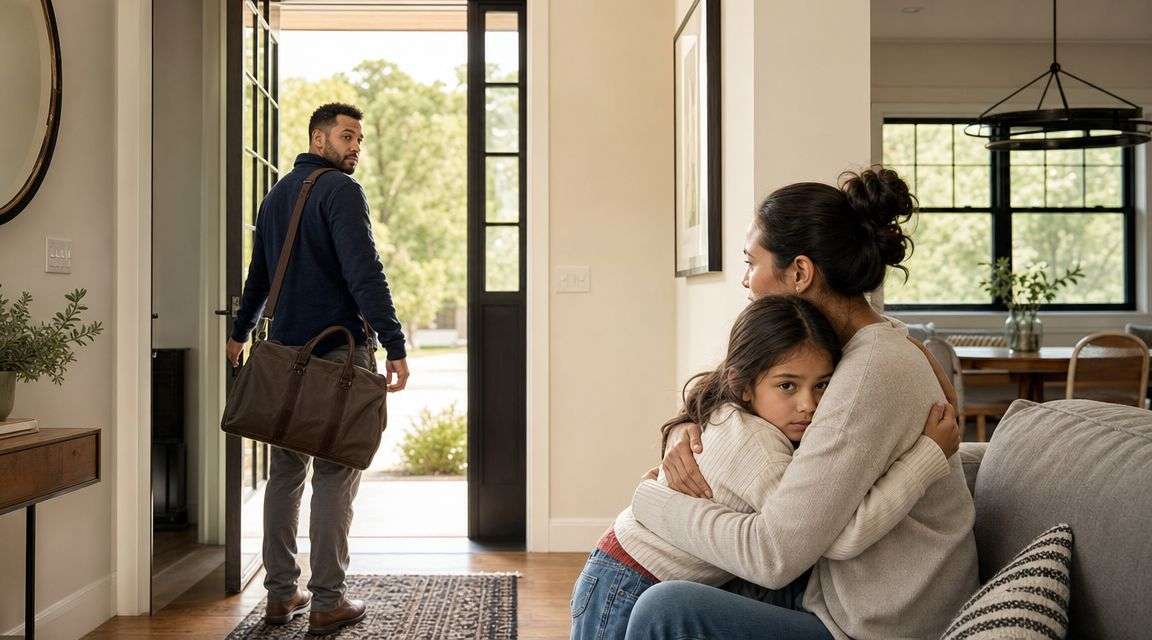
The parent at home
The at-home parent often becomes the default manager of everything. Not just meals, homework, rides, and bedtime, but also the invisible labour. Keeping kids regulated. Tracking forms. Deciding when to be flexible and when to hold a boundary. Absorbing everyone's moods while trying not to fall apart yourself.
This load lands in a wider context too. Statistics Canada's recent Canadian Social Survey found that 31% of Canadians aged 15+ reported very good mental health in 2024, down from 34% in 2023, which points to a broad need for emotional support in stressed households, including caregivers under rotational pressure, as noted on the Parents Circle youth camp page.
When you're the one holding the home front, resentment can sneak in beside love.
The parent at camp
The camp parent isn't on holiday. Many carry a different burden. They miss routines at home, worry they're becoming a guest in their own family, and may feel guilty calling at the wrong time or not calling enough. Then they come home tired and are expected to step in smoothly.
That return can be rough. A child may cling to the at-home parent. The parent at camp may try to help and get pushback. Nobody means harm, but everybody can feel replaced, criticised, or underappreciated.
The children
Children usually struggle most with predictability and meaning. They want to know: Who's taking me to school? When are you leaving? When are you back? Will bedtime still feel the same? Why does everyone seem tense?
You may notice:
- Younger children becoming clingy, tearful, or more rigid about routines
- School-age children showing anger, stomach aches, sleep disruption, or extra conflict
- Teens acting dismissive, going quiet, or seeming irritated right when connection is offered
Children often react most strongly before the goodbye and just after the reunion. That's not manipulation. That's stress showing up in behaviour.
Naming this rollercoaster matters. It helps you respond with steadiness instead of taking every reaction personally.
Building Your Family's Rotation Roadmap
Families cope better when the rotation isn't reinvented every time. A simple roadmap lowers anxiety because everybody knows what happens next.
Start with anchor routines
You don't need a colour-coded masterpiece. You need a few repeatable anchors.
Choose one ritual for departure, one for the days apart, and one for reunion.
Examples that work well:
- Departure ritual. Same breakfast, same goodbye phrase, same hug or handshake.
- Connection ritual. A short evening voice note, a joke sent after supper, or a photo of something ordinary from the day.
- Reunion ritual. Pancakes on the first morning home, a walk together, or ten minutes of one-on-one time with each child.
Children relax when the goodbye and return feel familiar. Rituals reduce the sense that the family is constantly bracing for disruption.
Make time visible
Many children struggle because time feels abstract. A visible calendar helps.
Use a wall calendar, whiteboard, or printed monthly page. Mark:
- Camp days
- Home days
- Call days
- Special events
- Transition days
For younger children, use colours, stickers, or simple symbols. For older kids, write the actual schedule and include school events, practices, and appointments. Seeing time pass can lower repetitive questions because the answer is already in the room.
Decide roles before the stress hits
A lot of conflict in rotation families isn't about love. It's about unclear authority.
Talk through these questions before the next shift starts:
- Who handles school communication?
- Who books appointments?
- What decisions can the at-home parent make alone?
- When should the camp parent be consulted?
- What happens if a child wants a different answer from the other parent?
A simple rule helps. The parent on site handles immediate parenting. The other parent supports, not second-guesses.
Practical rule: Never use a call from camp to overturn the parent who is actively managing the moment at home.
That protects teamwork.
Build a week that holds the at-home parent up
A loose structure can keep solo-parent weeks from becoming survival mode by Wednesday.
| Day | Morning Routine (7-9 AM) | Afternoon Activity (3-5 PM) | Evening Wind-Down (7-8 PM) |
|---|---|---|---|
| Monday | Breakfast, school prep, quick calendar check | Grocery stop or outdoor play | Simple supper, baths, reading |
| Tuesday | Same wake-up rhythm, packed lunches | Homework table and snack | Quiet play, lay out clothes |
| Wednesday | School drop-off, one small house task | Library, park, or neighbour visit | Easy meal, family show, bedtime |
| Thursday | Repeat familiar morning steps | Activity pickup or free play | Showers, backpacks ready |
| Friday | Favourite breakfast | Low-pressure outing or home reset | Movie night or early bedtime |
| Saturday | Slower start, chores together | Time outside | Early supper, calm evening |
| Sunday | Prep for school week | Meal prep, family check-in | Baths, stories, lights low |
This kind of rhythm lowers decision fatigue. If your family also spends evenings at arenas or activities, a guide for comfortable sports parenting can be useful for reducing some of the practical strain around gear, sidelines, and long waits.
Keep the plan realistic
What doesn't work is creating a "better family system" that collapses after three days.
Skip these common traps:
- Overpromising. Daily hour-long calls usually become frustrating.
- Grand reunions with pressure. Kids may need time, not forced excitement.
- Too many rules at once. Add one or two supports first.
- Pretending transitions don't matter. Children notice what adults avoid.
The best roadmap feels ordinary. That's a strength, not a weakness.
Staying Connected Across the Distance
Connection during camp rotations isn't about constant contact. It's about contact that helps.
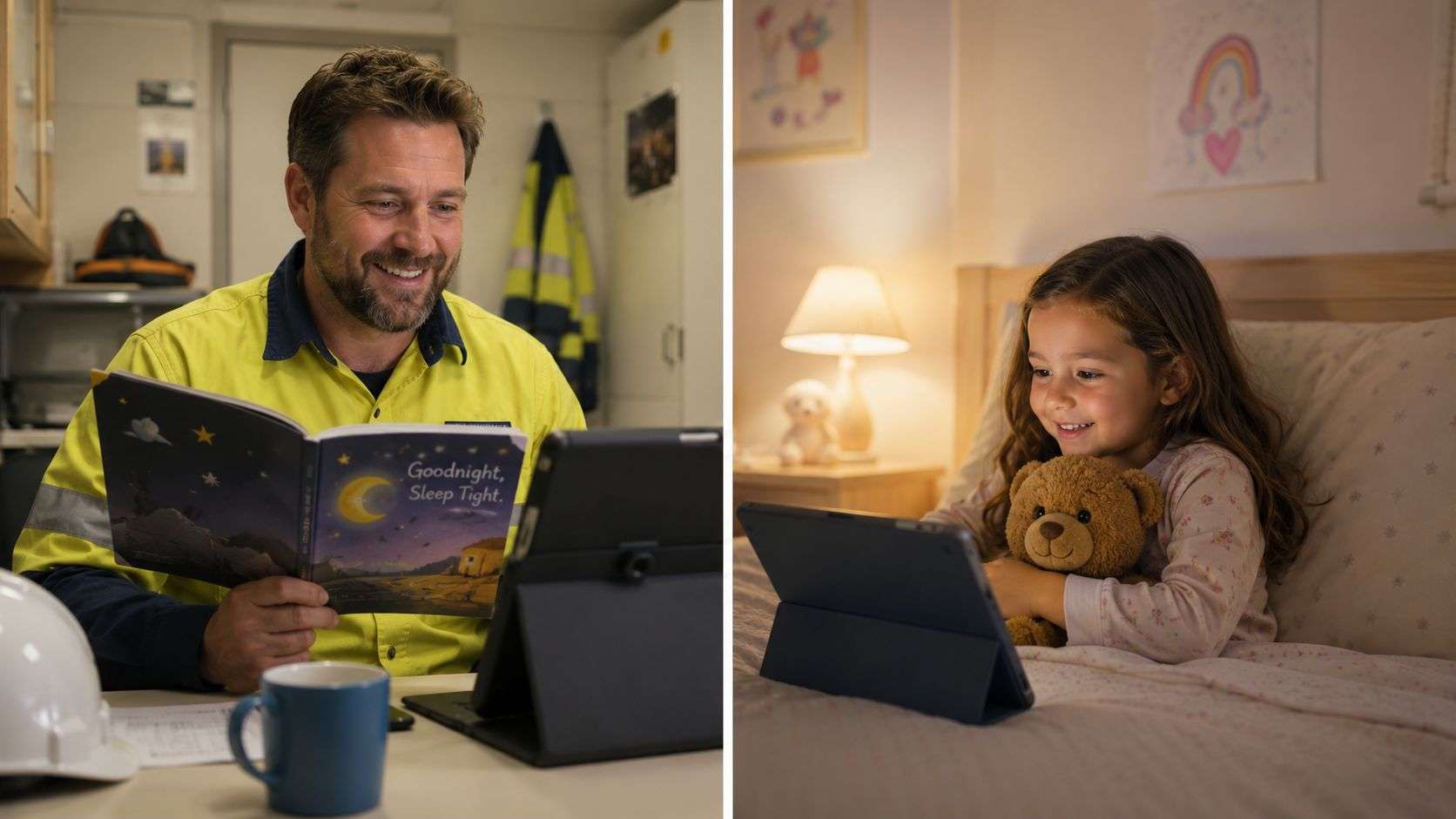
Make calls short and predictable
A tired child and a tired parent don't need a long, emotional call at the end of a hard day. They need a call with a purpose.
Try this structure:
- Start with a warm greeting
- Ask one concrete question
- Share one detail from your day
- End with a predictable sign-off
For example: "What's one good thing from today?" or "Show me the drawing you made."
Short calls often go better than long ones because they leave children wanting more instead of ending in tears or conflict.
If camp connectivity is unreliable, sorting out a practical setup ahead of time matters. Some families find an essential guide for mobile internet helpful when they're trying to create more dependable contact routines from remote locations.
Use connection that doesn't have to be live
Live calls are only one tool. Asynchronous connection is often easier and less stressful.
Good options include:
- A recorded bedtime story
- A short good-morning video
- A lunchbox note written before departure
- A photo of the weather, truck, lunch, or sunset from camp
- A shared journal that the child adds to while the parent is away
These smaller touches help children feel remembered in everyday life.
Use words that calm, not words that flood
When a child says, "I miss you," adults often panic and rush to fix it. That can accidentally make the feeling bigger.
Try scripts like these:
"I miss you too. Missing each other means we matter to each other, and we're still okay."
"You're sad and you're safe. Mum's here with you. Dad will talk to you tomorrow after supper."
For the camp parent, avoid saying, "Don't cry," or "I'll come home if you're upset." That creates more fear. Stay calm, warm, and clear.
Keep co-parenting updates simple
The parent at home shouldn't have to retell the entire day while exhausted. The parent at camp shouldn't need to fish for information to feel included.
Use a quick debrief format:
- One practical update. School, sleep, appointments, behaviour.
- One emotional update. Who struggled, who settled, what helped.
- One plan. What tomorrow needs.
Evidence from a structured parenting programme in conflict-affected settings showed strong movement toward calmer family dynamics. Before the programme, 85% of participating parents reported using harsh physical or psychological punishment, and after participation this dropped by half. Parents' use of positive strategies rose from 78% to 96% in country data from Iraq, Lebanon, Syria, and Jordan, in a programme that used weekly sessions over about three months with groups of roughly 20 parents, according to the Humanitarian Practice Network summary of the International Rescue Committee programme. The practical takeaway is clear. Structure, empathy, and supportive routines help under stress.
That matters for rotation families. Calm, brief, repeatable communication usually works better than intense discussions when families are tired.
Supporting Your Child's Emotional World
You see it most clearly on the hard days. The camp parent has just left, or just come back, and the child who was doing fine yesterday is suddenly melting down over socks, refusing supper, or acting like they do not care that anything changed.
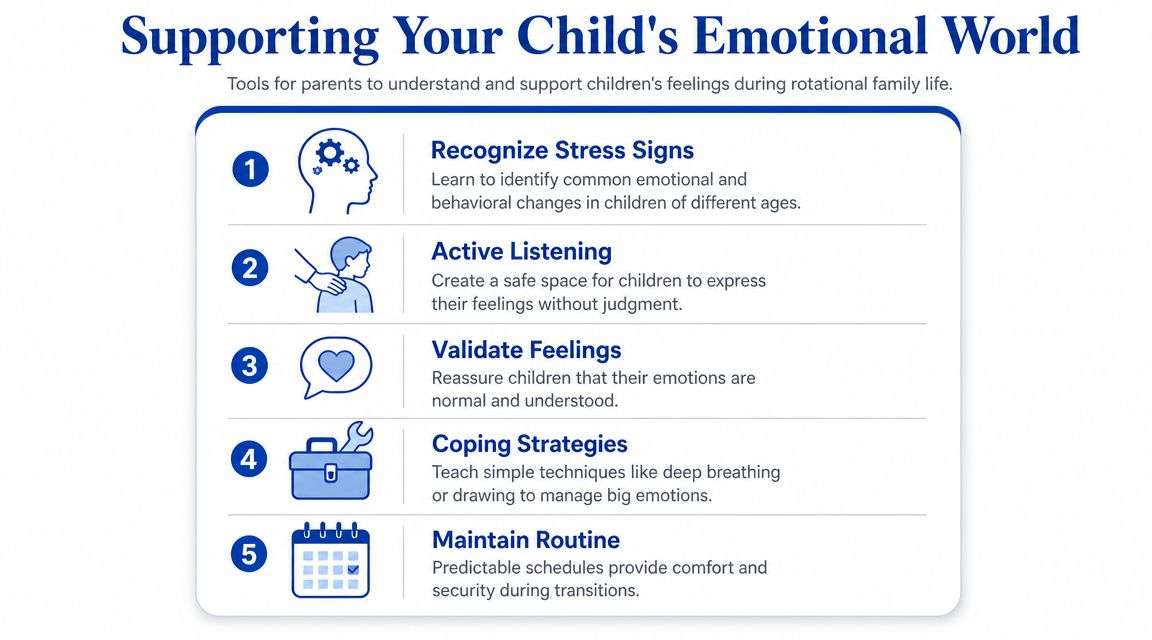
That does not mean you are doing it wrong. It usually means your child is carrying more than they can sort out on their own.
Know what stress can look like
Children often show stress in their bodies and behaviour before they can explain it.
You might see:
- Toddlers and preschoolers getting clingy, having bigger tantrums, slipping back on sleep or toileting, or needing more help than usual
- School-age children complaining of tummy aches, fighting more with siblings, getting controlling, or falling apart after school
- Teens going quiet, staying in their room, picking fights, acting flat, or saying the rotation does not bother them at all
Around departure and reunion, many children are dysregulated before they are cooperative. I tell parents to look at timing before they look at attitude. If behaviour gets worse right before camp leave, right after camp return, or during a change in routine, stress is usually part of the picture.
Make separation feel predictable
Children can handle a lot when the adults around them are clear and steady.
Repeated goodbyes get harder for some children if they feel surprised, confused, or left to guess what happens next. This is often more intense for children who have already lived through loss, a move, family change, or long periods of uncertainty. What helps is not a perfect speech. What helps is a pattern the child can trust.
Psychological safety at home looks like this:
- Adults use simple, truthful language
- Goodbyes are clear
- The child knows who is in charge while the camp parent is away
- Daily routines stay familiar where possible
- Feelings are allowed without the child having to fix the adult's emotions
A strong script sounds like this: "Mum leaves for camp after breakfast on Wednesday. Uncle Jay is taking you to hockey Thursday. I will do bedtime. Dad calls after supper on Friday if the shift allows."
That kind of clarity settles children because it answers the questions under the behaviour. Who is leaving? Who is staying? Who will take care of me? What stays the same?
Name the feeling under the behaviour
A child who slams a door on reunion day may be relieved, angry, excited, and unsettled at the same time. Children in rotation families often feel two opposite things at once. They miss the camp parent, then feel irritated when that parent changes the house rhythm. They want closeness, then push it away.
Put words to what you see without overtalking it.
Try:
- "You waited all week, and now your body feels stirred up."
- "Part of you is glad Mum is home. Part of you is upset things changed again."
- "I think this goodbye feels bigger today."
- "You seem mad, and I think there is hurt under that too."
This kind of language helps a child borrow your calm and your words until they can find their own.
Reunion behaviour often shows up strongest in the safest place. Children hold it together at school, then let go at home.
Give both parents a job in emotional support
This matters for the whole family unit, not only for the parent holding things together at home.
The parent at home usually sees the fallout first. Bedtime battles, school refusal, tears in the truck, sibling conflict. The camp parent often feels helpless, guilty, or pushed out because they are hearing about big feelings from far away and cannot step in physically. Both parents need a role.
The at-home parent can say: "He was teary after school and asked if you were safe. We looked at the calendar and it helped."
The camp parent can respond: "Tell him I heard that. I am safe. I miss him too. Tonight on the phone I'll remind him what stays the same."
That keeps the emotional load from landing on one parent alone. It also shows the child that both parents can handle hard feelings without panic.
Create a home where feelings are allowed
Children do not need a long processing conversation every night. They need repeated signs that home is a safe place to be upset, disappointed, worried, or angry.
Use ordinary moments:
- At supper ask, "What felt hard today?"
- At bedtime ask, "Anything still stuck in your chest or your head?"
- In the truck talk side by side, especially with kids who shut down with direct eye contact
- After an argument come back later with, "You were having a hard time. Tell me what was going on"
Younger children often show more in play than in conversation. Dolls, stuffed animals, Lego, drawing, and rough play can tell you a lot. Older children may talk more freely while shooting pucks, folding laundry, driving the range road, or grabbing a drink after practice.
Use co-regulation before correction
When a child is flooded, your calm matters more than your lecture.
Start here:
- Slow your own voice.
- Use fewer words.
- Move closer if your child settles with proximity, or give space if they need room.
- Name the feeling briefly.
- Deal with the behaviour once everyone is back in range.
That can sound like: "You are really upset. I am here. We will sort this out in a minute."
Parents often worry that this is letting bad behaviour slide. It is not. It is getting the child regulated enough to learn. Correction works better after the nervous system settles.
Watch reunion pressure
Many camp parents come home ready to make up for lost time. That is understandable. It can also backfire.
Some children need ten minutes. Some need half a day. Some want a hug in the driveway. Others want to keep playing and come to you later. Do not force affection. Do not quiz them for a big reaction. Stay warm and available.
A helpful reunion script is: "I'm glad to see you. You can come close when you're ready."
That gives the child room to reconnect without having to perform gratitude or excitement.
Keep adult feelings with adults
Children should not have to carry the emotional weight of rotation life.
Avoid saying things like:
- "Don't make this harder on me"
- "I work all this time for you"
- "If you cry, Dad won't leave"
- "You need to be strong for Mum"
Children do better when adults hold the adult grief, guilt, and stress. If you are stretched thin, say less to your child and get more support from another adult. That protects the relationship and gives your child the steady base they need.
Finding Your Support System in the Peace Country
It is 5:40 p.m. The parent at home is trying to get supper on the table, one child is melting down, and the truck needs fuel before school drop-off tomorrow. At camp, the other parent is finishing a long shift and feeling useless because they cannot step in. That kind of strain wears on both adults. Families do better when support is built in before things go sideways.
In the Peace Country, support often needs to be plain and practical. You are looking for people and places that lower the day's load, protect your energy, and give both parents a bit more breathing room.
Build support you can actually use
Start small and choose help that fits rotation life as it is, not as you wish it were.
That might look like:
- One dependable neighbour who can handle an emergency pickup or stay with the kids while you run to town
- A grandparent or sibling who covers one supper or one bedtime each rotation
- A parent friend who understands camp schedules and can swap school runs or last-minute childcare
- A community programme that gives your child routine and gives you one hour where nobody needs anything from you
The goal is not a big network. The goal is two or three people you can call without a long explanation.
Protected time matters too. Earlier research on family camps pointed to the same pattern many families already know from experience. Shared routines, lower pressure, and time together help people settle and reconnect. For rotation families, that might be a Saturday breakfast after changeover, a walk by the river, or one quiet evening at home without extra plans.
Support the parent at home and the parent at camp
Families often put all the attention on the parent carrying the house. Fair enough. That load is heavy. The camp parent also needs support if you want the family system to hold.
The parent at home needs practical relief, adult company, and permission to stop doing everything alone.
The parent at camp needs a clear role, even from a distance. Ask for specific jobs they can still do. They can book the dentist, order groceries for pickup, pay the hockey fee, or record a bedtime message. That reduces resentment for the parent at home and helps the camp parent stay emotionally present.
A simple script helps: "I do not need you to fix everything tonight. I need you to take these two jobs off my list."
Let help be part of the plan
A lot of parents in rotational work families carry the idea that they should be coping better by now. I rarely see that belief help anyone. It usually leads to more isolation, more snapping, and more guilt.
If you are constantly on edge, dreading transitions, or feeling alone even when you are both trying hard, bring in another adult. That might be a trusted friend, a pastor, an elder, a support group, or a counsellor. Getting support early is often what keeps a hard season from turning into a family crisis.
You do not need to earn support by falling apart first.
Frequently Asked Questions
How do these strategies change for toddlers versus teenagers
With toddlers, keep things concrete. Use a visual calendar, repeat the same goodbye routine, and keep separations clear and brief. They need physical connection, predictable caregivers, and very simple explanations.
With teenagers, focus more on respect and consistency. They still need structure, but they don't want to feel managed like little kids. Offer choice where you can, keep communication direct, and protect some one-on-one time when the camp parent returns.
What if my child gets angry when the camp parent comes home
That reaction is common. Anger at reunion often means the child is overloaded, not that they don't care. Don't force closeness right away. Keep the return calm, lower expectations for the first day, and let the reconnecting happen through ordinary things like snacks, a drive, a game, or sitting together.
What if my co-parenting relationship is strained
Keep communication child-focused and simple. Use shared notes, a calendar, or a message thread dedicated to logistics. Avoid rehashing relationship conflict during transition days. If needed, get outside support to help create clearer boundaries and more workable communication.
The parent at camp is too tired or disconnected to participate. What can we do
Start smaller. Ask for one manageable form of contact instead of a total overhaul. A ten-minute check-in, a recorded bedtime story, or one predictable message each day is more sustainable than a plan nobody can keep. Aim for reliability, not intensity.
You Have What It Takes
Camp rotations ask your family to keep adapting. That can be tiring, lonely, and messy. It can also become more manageable when you build around what helps. Predictable routines. Thoughtful handoffs. Calm communication. Emotional safety for your children and for yourselves.
You don't have to do all of this at once. Pick one goodbye ritual. One reunion habit. One better way to stay in touch. Small changes, repeated often, can change the feel of family life.
Be patient with your kids. Be fair with your partner. Be gentle with yourself. You're carrying a lot, and you're still showing up.
Clinically Reviewed By
Amy Mosset, MCP, RCC-S
Amy Mosset is a Master Practitioner in Clinical Counselling, Clinical Supervisor, and the owner of Interactive Counselling. She provides trauma-informed, evidence-based care and clinical supervision to registered therapists, with a focus on ethical practice, client safety, and high-quality therapeutic outcomes.
If this article brought up questions about parenting stress, co-parenting, family transitions, or the emotional weight of rotational life, you can explore Interactive Counselling for more information about counselling support for individuals, couples, and families.