
By late afternoon in a Peace Country winter, it can feel like the whole day passed in dim light. You get up in the dark, drive home in the dark, and somewhere along the way your motivation, patience, and energy seem to shrink. For many people in northern Alberta, that isn't laziness or weakness. It's a real winter shift in mood and functioning, made heavier by cold, isolation, and a season that seems to go on for months. For more information, see our depression counselling.
"Surviving a Peace Country winter means treating your mental health as something to plan for, not something to push through."
This is more common than many people realise. The Canadian Mental Health Association says about 3% of Canadians experience acute Seasonal Affective Disorder, while another 15% experience milder symptoms in winter, which helps explain why so many people notice a meaningful drop in mood as the seasons change (Canadian Mental Health Association on SAD in Canada). If you're feeling more down, more tired, more withdrawn, or less like yourself, you're not alone. And you're not overreacting. Peace Country winter depression, surviving the long northern Alberta season, starts with knowing what's happening and using strategies that fit this region, not generic advice that ignores the reality outside your door.
Introduction
The Peace Country asks a lot of people in winter. The roads can be rough, daylight is limited, routines get smaller, and many homes are places where people sleep more, cancel more, and stop reaching for things that usually help. It's common to hear people call it “just the winter blues,” but that phrase can hide problems that deserve more care.
Some winter changes are mild. Some are not.
For some people, winter brings a dip in mood and energy that's annoying but manageable. For others, it becomes a recurring depressive pattern that affects sleep, appetite, work, relationships, and the ability to enjoy anything at all. That difference matters because the right support depends on what you're dealing with.
Winter depression in northern Alberta is survivable when you treat it early, realistically, and with the right tools.
If you've been wondering whether what you're feeling is normal, whether a light box is worth it, or what to do when getting outside isn't practical, there are useful answers. The most helpful approach is not “tough it out.” It's a winter plan built for where you live.
Understanding the Winter Shift in Your Mood
People often use one phrase for very different experiences. “Winter depression” can mean anything from feeling sluggish in January to living through a seasonal depressive episode every year. Sorting that out is the first step.
A key point from primary care guidance is that Seasonal Affective Disorder, or SAD, is a subtype of major depression with a seasonal pattern. It isn't the same thing as ordinary burnout, a sleep problem, or feeling fed up with winter. Self-diagnosis can be unreliable, especially in places where long dark winters overlap with shift work, rural isolation, and disrupted sleep.
When it may be winter blues
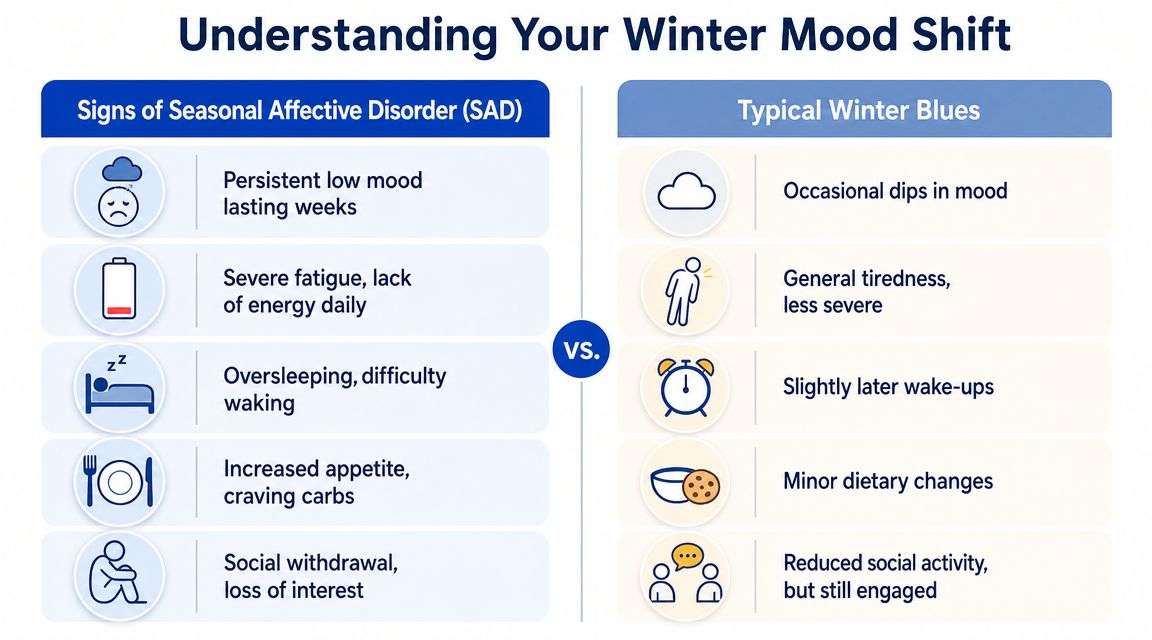
Winter blues tend to feel like a reduction in spark. You still function. You still enjoy some things. You may need more effort to get going, but your life still feels recognisably yours.
Common signs include:
- Occasional low mood that comes and goes
- Less energy without feeling flattened every day
- A bit more sleep or slower mornings
- Mild comfort eating or craving heavier foods
- Less social interest while still staying somewhat connected
When it may be something more serious
SAD looks more like depression that returns with a seasonal pattern. It affects not just how you feel, but how you function.
Watch for patterns like these:
- Mood changes such as persistent sadness, irritability, hopelessness, or tearfulness
- Sleep disruption including oversleeping, trouble waking, or feeling unrefreshed no matter how long you sleep
- Appetite changes especially stronger carb cravings or eating more in a way that feels hard to regulate
- Loss of interest in people, activities, or routines you usually care about
- Social withdrawal that goes beyond wanting a quiet night in
- Daily fatigue that makes simple tasks feel heavy
- Reduced concentration at work, school, or home
Here's a simple comparison:
| Symptom Area | Winter Blues | Seasonal Affective Disorder (SAD) |
|---|---|---|
| Mood | Mild dips, still some enjoyment | Ongoing low mood, loss of interest |
| Energy | Slower, but functioning | Fatigue that disrupts daily life |
| Sleep | Slightly more sleep | Oversleeping, hard to wake, still exhausted |
| Appetite | Comfort eating at times | Noticeable appetite and craving changes |
| Social life | Less active | Pulling away from people and plans |
The Peace Country factor
In northern Alberta, winter doesn't just reduce sunlight. It changes behaviour. People go out less. Commutes feel riskier. Social plans get cancelled. Shift schedules can throw off sleep. Farm, industrial, healthcare, and service work can keep people on demanding routines long after their reserves are low.
That's one reason it helps to look beyond generic advice. Telling someone in February to “just go for a walk” may be unrealistic if it's bitterly cold, roads are poor, and daylight is already gone by the time they get home.
Practical rule: If symptoms are lasting, repeating each winter, or interfering with work, parenting, relationships, or basic care, don't assume it's just seasonal tiredness.
Men, in particular, may describe depression as anger, numbness, irritability, or shutting down rather than sadness. If that sounds familiar, this guide on support for men with depression may help put words to what's happening.
Harnessing Light to Reset Your Rhythm
When people ask what works for seasonal depression, this is the place I usually start. Not with “try to get some daylight when you can,” though that may still help. The strongest practical tool for many people is controlled bright light exposure.
For seasonal symptoms, a common clinical routine is a 10,000-lux light box for about 30 minutes each morning, used consistently at the same time. Benefits usually build over 1 to 2 weeks, not overnight, and morning use matters because it better supports the body's circadian timing than evening use.

Why light matters in a northern winter
In a long northern season, many people don't get enough strong morning light to help anchor sleep and mood rhythms. They wake in darkness, spend much of the day indoors, and get too little light at the time the brain most needs it. A proper light box doesn't replace the sun, but it can give the brain a steadier signal that the day has started.
That can help with:
- Morning heaviness
- Sleep timing drift
- Low daytime energy
- Seasonal mood decline
A routine that people can actually stick with
The best light therapy plan is one that fits real life. It should be boring enough to repeat.
A workable routine looks like this:
- Use it early. Set it up where you eat breakfast, read, journal, or check emails.
- Follow the manufacturer's distance instructions. Placement matters.
- Keep your eyes open but don't stare into the lamp.
- Use it daily at roughly the same time.
- Give it time. Don't quit after three days because it hasn't “worked” yet.
If mornings are chaotic, think in pairings. Light box plus coffee. Light box plus breakfast. Light box plus packing lunches. That kind of habit stacking is often what makes the difference between a useful tool and an expensive object on the counter.
What doesn't work well
A lot of frustration with light therapy comes from avoidable mistakes.
Common ones include:
- Using the wrong device. Not every bright lamp is a therapeutic light box.
- Sitting too far away. The box may be bright in the room but not bright enough at your face.
- Using it at random times. Consistency matters.
- Switching to evening use because mornings feel rushed.
- Giving up too soon before the build-up period has passed.
A light box works best when you treat it like a winter medication for your schedule, not like a wellness extra.
If your symptoms are moderate to severe, or if winter depression is affecting work or family life, light therapy may be only one part of treatment. Some people also need psychotherapy, medication, or support for sleep and circadian problems. That isn't a failure. It's often the most sensible next step.
Fueling Your Body and Mind for Winter
By the middle of winter, many people in the Peace Country fall into a pattern that makes sense in the short term and feels awful over time. Meals get less structured. Movement drops. Evenings get longer and flatter. Sleep gets messy. Then mood follows.
Winter care works better when you stop thinking in extremes. You do not need a perfect routine, a gym transformation, or an all-organic meal plan. You need enough structure to support your brain through a hard season.
Food that supports steadier days
People often crave quick carbohydrates when mood drops and energy sinks. That's understandable. Warm, easy food can feel comforting. The problem starts when all winter eating becomes reactive, irregular, and low on anything that keeps energy steady.
In northern Alberta, practical food support often looks like this:
- Build around pantry basics like oats, beans, lentils, canned fish, soups, frozen vegetables, eggs, and whole grains
- Keep easy protein visible so supper doesn't become toast or snacks every night
- Plan for low-energy days with a few repeat meals you can make without much thought
- Talk with your doctor or pharmacist about supplements, including vitamin D, if that's relevant for you
The best winter food plan is usually the least glamorous one. It's the one you can repeat when roads are bad, groceries are delayed, and you don't want to think.
Movement that fits the climate
“Exercise more” is useless advice if the weather feels punishing. In a Peace Country winter, movement has to be realistic.
That might mean:
- Ten minutes indoors after work before you sit down for the night
- Walking in a mall, community centre, or indoor track
- Stretching while supper cooks
- Short outdoor exposure when conditions are safe, bundled up and brief
- A simple home routine you can do in socks beside the couch
One person might enjoy getting outside at lunch. Another may do better with a stationary bike in the basement and no guilt about it. The point is not to win winter. The point is to keep your body from going completely still.
Small, repeated actions protect mood better than ambitious plans you abandon by Thursday.
If it helps to put all of this in writing, a simple worksheet can make the season feel less slippery. Some people find it useful to create your wellness plan with a few daily anchors, backup options, and signs that it's time to ask for more support.
Staying Connected When It Is Cold Outside
Isolation develops in winter. It rarely starts with a dramatic withdrawal. It starts with cancelling one plan because the roads are poor, skipping a visit because it's dark already, deciding you're too tired to call, then realising a week has gone by and you've barely spoken to anyone in a meaningful way.
That pattern matters because depression loves shrinkage. The smaller your world gets, the easier it is for hopelessness to feel true.
Connection doesn't have to be big
Individuals don't necessarily require a packed social calendar. They need enough contact with other humans to remember they still belong somewhere.
That can look like:
- A standing phone call every week with one person who's easy to talk to
- A coffee visit at home instead of a night drive across town
- A group activity indoors at a library, hall, church, or community space
- A check-in text plan with a friend where neither of you has to be “on”
- Volunteering in a small way that gives your week some shape
A useful question is not “How do I become more social?” It's “How do I avoid disappearing?”
Use warmth, not pressure
I often encourage people to think in terms of low-effort contact. The winter version of connection should be gentle. Invite one person over for soup. Join by phone if you don't have the energy for video. Sit beside people at an activity instead of feeling like you have to perform.
For parents, shift workers, and people living outside major centres, that flexibility matters. A 20-minute conversation may do more for your mood than waiting for the mythical perfect social plan that never happens.
Notice your avoidance story
When depression deepens, people often tell themselves they're sparing others, being practical, or waiting until they feel better first. In reality, they're often withdrawing because everything feels heavier.
Watch for thoughts like these:
- “I don't want to be a burden.”
- “I'll reach out when I'm in a better mood.”
- “It's too much trouble.”
- “No one wants to hear from me.”
Those thoughts feel convincing in winter. They are not always accurate.
If connection feels difficult, keep the bar low and the pattern regular. Predictable contact is often more protective than occasional intense support.
Accessing Support in Northern Alberta
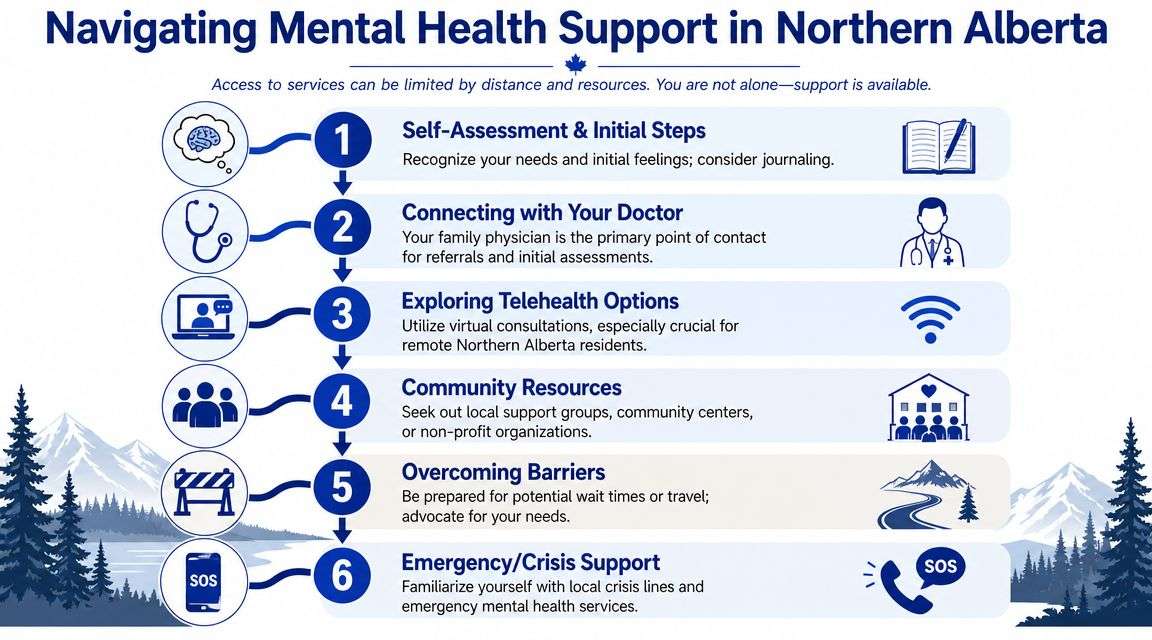
A common Peace Country pattern looks like this. January hits, the road conditions are poor, the days feel short, and a person keeps telling themselves they just need to push through until spring. Then sleep slips, patience gets thinner, work feels harder, and even basic tasks start taking more effort than usual. That is a good time to stop guessing and get assessed.
Research on seasonal patterns in Canada has found that major depressive episodes are more common in the winter months, particularly in December, January, and February. The same source also notes Alberta Health Services support, including the Peace River mental health centre at 10015 98 Street, Peace River, Alberta, telephone 780-624-6151 (Canadian seasonal depression data and local AHS service information).
Why people delay getting help
In northern Alberta, delays are often practical before they are psychological. A person may live outside town, work shifts, share one vehicle, or have children at home. Winter adds icy highways, limited daylight for travel, and the sheer effort of leaving the house when energy is already low.
Then the self-doubt starts. People wonder whether it is serious enough, whether they are overreacting, or whether they should be able to handle it on their own. In a small community, some also worry about privacy or about inconveniencing others.
I see that often. The barrier is rarely laziness. It is usually a mix of exhaustion, logistics, and the northern habit of enduring more than is good for you.
What support can look like in practice
Support does not have to mean a long drive on a bad road. Phone and virtual counselling can make care more workable during the winter, especially for people outside major centres or anyone whose schedule changes week to week. Family doctors, Alberta Health Services, and private counselling options can all be reasonable starting points. For example, counselling support for depression and anxiety may be accessed by video or phone as one option among others.
When you are choosing a therapist or service, look for:
- Experience with depression and seasonal patterns
- Ability to assess whether this fits SAD, major depression, burnout, grief, or a sleep-related concern
- Flexible session formats, including phone or video
- A practical, collaborative style that fits real life in the North
A simple rule helps here. If symptoms have lasted more than two weeks, if your functioning is dropping, or if you are having trouble coping safely, reach out sooner rather than waiting for certainty.
If you or someone you love is in crisis, the Canadian Mental Health Association notes that 9-8-8 is available for crisis support across Canada. In an emergency, call emergency services or go to the nearest emergency department.
Frequently Asked Questions About Winter Depression
People usually know when winter is affecting them. What they often don't know is when to trust themselves, when to wait, and when to get more help.
Is winter depression just part of living here
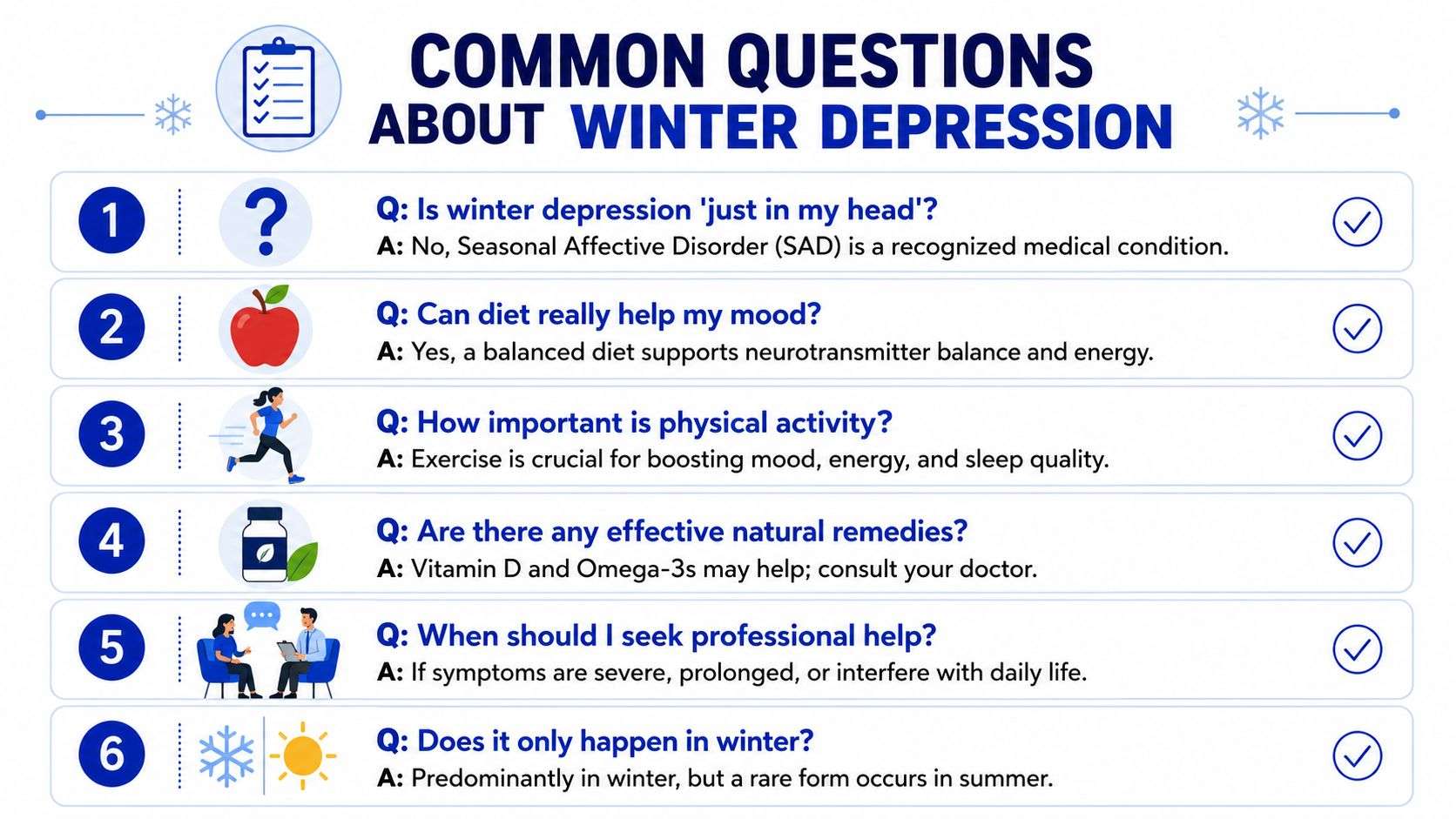
Not exactly. Many people in northern Alberta notice a seasonal dip, but that doesn't mean significant suffering is something you have to accept. If winter changes are affecting your work, sleep, parenting, relationships, or sense of self, it deserves attention.
What if I tried the usual advice and still feel awful
That's important information. If light exposure, structure, movement, and connection haven't helped enough, the next step is assessment, not more self-criticism. Sometimes the issue is SAD. Sometimes it's major depression, burnout, grief, or a sleep and circadian problem made worse by winter patterns.
How do I support a loved one without pushing too hard
Stay concrete and kind. Offer specific help like a ride, a grocery run, a check-in call, or sitting together while they book an appointment. Avoid debates about whether they “should” feel this way. Calm presence is often more effective than pep talks.
Can virtual counselling really be enough
For many people in Alberta's North Zone, access is limited by distance and weather, which is why low-barrier options like virtual counselling can be an important part of staying connected to care during winter (access barriers in northern communities and the value of virtual options). It may not solve every barrier, but it often makes consistent support much more possible.
When should I seek help right away
Seek prompt help if symptoms are severe, if you're struggling to function, if you feel unsafe, or if you've stopped being able to manage basic daily tasks. If there's any concern about immediate safety, use crisis or emergency supports right away.
If this season has been wearing you down, you don't have to figure it out alone. Interactive Counselling offers information about therapy support for people dealing with depression, anxiety, grief, trauma, and life transitions, with options that can fit winter realities more easily than travel sometimes allows.
Clinically Reviewed By
Amy Mosset, MCP, RCC-S
Amy Mosset is a Master Practitioner in Clinical Counselling, Clinical Supervisor, and the owner of Interactive Counselling. She provides trauma-informed, evidence-based care and clinical supervision to registered therapists, with a focus on ethical practice, client safety, and high-quality therapeutic outcomes.