To access ICBC counselling in the South Okanagan under Part 7 benefits, start by reporting your crash to ICBC and getting a claim number. With that claim number, you can generally access up to 12 pre-approved counselling sessions within the first 12 weeks after the accident without a doctor's referral, and if your counsellor doesn't direct bill ICBC, reimbursement claims need to be submitted within 60 days. For more information, see our Penticton ICBC counselling.
A lot of people reach for help only after the shock has started to settle. The vehicle is gone from the scene, the calls have been made, and friends or family assume the worst is over. But this is often when the harder part begins. Sleep changes. Driving feels different. Your body tenses at intersections. You replay the crash when you least expect it. If that's where you are, you're not overreacting. You're responding to something distressing, and support is available. For more information, see our counselling in Penticton.
"ICBC counselling in the South Okanagan means using your ICBC claim number to access early, often direct-billed counselling support for accident-related mental health concerns under BC's Part 7 benefits." For more information, see our ICBC counselling.
The Quiet Aftermath of a Car Accident
In the South Okanagan, I often hear some version of the same story. Someone was on a familiar road in Penticton, Summerland, Oliver, or Osoyoos. They were running errands, commuting, heading to school pickup, or driving home from work. Then everything changed in a few seconds.
At first, many people focus on the obvious tasks. Exchange information. Figure out the vehicle. See a doctor or physiotherapist. Talk to ICBC. What often gets pushed aside is the emotional aftershock. That can look like panic at red lights, dread before getting into the passenger seat, irritability at home, trouble concentrating at work, or feeling strangely numb.
Those reactions are common after an accident. They can show up whether the crash was severe or “not that bad.” The nervous system doesn't measure impact the same way paperwork does.
Recovery after a crash is often both physical and psychological. When one side gets ignored, healing usually feels slower and more confusing.
If you're dealing with pain, stiffness, or mobility issues too, it can help to understand how physical and emotional healing often overlap. A practical overview of car accident injury recovery can make that connection easier to see.
What people often miss in the first few days
The most common mistake isn't weakness. It's delay.
People tell themselves they should wait and see. They assume counselling is only for extreme cases. They worry they'll seem dramatic, or they think they need to “earn” support by getting worse first. That usually doesn't help. Early care tends to make the process smoother because it addresses symptoms before avoidance, fear, and stress become more entrenched.
What support is for
Counselling after a motor vehicle accident isn't about proving that something is wrong with you. It's about giving your mind and body a place to process what happened.
That may include help with:
- Driving anxiety that appears on bridges, highways, or busy intersections
- Sleep disruption such as nightmares, light sleeping, or trouble falling asleep
- Intrusive memories that come back suddenly during the day
- Mood changes including anger, sadness, or emotional shutdown
- Adjustment stress when injury affects work, parenting, routines, or independence
For many people, ICBC Part 7 benefits become the doorway into that support. Not the legal side of things. The care side.
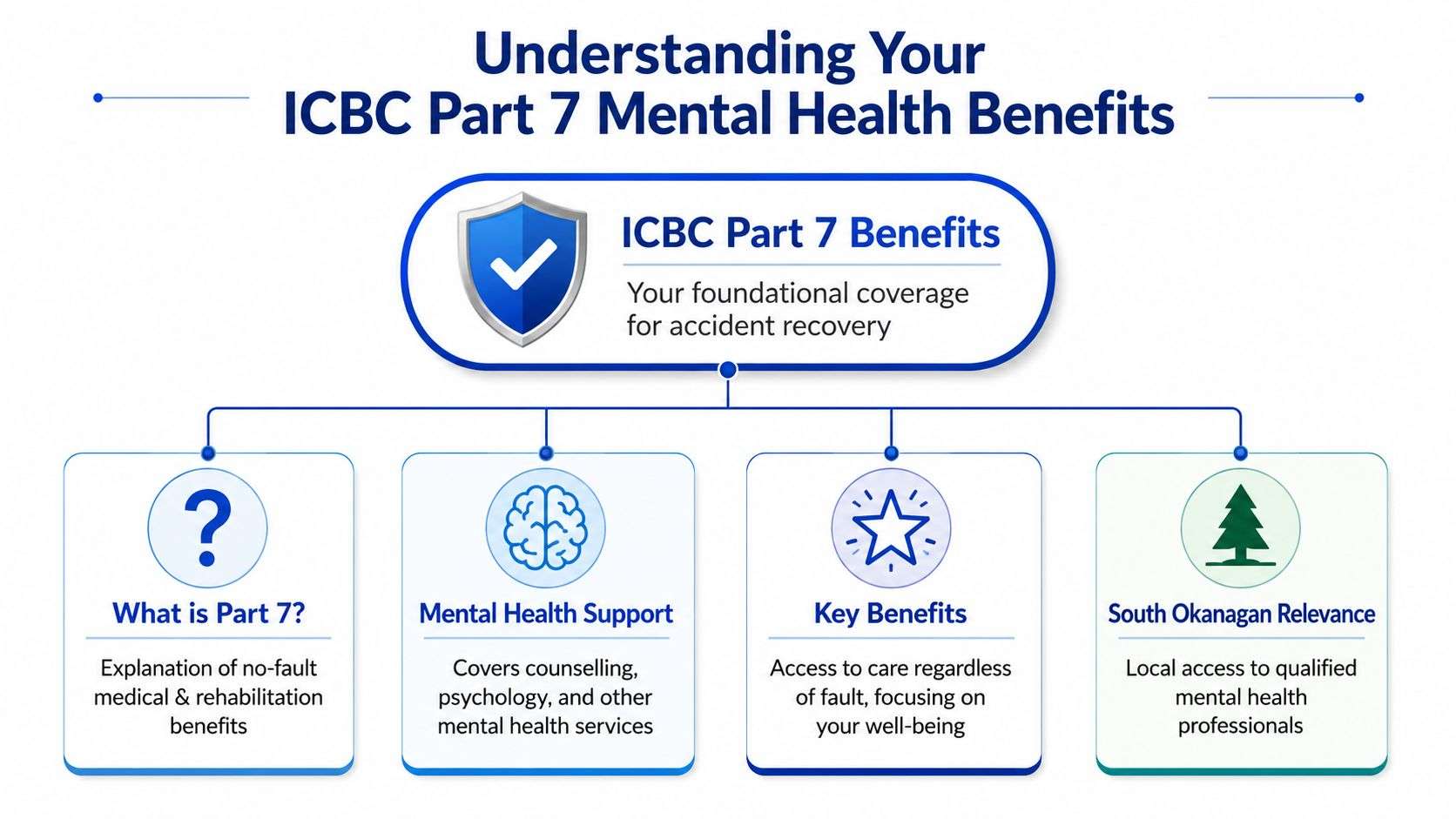
Understanding Your Part 7 Benefits for Mental Health
A lot of people hear "Part 7" and assume it means paperwork, delay, and one more system to figure out while they are already running on very little energy. In practice, it is the part of BC's no-fault accident benefits system that can cover care after a crash, including mental health treatment, whether or not you caused the accident.
That matters because emotional symptoms after a collision are part of recovery. They are not separate from it.
What Part 7 means in practice
Part 7 is the coverage framework that lets injured people in BC receive certain recovery supports after a motor vehicle accident. The language can feel bureaucratic, but the day-to-day meaning is simpler. If the crash affected your functioning, treatment may be available through your ICBC claim.
According to ICBC's enhanced accident benefits guide, medical care, rehabilitation support, and some related expenses may be covered under the enhanced benefits system. The same guide explains that income replacement rules are changing starting April 1, 2026. For counselling clients in Penticton, Summerland, Oliver, and Osoyoos, the practical point is straightforward. This is an established provincial recovery system with defined categories of support.
Why mental health support belongs here
After an accident, people often minimize what they are going through because they can still get to work, keep the family schedule going, or push through the day. I see that often. Someone says, "I was not badly injured, so I do not know if counselling counts," while also describing panic at intersections, poor sleep, irritability, or a constant sense that something bad is about to happen.
Those symptoms count.
Counselling can be appropriate if the accident left you more anxious, shut down, tearful, on edge, avoidant, or unable to settle back into normal routines. It can also help when physical pain and emotional stress start feeding each other, which is common after a crash.
Practical rule: If the accident changed how you feel, sleep, drive, cope, or function, it makes sense to ask for counselling support through your claim.
What this means for South Okanagan residents
In smaller communities, the barrier is often confusion rather than lack of care. People are not always sure whether local providers can bill ICBC, whether mental health symptoms are covered, or whether they need to wait until things get worse.
You do not need to wait for a crisis to take this seriously.
The same provincial benefit structure applies across BC, including the South Okanagan. The local reality is that access can depend on timing, provider availability, and how quickly the claim is set up properly. Early action usually reduces frustration later.
| Step | What it means |
|---|---|
| Open your ICBC claim | Your claim number connects treatment to your accident file. |
| Identify accident-related concerns | Keep a simple record of changes in sleep, mood, driving, anxiety, or daily functioning. |
| Choose a counsellor familiar with ICBC | A provider who understands the process can often explain billing, approvals, and common delays in plain language. |
For many people, the hardest part is not deciding whether they need support. It is figuring out how to begin while they are already stressed. Part 7 can make that first layer of care more accessible, which gives you a clearer place to start.
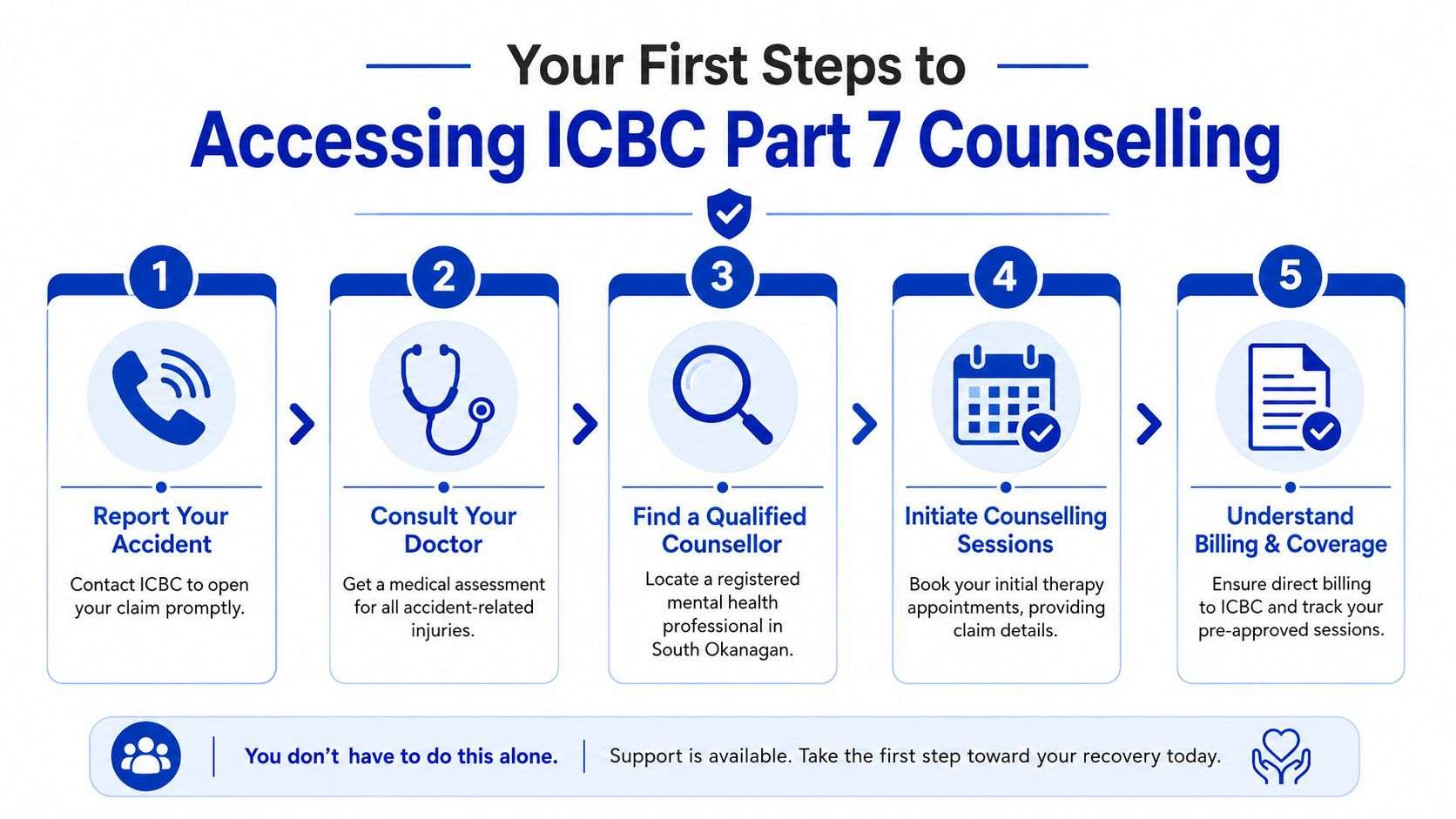
Your First Steps to Accessing Counselling
The first part of this process matters most because it's where people either gain momentum or get tangled in delay. If you're feeling foggy, overwhelmed, or exhausted, that's normal. Keep the first steps small and concrete.
Start with the claim number
Before anything else, report the accident to ICBC and make sure you have your claim number. Without it, a counsellor usually can't connect your sessions to the accident file.
Think of the claim number as the access point. It doesn't mean you have to have every symptom figured out right away. It just gets the file open so treatment can start moving.
Use the early window
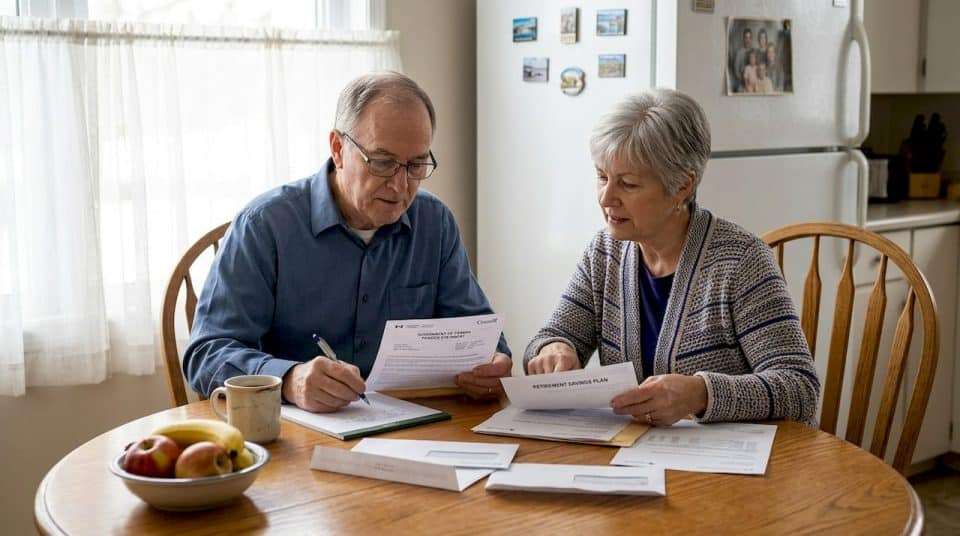
A practical legal summary of the workflow explains that in British Columbia, within the first 12 weeks after a motor vehicle crash, counselling is generally pre-approved and direct-billable, with no referral required. For clinical counselling, the commonly cited cap is 12 sessions in that initial 12-week window, and reimbursement claims must be submitted within 60 days if the provider doesn't bill ICBC directly. The same source notes that if you wait past that automatic coverage window or go beyond the session cap, you typically need a physician referral and claims-adjuster approval for additional funded sessions. That summary is outlined in this ICBC Part 7 benefits overview.
That's the part many people wish someone had told them earlier.
Book early. The simplest path is usually the one that stays inside the automatic coverage window.
A workable step-by-step plan
If your mind is scattered right now, use this checklist.
Report the crash to ICBC
Ask for your claim number and keep it somewhere easy to find.Write down the accident date
This sounds basic, but it matters. Timing affects authorization.Look for a counsellor who knows ICBC claims
Ask directly whether they work with motor vehicle accident files.Confirm direct billing
If they direct bill ICBC, the administrative side is often much easier for you.Book your first appointment promptly
Don't wait until symptoms become unmanageable.
What works and what tends not to
Some choices make this smoother. Others create avoidable stress.
What works
- Acting early: Early booking usually means fewer approval issues.
- Asking billing questions upfront: Find out who submits what before the first session.
- Keeping basic records: Save your claim number, accident date, and provider details in one place.
What doesn't
- Waiting for symptoms to become severe: Distress doesn't need to reach a crisis point before care is appropriate.
- Assuming every provider bills the same way: Some direct bill. Some don't.
- Forgetting timelines: Once the early window passes, the process often becomes more layered.
If you feel too overwhelmed to do this alone
That's common after an accident. Ask a partner, family member, or trusted friend to help with practical steps such as locating your claim number, calling a clinic, or writing down questions before you book. You still remain in control of your care. You're just getting support with the admin load while your system settles.
What to Expect from Your Counselling Sessions
People often worry about the first appointment more than the paperwork. They wonder what they're supposed to say, whether they'll have to retell everything in detail, or whether the counsellor will expect them to be “more traumatized” than they feel.
Most accident-focused counselling starts more gently than people expect.

The first session usually focuses on safety and clarity
You probably won't be pushed to relive the crash in graphic detail. A careful counsellor usually begins by understanding what has changed since the accident.
That might include questions like:
- How has your sleep been?
- What happens in your body when you get into a vehicle?
- Are there places, roads, or situations you now avoid?
- How are you coping at work or at home?
- What feels hardest right now?
Those questions help map the impact of the accident. They also help you and your counsellor identify what support should focus on first.
Common themes after a motor vehicle accident
Some people arrive saying, “I'm not sure if this counts.” Then they describe being unable to drive through the intersection where the crash happened, crying unexpectedly, snapping at their family, or feeling on alert all the time. It counts.
Counselling often helps with experiences such as:
| Common experience | How counselling can help |
|---|---|
| Driving fear | Build gradual strategies to return to driving or riding with more confidence |
| Flashbacks or intrusive memories | Reduce overwhelm and create grounding skills for the present moment |
| Sleep problems | Support calming routines and lower nervous system activation |
| Irritability or shutdown | Make sense of post-accident stress responses without shame |
| Loss of normal routine | Rebuild structure, confidence, and daily functioning |
You don't need the “right words” to start therapy after an accident. You only need a place to begin.
What therapy may look like over time
Accident-related counselling often includes a mix of practical coping and deeper processing. Early sessions may focus on stabilising symptoms. That can mean grounding skills, breath work, ways to manage panic in the car, or strategies for handling triggers in everyday settings.
Later, the work may shift toward meaning and adjustment. People grieve more than the crash itself. They may grieve their sense of ease, independence, trust, or routine. Therapy gives those losses language and helps you rebuild a sense of safety.
In-person, virtual, or phone support
In South Okanagan communities, some people strongly prefer in-person counselling because they want a contained, face-to-face space. Others are dealing with pain, transportation issues, childcare demands, or driving anxiety, so secure virtual or phone sessions are a better fit.
Neither format is automatically better. What matters is whether you can attend consistently and feel present enough to engage. If leaving the house is exhausting right now, remote sessions can make support more reachable. If home doesn't feel private or settling, in-person may be the better option.
Navigating Coverage, Billing, and Extended Support
Once counselling has started, clients often want to know three things. How billing works. What happens when the initial sessions are used. And whether they're going to get stuck doing endless paperwork.
The answer is usually more manageable than people fear, especially when the provider understands ICBC files.
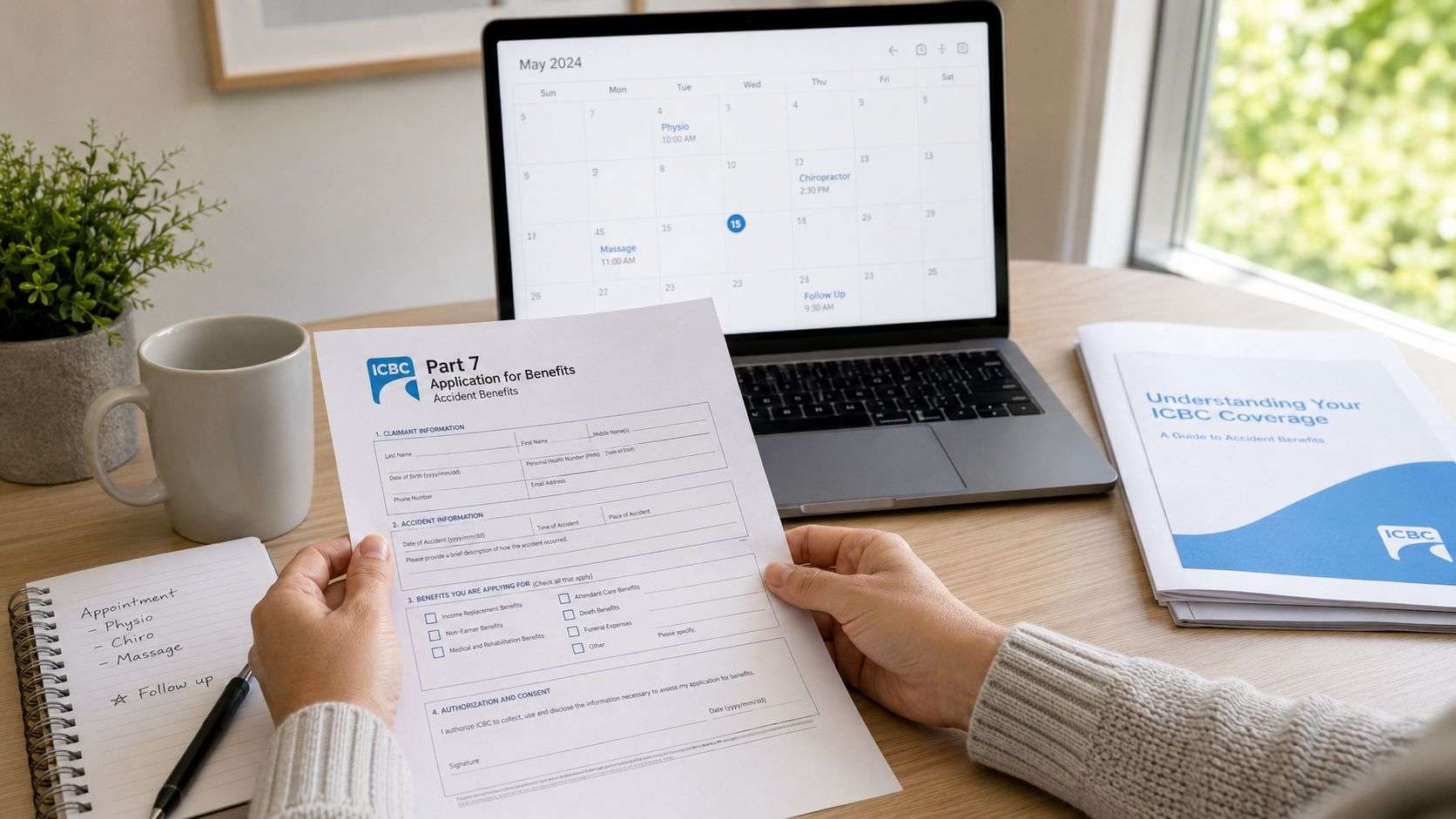
Direct billing versus reimbursement
If a counsellor direct bills ICBC, the clinic typically submits the session charges to ICBC on your behalf. That tends to reduce stress because you aren't paying first and then trying to sort out reimbursement later.
If the provider doesn't direct bill, ask exactly what documentation you'll receive and what you need to submit. Without such clarification, small administrative misunderstandings can become frustrating. A simple conversation at the start often prevents that.
If you like to understand billing processes in a broader way, especially the difference between clinical service codes and paperwork requirements in mental health settings, this Guide for mental health billing compliance gives a general overview. It isn't an ICBC guide, but some clients find it helpful for understanding why accurate documentation matters.
When more support is needed
The initial counselling sessions are a starting point, not a judgment about how long recovery “should” take. Some people improve steadily in that period. Others need continued support because symptoms are still affecting daily life.
When more sessions are needed, the process usually becomes more formal. In practice, that can involve:
- A physician referral to support continued treatment
- Communication with the ICBC recovery specialist or adjuster
- Clinical rationale from the treating counsellor about ongoing symptoms and goals
This doesn't mean something has gone wrong. It means the file has moved past the automatic early stage.
Why the system feels the way it does
Part of the confusion comes from the fact that Part 7 has changed over time. A historical legal summary explains that older versions of the BC scheme described Part 7 as covering medical and rehabilitation expenses, wage loss, homemaker benefits, funeral expenses, and death benefits, with a common wage-loss cap of $300 per week and calculations at 75% of average weekly earnings. More recent ICBC guidance shows a modernized framework with a 90% net-income test and a $740 weekly cap, while injury-related medical, personal, and travel expenses are separately covered. That history is outlined in this lay guide to ICBC Part 7 benefits.
For counselling clients, the useful takeaway is qualitative. The system has moved toward broader rehabilitation support over time. Mental health care sits within that larger recovery model.
If the administrative side starts to feel heavy, bring the question into session. A therapist familiar with ICBC work can often tell you which concern is clinical, which is procedural, and what needs attention first.
Compassionate Answers to Your ICBC Counselling Questions
A few concerns come up again and again after an accident. Most of them have less to do with therapy itself and more to do with uncertainty. Clear answers can take some of the pressure off.
| Question | Answer |
|---|---|
| Do I need a doctor's referral to start counselling? | In the early post-accident period, counselling is generally pre-approved within the initial window described earlier, and no referral is typically required for that stage. If treatment continues beyond that stage, additional approval steps may be needed. |
| Will I have to pay out of pocket first? | Sometimes no, sometimes possibly. If your counsellor direct bills ICBC, you may not have to pay upfront for covered sessions. If they don't direct bill, ask what you would need to submit for reimbursement and keep an eye on deadlines. |
| What if I didn't feel upset right away, but now I'm struggling? | That's common. Many post-accident reactions appear after the practical crisis passes. Delayed anxiety, sleep disruption, fear of driving, and emotional shutdown can all happen later. It's still worth seeking support. |
| Do I have to talk about the crash in detail in the first session? | No. Good trauma-informed counselling moves at a pace that feels safe enough to be useful. Early sessions often focus on symptoms, functioning, and stabilisation rather than forcing a detailed retelling. |
| What if I need more than the first set of sessions? | That doesn't mean you've failed or that therapy isn't working. It usually means your recovery still needs support. Your counsellor can help document ongoing concerns and coordinate the next approval steps with your broader care team. |
A few final practical reminders
- Keep your claim number handy: It's the detail you'll be asked for most often.
- Ask about direct billing before session one: Don't assume every clinic handles ICBC files the same way.
- Don't wait for certainty: You can start counselling even if you're still trying to understand what the accident has changed for you.
If you've been searching for guidance on ICBC Counselling in the South Okanagan: Navigating Part 7 Benefits, the heart of it is this. The process is easier when you act early, ask simple questions, and let someone help you carry the administrative side while you recover.
If you'd like to learn more about ICBC-funded counselling and broader therapy support, Interactive Counselling offers information about available services, including in-person, phone, and secure virtual options for clients recovering from motor vehicle accidents.
Clinically Reviewed By
Amy Mosset, MCP, RCC-S
Amy Mosset is a Master Practitioner in Clinical Counselling, Clinical Supervisor, and the owner of Interactive Counselling. She provides trauma-informed, evidence-based care and clinical supervision to registered therapists, with a focus on ethical practice, client safety, and high-quality therapeutic outcomes.