You may be reading this because part of you already knows the relationship is hurting you, but another part still feels pulled back. Maybe you replay the kind moments, question your own memory after an argument, or feel ashamed that leaving hasn’t been simple. If that’s where you are, it doesn’t mean you’re weak, confused, or “choosing drama.” It often means you’re caught in a pattern that has a name. For more information, see our trauma counselling.
Trauma bonding is a powerful emotional attachment that can form when harm, fear, hope, and affection get repeatedly mixed together, making it feel painfully hard to leave even when the relationship is toxic.
What Trauma Bonding Is and How It Forms

You get through a painful argument and feel ready to pull away. Then your phone lights up with a tender apology, a promise, or a version of them that feels soft and familiar. Your body loosens. Your hope comes back. That swing between distress and relief is one of the clearest ways a trauma bond begins to take hold.
A trauma bond forms when harm and comfort keep arriving from the same person. The result is a confusing attachment that can feel intense, loyal, and hard to break, even when the relationship is causing real damage.
A helpful comparison is a fire alarm that keeps going off at random, then suddenly stops. The silence feels so relieving that you start waiting for it, chasing it, and organizing yourself around it. In a toxic relationship, the nervous system can start reacting in a similar way. It becomes highly focused on the next moment of calm.
The cycle that creates the bond
Many people get stuck here intellectually. They ask, “Wouldn’t being hurt make me detach?” Sometimes it does. In trauma bonding, repeated fear followed by relief can pull attachment in the opposite direction.
The pattern often looks like this:
- Tension builds. You monitor their tone, facial expression, or messages and start adjusting yourself to keep the peace.
- Harm happens. This may include yelling, intimidation, blame, humiliation, control, threats, sexual coercion, financial restriction, or physical violence.
- Relief appears. They apologise, become affectionate, offer explanations, give gifts, or act like the person you have been hoping to see.
- Hope reactivates. You start to believe the worst part may be over.
Over time, the bond is shaped less by steady care and more by the powerful relief that follows fear. That is one reason leaving can feel emotionally backward. The person causing the pain has also become the person your system associates with soothing.
Why neurodivergent people can be especially vulnerable
This part is often left out, and it deserves careful attention.
For some people with ADHD, unpredictability can hit especially hard. High-intensity relationships may feel gripping, and the return of affection can bring a rush that is difficult to step back from. Rejection sensitivity can also make distance, criticism, or withdrawal feel overwhelming, which may strengthen the urge to repair the connection quickly.
For some autistic people, trauma bonding can be intensified in different ways. A strong need for clarity, consistency, and honesty can make manipulative behaviour disorienting. If someone alternates between warmth and cruelty, you may keep searching for the “real” version of the relationship, trying to solve the contradiction rather than naming it as abuse. Sensory overload, burnout, or a long history of being misunderstood can also reduce the energy available for spotting patterns early and responding to them.
None of this means neurodivergent people are destined for abusive relationships. It means some common features of ADHD and autism can be used against a person in ways many standard trauma-bonding guides do not fully address.
If you want more context on how attachment patterns can shape adult relationships, Interactive Counselling's relationship guidance offers a gentle overview.
It is different from love and different from ordinary conflict
Healthy love can survive disagreement because both people stay connected to reality. Repair does not depend on fear. There is room for accountability, boundaries, and emotional safety.
Trauma bonding is different because the relationship itself becomes organized around instability. Affection is not steady enough to build trust, but it appears often enough to keep hope alive. A person may miss their partner intensely and still be unsafe with them. Both can be true at once.
That is why survivors often say they feel attached to a version of the person that only appears in flashes. They are not attached by love alone. They are often attached by a painful cycle of injury, relief, and renewed hope.
What often gets missed
Trauma bonding is closely tied to survival. If connection lowers the immediate risk of conflict, the mind and body may start treating closeness as protection, even when the relationship is harmful overall. That can show up as people-pleasing, minimising, self-blame, freezing, or holding tightly to the rare good moments.
Research has studied this pattern for decades, including early work by Dutton and Painter on how intermittent abuse and power imbalance can intensify attachment after separation. The point is not that survivors are irrational. The point is that this pattern is real, documented, and understandable.
In Canada, this can become even more complicated when children, housing pressures, immigration concerns, disability, or co-parenting obligations are involved. A person may understand that the relationship is unhealthy and still remain emotionally tied because contact never fully stops, especially when parenting schedules, court processes, or safety planning keep the other person in view.
If this describes your experience, nothing about it means you wanted the harm or failed to see what was happening. It means your system adapted to unpredictability the way human systems often do.
The Invisible Chains of a Toxic Relationship
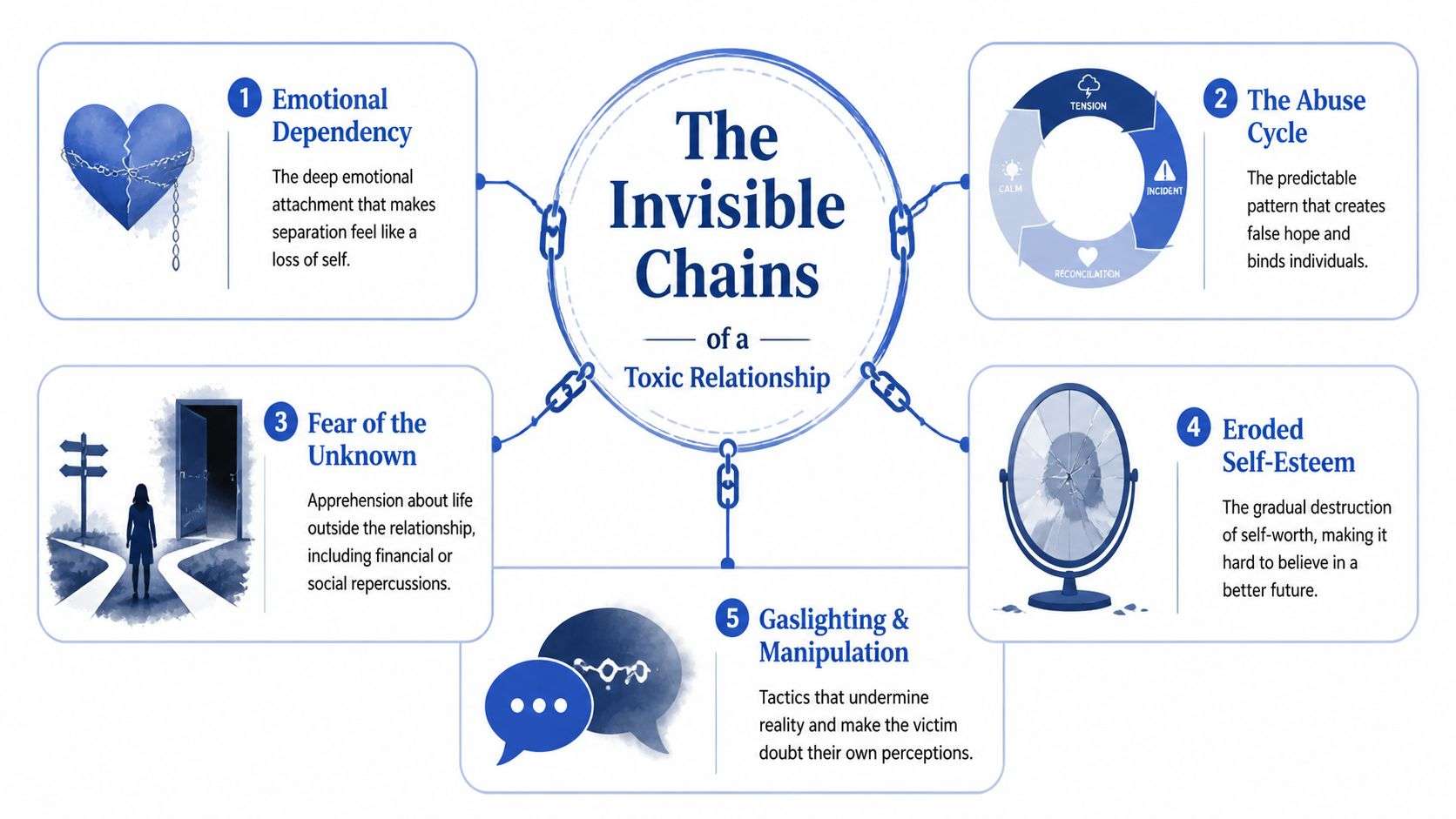
It can look confusing from the outside. A person has been hurt again, promises have been broken again, and yet they still answer the text, still hope this time will be different, or still feel panic at the thought of leaving for good. Inside the relationship, those reactions often make painful sense.
Trauma bonds work like invisible chains because they are made of feelings, body responses, learned habits, and real-life pressures all at once. You may care intensely about the person and also feel afraid of them. You may see the harm clearly in one moment, then doubt yourself in the next. That back-and-forth is part of what keeps people stuck.
How the bond grips the nervous system
A toxic relationship often trains the body to stay on alert. After enough tension, criticism, unpredictability, or intimidation, your system may start scanning constantly for danger and relief. Then a brief calm moment, apology, affectionate message, or kind gesture can feel far bigger than it would in a stable relationship.
A slot machine is a useful comparison here. The unpredictable reward keeps people pulling the lever because the next win always feels possible. In trauma bonding, the "win" might be tenderness, accountability, or a few peaceful days. The rarity of that relief can make it feel precious, even when the overall pattern is harming you.
This can be even more intense for neurodivergent people. Someone with ADHD may feel the pull of inconsistency more sharply because novelty, urgency, and emotional swings can grab attention fast. An autistic person may stay invested in the relationship because predictability matters greatly, and even a harmful routine can feel hard to disrupt once the pattern is established. If you are neurodivergent, none of this means you are naive. It means your brain may process attachment, stress, conflict, and change in ways that deserve care and understanding.
How the mind tries to protect you
The mind also works hard to reduce inner conflict. If someone you love keeps hurting you, your thoughts may start bending toward explanations that make the relationship feel survivable.
You might tell yourself:
- They are struggling and do not mean it.
- I should have handled that better.
- Things are improving, I just need to be patient.
- Leaving would hurt the children, so I need to hold everything together.
- If I explain myself one more time, they will finally understand.
These thoughts are not signs of weakness. They often reflect a mind trying to preserve attachment, reduce fear, and get through the next day.
For some survivors, especially those who have spent years being corrected, misunderstood, or disbelieved because of ADHD, autism, or other differences, self-doubt can become even more entrenched. If you have often been told you are "too sensitive," "too intense," or "reading things wrong," it becomes easier for a harmful partner to distort your reality.
Why isolation makes the chains tighter
Toxic relationships often narrow a person's world slowly. Calls go unanswered. Plans get cancelled. Sharing the truth starts to feel exhausting. Over time, fewer people are close enough to say, "What you are describing is not okay."
That loss of outside perspective matters. Human beings make sense of reality in relationship with other people. When a partner becomes the main source of comfort, conflict, and interpretation, their version of events can start to feel more convincing than your own.
Some survivors describe this as losing their internal compass. They know something feels wrong, but they no longer trust themselves to name it. If that sounds familiar, it may help to find support for trauma with Interactive Counselling if your reactions feel immediate, overwhelming, or difficult to explain.
Practical ties can feel like emotional ties
The "chains" are not only psychological. They are often practical.
Shared housing, money, pets, immigration concerns, disability, and parenting responsibilities can all make distance harder to create. In Canada, co-parenting can add another layer of strain because contact may continue through parenting exchanges, school communication, court expectations, or family apps even after separation. That ongoing contact can reactivate fear, hope, guilt, or confusion each time the other person reappears.
For neurodivergent survivors, these demands can be even heavier. Executive functioning strain can make safety planning, legal paperwork, scheduling, and boundary-setting feel overwhelming. Sensory overload, burnout, and difficulty shifting routines can make leaving feel less like one decision and more like trying to rebuild your whole operating system while under stress.
Older wounds can make the pattern feel familiar
Some trauma bonds connect with earlier attachment injuries. If love once felt inconsistent, conditional, or mixed with fear, a harmful adult relationship may feel strangely recognizable. Familiarity can be mistaken for safety because the nervous system often prefers known pain over unknown change.
That is why leaving can feel like grief, withdrawal, confusion, and longing at the same time. You are not only stepping away from a person. You may also be stepping away from a survival pattern your mind and body learned for a long time.
Common Signs and Misconceptions About Trauma Bonds
Trauma bonding can be hard to spot from the inside because it often hides behind loyalty, hope, empathy, and self-doubt. Many people don’t recognise it until they notice how much of their energy goes into explaining away what hurts.
Some common signs include:
- You defend their behaviour. You find yourself making excuses for things that would alarm you if they happened to someone you love.
- You feel responsible for fixing the relationship. Even when the harm is repeated, you believe the next right conversation, sacrifice, or act of patience might finally change things.
- You minimise what happened. You tell yourself it wasn’t “that bad,” especially after a calm or affectionate period.
- You feel intense relief when they’re kind again. Their warmth feels like rescue, not just affection.
- You struggle to trust your own reality. After arguments, you replay events and wonder whether you caused the problem.
- You feel pulled back after leaving. Distance brings grief, panic, guilt, or a strong urge to reconnect.
- You feel cut off from yourself. Your needs, values, routines, and sense of identity may have become smaller over time.
- You fear life without them more than life with them. Even if the relationship is painful, leaving may feel like stepping into a void.
If you’re trying to sort out whether your relationship patterns are unhealthy, this Interactive Counselling relationship guide can help you compare what you’re experiencing with healthier dynamics.
Myths vs realities of trauma bonding
| Common Myth | Compassionate Reality |
|---|---|
| “If I stay, it must mean I want this.” | Staying often reflects fear, conditioning, dependency, hope, or safety concerns. It doesn’t mean you wanted harm. |
| “If the good times are real, the abuse isn’t.” | Kind moments can be real and the abuse can still be real. Both can exist together, which is part of what makes trauma bonding so confusing. |
| “I should have left the first time.” | Many people need time, support, and safety planning before they can leave. There isn’t a moral deadline for survival. |
| “I’m just too attached.” | The attachment may have been shaped by repeated cycles of fear and relief, not simply by love. |
| “If I explain myself better, they’ll finally understand.” | In a toxic dynamic, the problem often isn’t lack of explanation. It’s the ongoing pattern of control, harm, or manipulation. |
| “Missing them means I made the wrong choice.” | Missing someone after a trauma bond is common. Longing doesn’t automatically mean the relationship was safe. |
Signs that often confuse people
Some experiences feel especially hard to interpret because they can look like care from the outside.
For example, an apology may seem meaningful, but if it keeps happening without lasting change, it can become part of the cycle. Intense closeness after conflict can feel romantic, but it may be relief after fear. Protectiveness can look like love, yet control often disguises itself that way.
Gentle reminder: trauma bonding doesn’t mean every mixed feeling is fake. It means your real feelings may be tangled up with fear, conditioning, and repeated manipulation.
Creating a Safe Plan to Reclaim Your Life
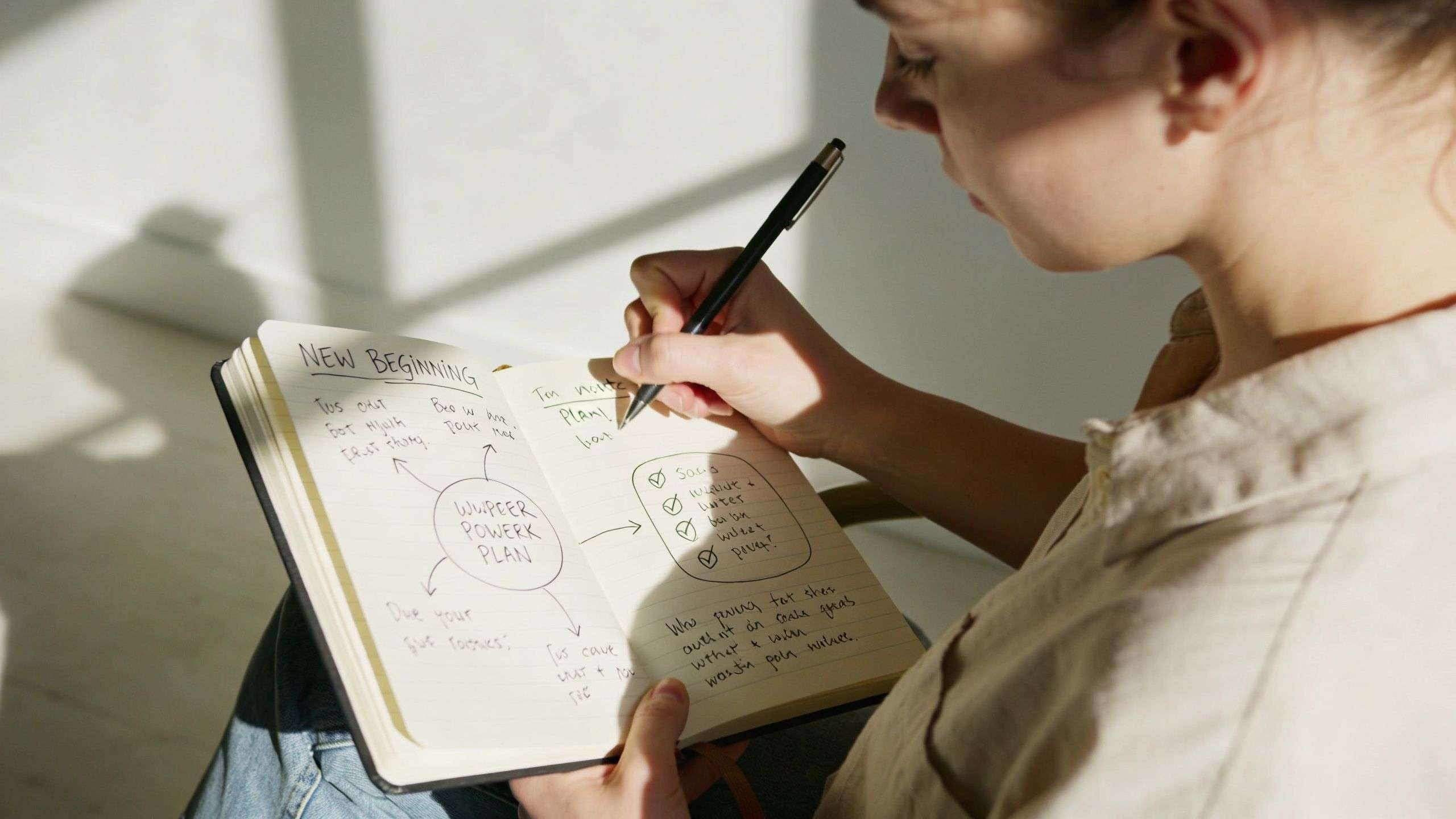
Leaving a trauma-bonded relationship is often a process, not a single moment. People sometimes imagine one dramatic exit. In reality, safety usually grows through preparation, support, and small practical steps.
The most important principle is this. Your safety matters more than proving anything to the other person.
Start with a private safety mindset
You do not need to announce your plans early. In many situations, privacy is protective.
A safe plan may include:
- Saving important documents in a secure place, such as identification, banking details, health cards, passports, custody papers, or medications.
- Keeping key contacts accessible on paper as well as on your phone.
- Setting aside essentials like clothing, chargers, children’s items, or transportation needs.
- Documenting incidents carefully if it is safe to do so and if that information may be helpful later.
- Thinking through exits such as where you could stay, who could help, and what time of day is safest for movement.
Some people feel guilty for planning privately. You don’t need to. Planning is not betrayal. It’s self-protection.
Build support before the breaking point
Trauma bonds often weaken when reality is witnessed by safe people. If possible, reconnect with one or two trusted people who can stay calm and grounded. You don’t need a perfect speech. A simple message like “Things are not okay, and I may need support” is enough.
You might also want practical guidance if separation involves shared housing, finances, or children.
Use a paced approach
A trauma bond can create a strong urge to go back for comfort when the fear, loneliness, or guilt spikes. That’s why many people do better with a plan that includes structure.
Some useful anchors are:
- Reduce reactive contact. If direct communication isn’t necessary, create space where you can.
- Write down the pattern. Keep a private record of what happened, how you felt, and what changed after each apology or calm phase.
- Choose one support person for check-ins. This helps when your resolve shifts.
- Prepare for mixed emotions. Relief and grief often show up together.
- Make decisions in calm moments. When possible, don’t decide your future in the middle of an apology, panic, or confrontation.
Leaving is not only a logistical task. It is often a nervous system transition. Give yourself permission to move carefully.
If children are involved
Safety planning becomes more layered when children are part of the picture. Keeping routines, school details, medications, and trusted caregivers organised can reduce chaos. Try to separate what your child needs from what the other parent demands emotionally.
If that feels overwhelming, that’s understandable. Many survivors aren’t only leaving a relationship. They’re also trying to protect a child while untangling fear, guilt, and practical dependence.
How Counselling Helps You Heal and Recover
Counselling can help because trauma bonding isn’t solved by insight alone. Many people already know the relationship is harmful. The harder part is calming the body, challenging distorted beliefs, and rebuilding the ability to trust your own mind.
Therapy offers a place where you don’t have to defend your reactions. You can bring the confusion exactly as it is.
What early counselling often focuses on
In the beginning, a therapist may help you slow the cycle down enough to see it clearly. That can include naming manipulation patterns, exploring triggers, and creating steadier internal ground before making major decisions.
Early work often centres on questions like:
- What happens in your body before you reach out again?
- What story do you tell yourself after they hurt you?
- What keeps the hope alive, even when the pattern repeats?
- What support helps you feel more anchored in reality?
For people who are new to therapy, learning about Interactive Counselling's approach to trauma can make the process feel less intimidating.
Helpful therapy approaches
Different approaches support different parts of recovery.
CBT can help you examine the thoughts that keep the bond in place, especially self-blame, minimising, and the belief that you are responsible for someone else’s behaviour.
EMDR is often used when past trauma and present triggers are tightly linked. Some people notice that the current relationship activates much older fear, shame, or helplessness. EMDR may help process those underlying memories so the present no longer feels fused with the past.
Attachment-based therapy can help if the relationship feels impossible to leave because it touches deep fears of abandonment, unworthiness, or not being lovable unless you over-function for others.
What healing can look like
Recovery usually isn’t about becoming cold or detached. It’s about becoming clearer.
That may include:
- recognising manipulation faster
- tolerating the discomfort of distance
- grieving the fantasy of who the person could have been
- rebuilding routines and relationships outside the bond
- learning what steadiness feels like in the body
Therapy doesn’t erase your feelings for the person overnight. It helps you understand those feelings, hold boundaries around them, and stop letting them decide your future.
Many people also need a place to process shame. Shame says, “I should have known better.” Healing says, “I adapted to something harmful, and now I can learn a safer way.”
Navigating Co-Parenting and Neurodiversity
You leave the relationship, but the relationship does not fully leave your day. A school email comes in. There is a disagreement about pickup time. Your phone lights up with a message that looks practical on the surface, then suddenly pulls you back into doubt, guilt, or fear.
That is one reason co-parenting after abuse can feel so hard. Ongoing contact can keep the bond activated, even when you know the relationship was harmful. In Canada, this can become even more stressful because parenting decisions, documentation, safety concerns, and provincial family law processes often unfold at the same time. If family violence affects parenting arrangements, general legal overviews such as modifying child custody due to family violence can help you understand the issues involved, but you will still need advice that fits your province and your specific safety concerns.
A helpful way to frame this is to treat co-parenting communication like a business channel, not a relationship channel. The goal is not warmth, repair, or emotional clarity. The goal is clear information about the child.
That usually means:
- keeping messages brief, factual, and child-focused
- using written communication when possible
- saving records of schedule changes, agreements, and concerning behaviour
- refusing to argue about old conflicts inside parenting conversations
- getting legal guidance if parenting time and safety start to overlap
For neurodivergent parents, these challenges can feel even more intense. This part is often missed in mainstream articles about trauma bonds, yet it matters a great deal.
ADHD and autism can change how a person experiences conflict, attachment, overwhelm, and decision-making under stress. Executive function strain can make paperwork, scheduling, and follow-through feel much heavier. Rejection sensitivity can make distance feel excruciating, even when distance is protective. Some autistic people also describe getting stuck in loops of analysis, trying to find the perfectly fair explanation for behaviour that was controlling. Some people with ADHD notice that urgency and intermittent affection pull attention so strongly that it becomes harder to hold onto the full pattern over time.
The bond can work like a variable reward system. Your brain does not get a steady signal. It gets confusion, relief, tension, and hope in irregular bursts. For a neurodivergent nervous system that already works hard to sort stimuli, transitions, or emotional intensity, that inconsistency can be especially destabilising.
None of this means a neurodivergent person is weak or less capable. It means the support plan may need to fit the way their brain processes stress.
Helpful supports may include:
- visual parenting calendars and written step-by-step plans
- scripts for responding to provocative messages
- body-based regulation before answering texts or emails
- a trusted person who helps review communication for manipulation
- simpler systems for documents, deadlines, and custody notes
If you are parenting while trying to recover from a trauma bond, support should be practical, not just insightful. The right therapist can help you build routines, boundaries, and communication strategies that match your nervous system and your family reality. If you are looking for Therapy in Kelowna, it may help to find someone who understands trauma, abuse dynamics, and neurodiversity together.
If you are neurodivergent and leaving feels harder than other people say it should, that does not mean you are doing it wrong. It may mean you need clearer structure, gentler pacing, and support that matches how your mind and body respond to stress.
Your Questions Answered and a Path Forward
Some questions linger even after a person understands the basics of trauma bonding. These are often the questions that carry the most shame, so they deserve direct and gentle answers.
FAQ
Can a trauma bond feel like love
Yes. That’s part of what makes it so confusing. The feelings are often real, but they’re mixed with fear, dependency, relief, guilt, and conditioning. It’s possible to care very much about someone and still be caught in a harmful bond with them.
Why do I miss them even though they hurt me
Because your system may have learned to associate that person with both danger and comfort. Missing them doesn’t prove the relationship was safe. It may reflect attachment, habit, grief, and withdrawal from the cycle.
Is trauma bonding the same as codependency
Not exactly. They can overlap, but they’re not the same. Codependency usually refers to a pattern of over-focusing on another person’s needs, emotions, or functioning. Trauma bonding is more specific to a bond formed through repeated cycles of harm and intermittent reward.
Can we fix the trauma bond together
Sometimes people hope that enough honesty, insight, or couples work will repair the bond. In relationships involving abuse, coercion, intimidation, or manipulation, joint repair is often not the first concern. Safety, clarity, and accountability come first. A person cannot heal a trauma bond by trying harder to earn safe treatment.
How do I cope with guilt after leaving
Start by recognising that guilt is not always a sign you did something wrong. Guilt can appear when you break a long-standing survival pattern. It can also show up when you’ve been trained to prioritise someone else’s feelings above your own wellbeing. Grounding, support, journalling, and therapy can all help you tell the difference between guilt and grief.
If you’re looking for local support options, exploring Therapy in Kelowna may be one gentle next step.
Healing from trauma bonding usually begins with one quiet shift. You stop asking, “Why am I so attached?” and start asking, “What happened to me in this dynamic, and what do I need to feel safe again?” That question opens the door to self-compassion.
You do not have to leave perfectly. You do not have to explain your pain in a flawless way. You do not have to wait until you feel completely detached before choosing safety.
What matters is that you begin to trust that your confusion makes sense, your pain matters, and recovery is possible.
Clinically Reviewed By
Amy Mosset, MCP, RCC-S
Amy Mosset is a Master Practitioner in Clinical Counselling, Clinical Supervisor, and the owner of Interactive Counselling. She provides trauma-informed, evidence-based care and clinical supervision to registered therapists, with a focus on ethical practice, client safety, and high-quality therapeutic outcomes.
If this article brought up something tender, you’re not alone, and you don’t have to sort through it by yourself. Interactive Counselling offers trauma-informed support for individuals, couples, and families navigating relationship pain, trauma, separation, and recovery, with care that meets you where you are.