TL;DR: For more information, see our grief counselling.
- Empty nest transition brings profound feelings of grief, loss of purpose, and identity shifts.
- Loneliness peaks due to loss of routine, social connections, and a sense of purpose.
- Effective coping involves acknowledging emotions, reconnecting, exploring interests, and seeking support.
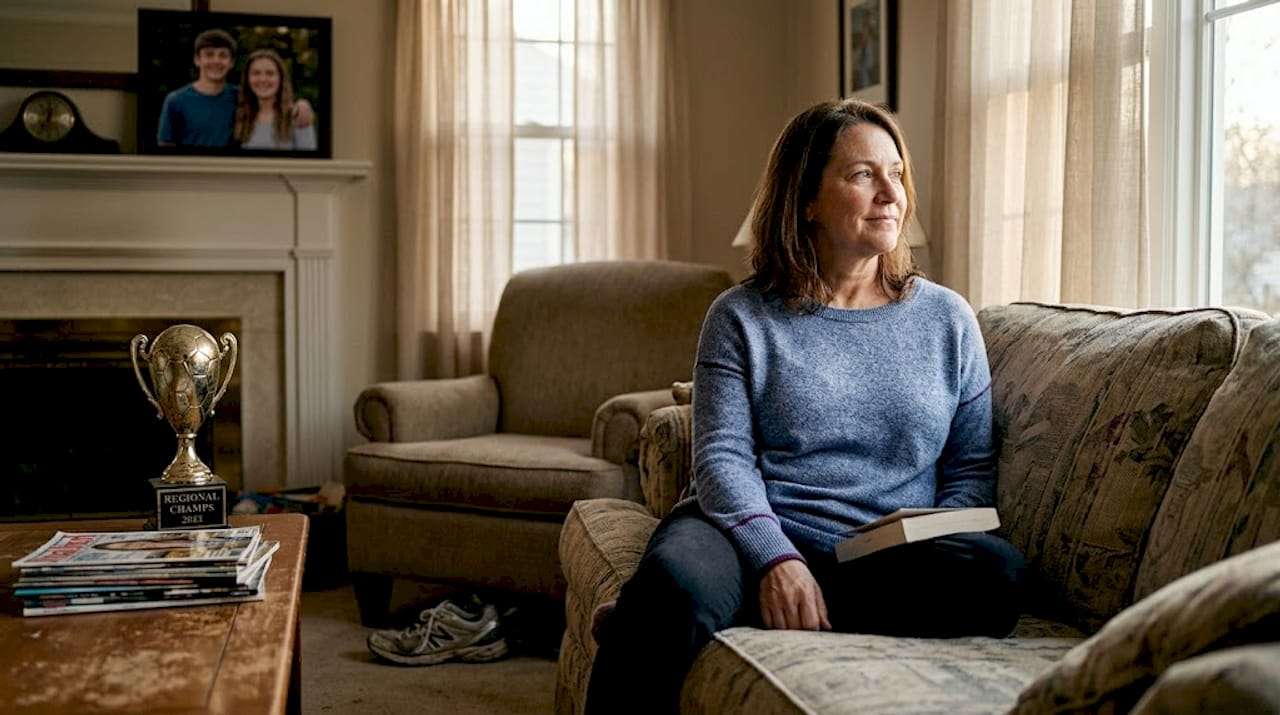
The house doesn’t change overnight. The walls stay the same colour, the furniture sits in familiar places, and yet something fundamental shifts the moment your last child moves out. What follows is a wave of loneliness that nearly every parent feels but almost none openly admit. You might feel grief, a loss of purpose, or a strange unfamiliarity with your own home. This experience is real, it is widespread across Canada, and you are not alone in navigating it. This article walks you through the causes, who is most affected, and what you can do to move forward with clarity and connection.
Table of Contents
- What is empty nest syndrome and the ‘quiet house’ effect?
- Why does loneliness peak after children leave home?
- Who is most affected and why? Single parents, identity, and midlife changes
- How to cope and build new purpose: Strategies for empty nesters
- Our perspective: What most guides miss about the quiet house
- Connect with support and counselling for your quiet house
- Frequently asked questions
Key Takeaways
| Point | Details |
|---|---|
| Loneliness is common | Many Canadian empty nesters experience deep loneliness, often unspoken after children leave home. |
| Identity shift | Loss of parenting roles can trigger a profound change in sense of self and belonging. |
| Vulnerable populations | Single parents and those facing midlife challenges are especially impacted. |
| Practical strategies | Effective coping includes reconnecting, new activities, and professional support. |
| Help is available | Mental health resources and counselling options make a real difference for empty nesters. |
What is empty nest syndrome and the ‘quiet house’ effect?
Empty nest syndrome is not listed in the DSM-5 as a clinical diagnosis, but that does not make it any less real. It is a term used to describe the deep emotional shift parents experience when their children leave home, whether for university, work, or independent living. The feelings of loneliness, grief, and identity loss that emerge can be just as disorienting as any recognised life crisis.
The ‘quiet house’ effect is a fitting way to describe what happens. One day the home is full of noise, schedules, and the constant hum of family life. Then, suddenly, it isn’t. That silence is not just physical. It is emotional. It signals the end of a role you have held for years, sometimes decades, and the beginning of a chapter that feels undefined.
For many Canadian parents, this transition is compounded by the country’s geographic realities. Children often move far away for education or employment, meaning visits are infrequent and the sense of distance is both literal and emotional. Statistics Canada monitors loneliness by age and sociodemographic group, recognising it as a significant national health concern, particularly for adults in midlife and beyond.
Here is a snapshot of what empty nesters commonly experience:
| Experience | What it looks like |
|---|---|
| Grief | Mourning the active parenting phase |
| Loss of purpose | Feeling unsure of your daily role |
| Identity shift | Questioning who you are beyond ‘parent’ |
| Social withdrawal | Pulling back from friends or community |
| Relationship strain | Tension with a partner or increased isolation |
Common emotional signs of empty nest syndrome include:
- Persistent sadness or low mood without a clear trigger
- Difficulty sleeping or changes in appetite
- Feeling purposeless or unmotivated during the day
- Withdrawing from social activities you once enjoyed
- Overinvesting in contact with your child, sometimes causing friction
Understanding the identity shift after children leave is a critical first step. Many parents have built their daily lives, their sense of worth, and even their friendships around their children’s needs. When that structure disappears, the emotional impact can be profound and surprisingly sudden.
Why does loneliness peak after children leave home?
Loneliness does not arrive gradually for most empty nesters. It tends to hit in waves, often at unexpected moments. The first morning you make coffee for one. The Friday night with no one to drive anywhere. These small, ordinary moments carry enormous emotional weight.
The core reason loneliness peaks so sharply is the loss of three interconnected pillars: daily routine, sense of purpose, and social connection. Parenting provides all three simultaneously. When it ends, they all disappear at once. As research into this transition confirms, loneliness peaks due to the loss of daily routines, the purpose parenting provides, and the social networks tied to children’s activities, even when parents also feel pride and relief.
Here is how these three losses typically unfold:
- Routine disappears. School pickups, meal planning for a family, and homework supervision all create structure. Without them, days can feel shapeless and long.
- Purpose fades. Parenting gives life a clear direction. Its absence can leave parents questioning what they are working toward.
- Social networks shrink. Many friendships form through children’s sports teams, school events, and parent groups. When kids leave, those connections often fade too.
- Emotional complexity builds. Feeling proud of your child’s independence while simultaneously grieving the loss of closeness creates a confusing emotional mix that is hard to articulate.
“You can feel genuinely happy for your child and devastated for yourself at the same time. Both feelings are valid, and neither cancels the other out.”
This emotional complexity is one reason empty nesters often feel isolated. They sense they should be happy, so they do not voice the grief. That silence deepens the loneliness further.
Exploring empty nest transition strategies can help you understand that what you are feeling is a normal response to an enormous life change, not a personal failing. Many parents also find that rediscovering yourself after kids move out becomes one of the most meaningful journeys they undertake, even if it does not feel that way at first.
Who is most affected and why? Single parents, identity, and midlife changes
While empty nest loneliness touches most parents to some degree, certain groups experience it far more intensely. Understanding which factors amplify the impact can help you recognise your own situation with more compassion.
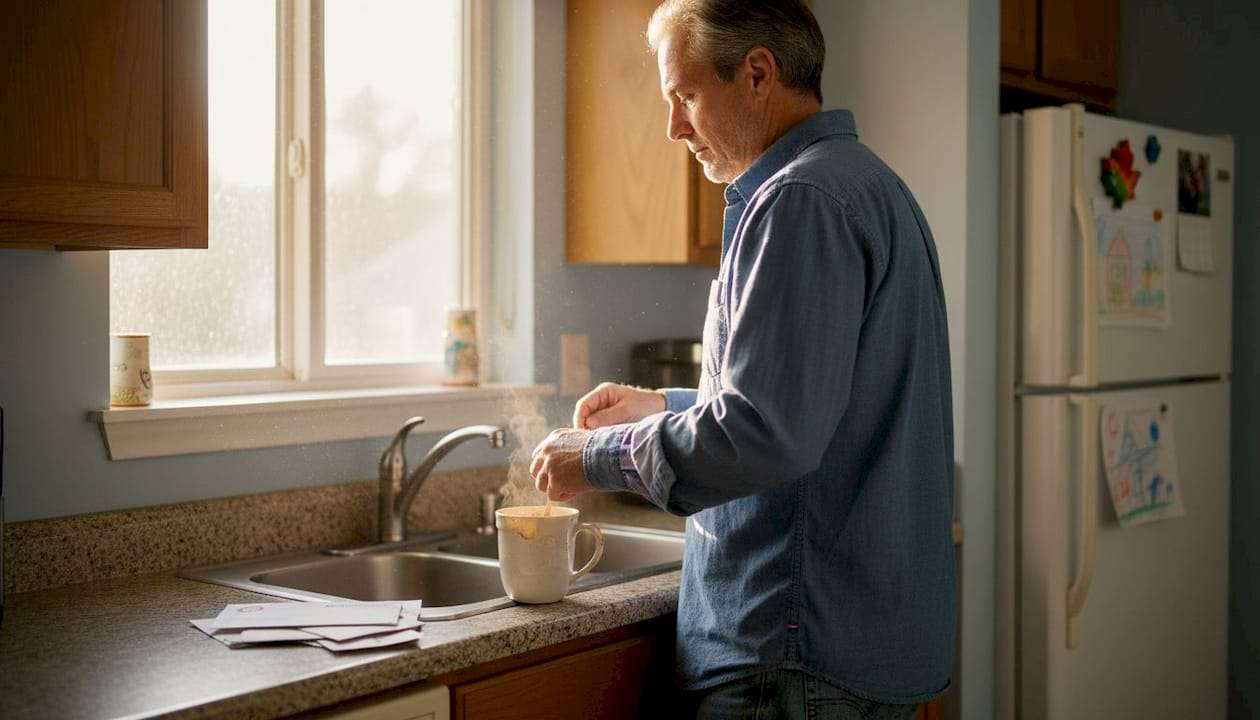
Single parents, those with strong parenting identity, and people navigating concurrent midlife changes such as menopause or health challenges are among the most affected. For single parents especially, children are often the primary source of daily companionship and emotional connection. When they leave, the silence is not just louder. It is total.
Those whose identity is deeply rooted in parenting face a particular kind of grief. Think of it like a compass that has always pointed in one direction. When that direction disappears, the compass spins without settling. This disorientation is real and can manifest as depression, anxiety, or a persistent sense of emptiness.
Midlife compounds everything. Consider what else may be happening at the same time:
- Hormonal shifts related to menopause or andropause affecting mood and energy
- Career transitions, including approaching retirement or job changes
- Health concerns that were easier to ignore when life was busier
- Relationship strain if a partnership has been child-focused for years
- Grief over aging parents or other significant losses
Each of these challenges on its own is manageable. Together, they can feel overwhelming. The empty nest arrives at a time when many Canadians are already navigating significant personal change, and the emotional load stacks up quickly.
Pro Tip: If you are a single parent approaching this transition, begin building your support network before your child leaves. Reconnect with friendships, join a community group, or speak with a counsellor. Proactive connection is far easier than rebuilding from isolation.
For parents whose sense of self has been closely tied to their children’s lives, exploring the empty nest experience for single parents can offer useful perspective on navigating these layered emotional challenges.
How to cope and build new purpose: Strategies for empty nesters
The good news is that loneliness after the nest empties is not permanent. With the right strategies, many parents describe this chapter as one of unexpected growth and renewed self-discovery. The key is to start with honesty, not busyness.
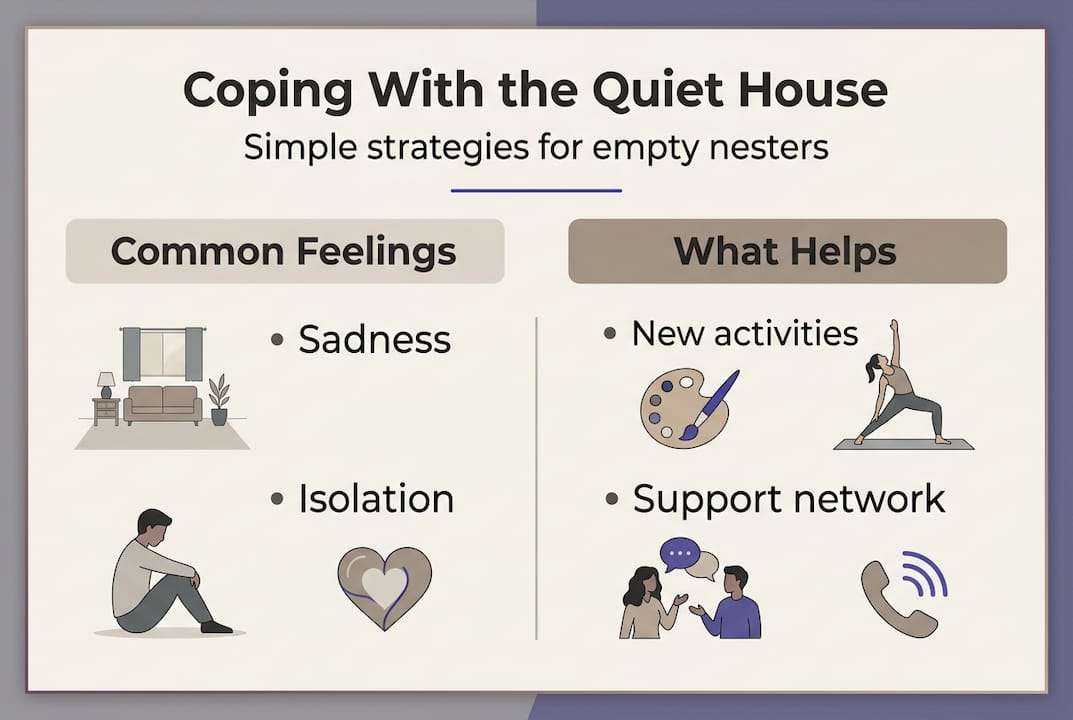
Effective coping strategies include acknowledging your emotions, reconnecting with your partner or yourself, exploring new hobbies, engaging in social activities, and seeking professional therapy when symptoms persist.
Here is a practical sequence to follow:
- Name what you are feeling. Grief, loneliness, and loss of purpose are all valid. Writing them down or speaking them aloud to someone you trust reduces their power.
- Reconnect with your partner. If you are in a relationship, this is an opportunity to rediscover each other beyond your shared parenting role. Plan something together that has nothing to do with your children.
- Revisit old interests. What did you love before parenting consumed your schedule? Music, hiking, painting, cooking? Start small and give yourself permission to enjoy it.
- Build new social connections. Join a community class, volunteer locally, or find a group centred on an interest. Human connection does not have to come from old networks.
- Seek professional support. If sadness persists for more than a few weeks, or if it is affecting your sleep, appetite, or relationships, speaking with a therapist is a wise and courageous step.
Pro Tip: Avoid filling the void with constant contact with your child. While staying connected is healthy, using those calls to manage your own anxiety can place unintended pressure on them. Build your own life alongside your relationship with them.
For those feeling disconnected from others, exploring reconnecting after loss offers gentle, practical guidance. Couples navigating this shift together may also benefit from reading about relationship support after retirement, as many of the emotional dynamics overlap significantly.
Our perspective: What most guides miss about the quiet house
Most articles about empty nest syndrome rush to the solution list. They tell you to take up yoga, call a friend, or book a holiday. And while those suggestions are not wrong, they skip something essential: you need to grieve before you can grow.
The quiet house is not just about missing your children. It is about the loss of a version of yourself that no longer exists. That is a significant thing to mourn, and it deserves real acknowledgement, not a distraction.
What we have seen, working with Canadian parents through this transition, is that those who allow themselves to sit with the discomfort, even briefly, move forward with far more clarity than those who immediately try to stay busy. Grief is not weakness. It is the honest response to genuine loss.
The most meaningful shift happens when parents stop asking “what do I do now?” and start asking “who am I now?” That question, uncomfortable as it is, opens the door to finding new purpose after kids leave in ways that feel authentic rather than forced. That is where real healing begins.
Connect with support and counselling for your quiet house
If the quiet house is weighing on you, reaching out for support is one of the most practical things you can do. At Interactive Counselling, we offer compassionate, personalised therapy for empty nesters across Canada, with in-person sessions in Kelowna, Vernon, Grande Prairie, and Penticton, as well as online and phone options nationwide. You do not have to navigate this transition alone. Understanding the types of counselling services available can help you find the right fit. Whether you need individual support, couples therapy, or guidance through grief and identity shifts, our licensed therapists are here. Explore our empty nest syndrome support resources and take the first step toward feeling like yourself again.
Frequently asked questions
Is empty nest syndrome a real mental health condition?
Empty nest syndrome is not a clinical diagnosis but it often results in genuine emotional distress and can lead to depression or anxiety that warrants professional support.
How common is loneliness among empty nesters in Canada?
Loneliness is widespread among Canadian empty nesters, and Statistics Canada monitors it closely by age and sociodemographic group, recognising it as a significant national concern.
What are the best ways to manage loneliness after children leave home?
Acknowledging your feelings, reconnecting with others, trying new activities, and seeking professional counselling are all effective coping strategies that research and clinical experience support.
Who faces the most intense loneliness when kids leave home?
Single parents, those with a strong parenting identity, and people navigating concurrent midlife changes such as menopause or health challenges tend to experience the most intense loneliness during this transition.
Recommended
- Rediscovering yourself after the kids move out: empty nesters
- Why the empty nest feels harder and how to cope
- Empty nest syndrome: grief, identity & new purpose
- Marriage after kids: maintain love and connection in 2026