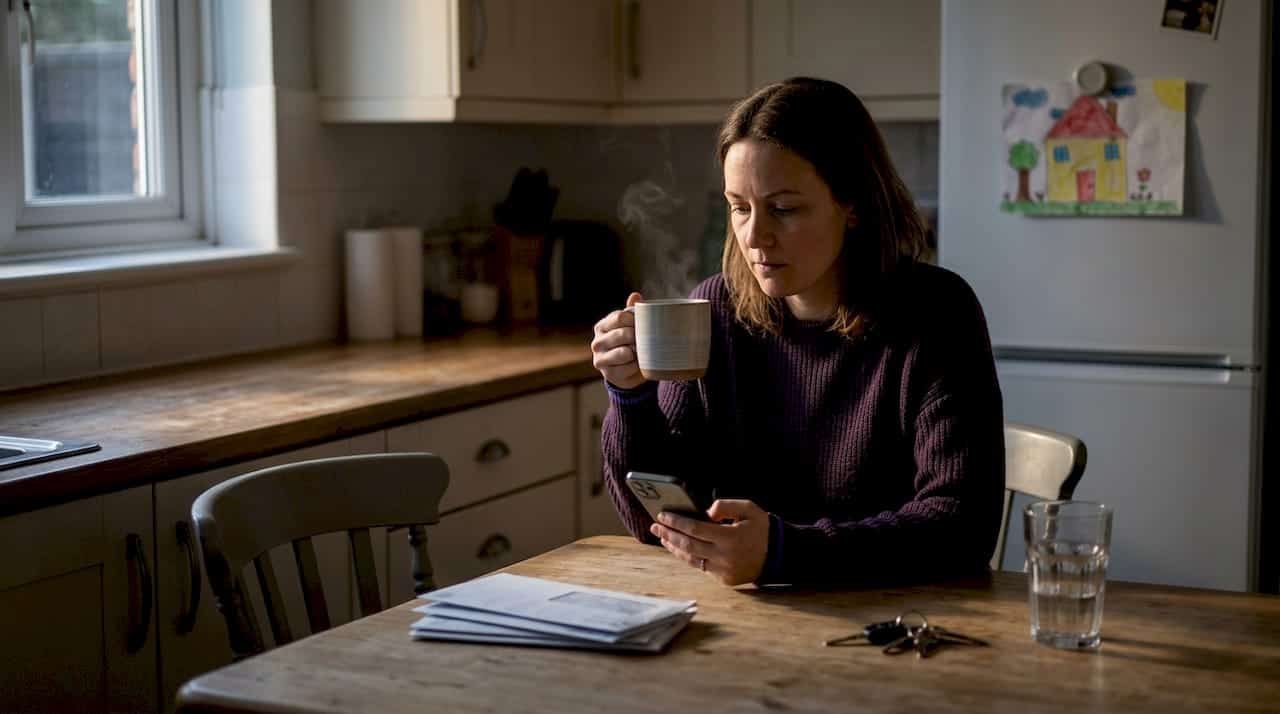
Oilfield rotations are often framed as a worker’s challenge. But for the partner left at home, the silence between calls can feel deafening. You’re managing the household, the children, the unexpected repairs, and the emotional weight of missing someone, all while being expected to simply carry on. Mental health challenges are higher for both workers and their families in oilfield camp settings, yet the partner at home rarely gets acknowledged. This article is for you. We’ll walk through why loneliness hits so hard, what the research says, and what you can actually do about it. For more information, see our couples counselling.
Table of Contents
- Understanding loneliness in oilfield families
- The double impact: Partners at home and workers on site
- Breaking the stigma: Why support is essential
- Practical strategies to cope with loneliness at home
- Building a lasting support system
- How professional counselling can make a meaningful difference
- Frequently asked questions
Key Takeaways
| Point | Details |
|---|---|
| Loneliness is widespread | Many Canadian oilfield partners experience deep loneliness and mental health strain when their loved one works away. |
| Support breaks isolation | Professional, peer, and family support are proven to reduce isolation, anxiety, and depression risks. |
| Seeking help is strength | Reaching out for assistance or counselling is a courageous and healthy choice. |
| Build your support circle | Create a network before, during, and after rotations for ongoing resilience and well-being. |
| Practical tools exist | Using routines, community groups, and therapy can transform daily life at home. |
Understanding loneliness in oilfield families
Loneliness in oilfield families isn’t just about missing your partner. It’s about the slow erosion of your daily rhythm. When someone leaves for a 14-day rotation, they take with them the shared routines, the second opinion, the extra set of hands, and the emotional anchor that keeps everything feeling manageable.
The impact of work rotations on relationships is well documented, and it goes far beyond inconvenience. Partners at home often describe a creeping sense of invisibility. You’re doing everything, but no one sees it. That invisibility breeds resentment, exhaustion, and eventually, a deep sense of isolation.
The numbers are sobering. Suicide risk in mining and oil and gas sectors sits at 72 per 100,000 among approximately 27,000 camp workers. And it’s not just the workers. 1 in 7 male oil sands workers reported self-harm thoughts, and 49% said they wouldn’t seek help. When workers suffer in silence, that silence travels home.
Here’s what makes it worse for partners specifically:
- Long separations disrupt emotional intimacy and daily support structures
- Solo parenting creates chronic stress and sleep deprivation
- Stigma around mental health discourages reaching out
- Cultural expectations push partners to appear strong and self-sufficient
- Fear of judgement or job security concerns keeps families quiet
Understanding how shift work changes family life is the first step toward addressing it honestly. You are not weak for struggling. You are human.
“The emotional weight carried by partners at home is real, significant, and too often invisible to the systems meant to support oilfield families.”
The double impact: Partners at home and workers on site
Here’s something that often surprises people: the strain runs in both directions. Workers on site deal with isolation, fatigue, and the guilt of being absent. Partners at home carry the full weight of the household and feel the emotional distance grow with every passing week. Neither experience cancels out the other.
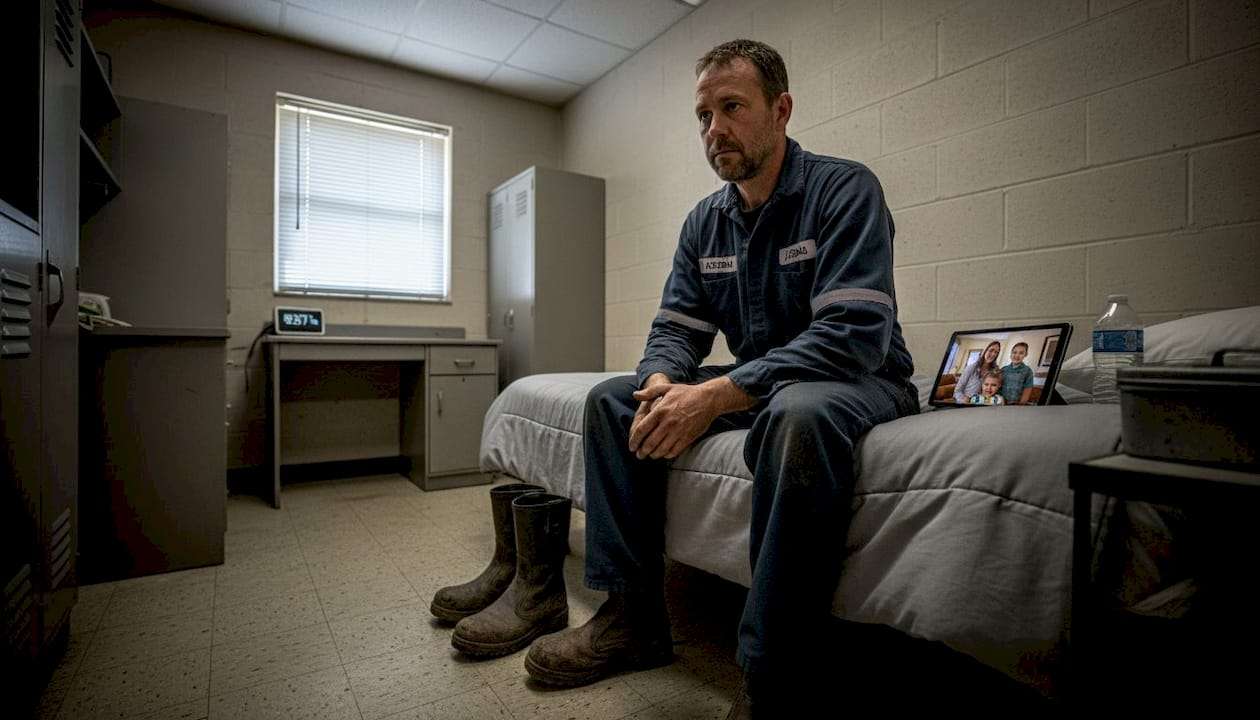
Partners act as de facto single parents during rotations, and when the worker returns, the adjustment can feel like welcoming a stranger into a home that has reorganised itself around their absence. That’s not a failure of love. It’s a structural reality of how long shifts break family dynamics.
Common experiences for partners during and after rotations include:
- Loss of sleep and personal time due to solo parenting demands
- Resentment building quietly when the workload feels unequal
- Emotional distance that makes reconnection feel awkward or forced
- Difficulty relinquishing control of the household when the partner returns
- Grief for the relationship dynamic that existed before camp work began
Reconnection after a rotation takes intentional effort. Exploring emotional distance after camp work and using reintegration tips can help both of you find your footing again.
“Coming home isn’t always a relief. Sometimes it’s the hardest part of the rotation for everyone involved.”
Pro Tip: During the first day or two after your partner returns, resist the urge to immediately hand over every problem that built up while they were away. Plan one quiet moment together, even just a short walk or a cup of tea, before diving into logistics. That small reset can change the entire tone of the time off.
Breaking the stigma: Why support is essential
Now that we’ve outlined the toll loneliness and disconnection take, let’s address what’s stopping many from getting help, and why that needs to change.
Many partners worry that seeking therapy signals weakness, or that it might somehow reflect poorly on their relationship or their partner’s employer. These fears are understandable, but they’re also keeping people stuck. Confidentiality in professional counselling is protected, and your mental health is not a performance review.
The evidence for seeking support is compelling. When on-site counselling was introduced at one camp, 368 workers sought help and mental health absences dropped by 30%. That’s a measurable, real-world result. And for partners at home, the data is equally encouraging.
| Support type | Benefit |
|---|---|
| Social support networks | Reduces depression and anxiety by 40% |
| Professional therapy | Boosts coping skills by 70% |
| Peer support groups | Reduces isolation and normalises shared experience |
| On-site counselling programmes | 30% reduction in mental health-related absences |
Cultural shifts in countries like Australia, where shorter rotations and normalised therapy use have been adopted in resource industries, show that systemic change is possible. Canada’s oilfield communities are beginning to follow. Supporting a partner with depression is one part of the picture, but supporting yourself matters just as much.
Seeking help is not a sign that something is broken. It’s a sign that you’re paying attention.
Practical strategies to cope with loneliness at home
Recognising the importance of support is one thing. Knowing what to actually do on a Tuesday evening when the house is quiet and you’re exhausted is another. Here are strategies that work for Canadian oilfield families.
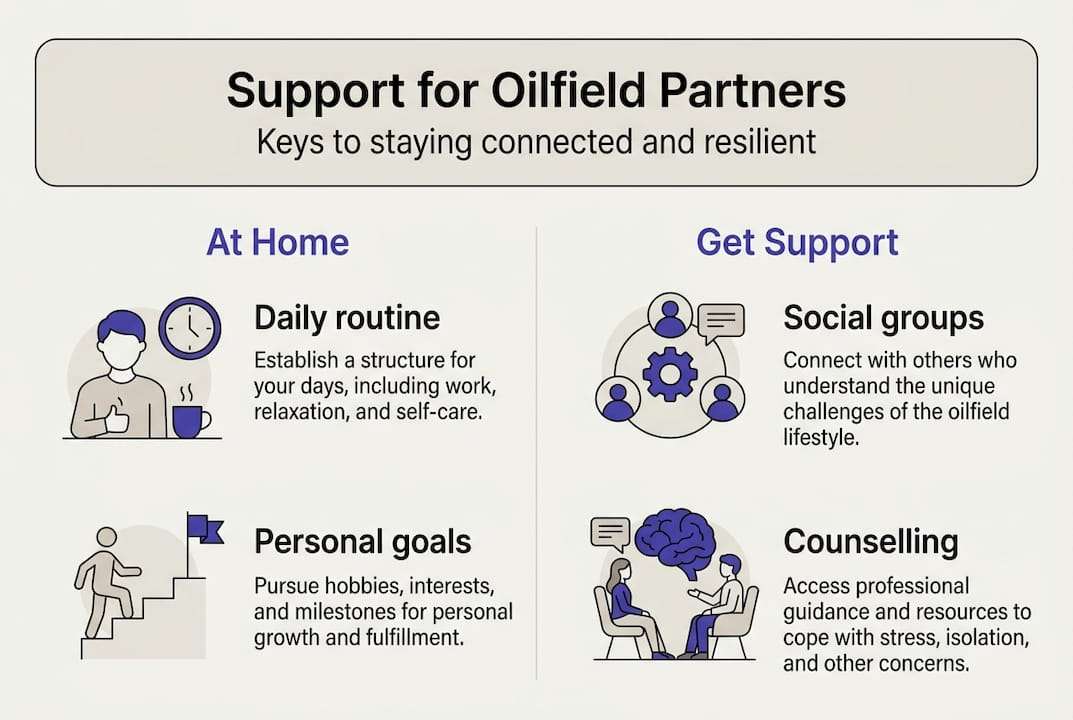
Build a structured routine. Predictability is a natural antidote to anxiety. Regular mealtimes, a consistent sleep schedule, and even a weekly exercise habit give your nervous system something to hold onto when everything else feels uncertain.
Connect with others who understand. The Oil Wives Clubs across Canada offer monthly gatherings and genuine fellowship for oil workers’ spouses. These aren’t just social events. They’re spaces where you don’t have to explain yourself.
Set personal goals. This one is backed by research. Personal goals boost life satisfaction by up to 65%. Whether it’s a course, a creative project, or a fitness goal, having something that belongs entirely to you builds a sense of agency that loneliness tends to erode.
Use available resources. Canada’s Employee and Family Assistance Programmes (EFAPs), the Canadian Mental Health Association (CMHA), and professional counselling services are all accessible options. You don’t need to be in crisis to use them.
Pro Tip: At the end of each week, write down three people you connected with meaningfully. If the list is consistently short or empty, that’s your signal to reach out before isolation deepens.
| Strategy | Frequency | Why it helps |
|---|---|---|
| Structured daily routine | Daily | Reduces anxiety and builds stability |
| Social connection (in-person or online) | Weekly | Combats isolation and builds belonging |
| Personal goal pursuit | Ongoing | Boosts agency and life satisfaction |
| Professional counselling | As needed | Builds coping skills and emotional resilience |
| Community group participation | Monthly | Normalises shared experience |
Exploring coping strategies and building family resilience together as a household, even across the distance, makes a real difference over time.
Building a lasting support system
Having tools and strategies is valuable. But what sustains you through multiple rotations, year after year, is a reliable support system. Not a single person or a single resource, but a layered network you can actually call on.
Families must be treated as active stakeholders, not bystanders, in the mental health conversation around rotational work. That starts with you identifying who is genuinely in your corner.
Here’s how to build that system intentionally:
- Map your circle. Write down the names of family members, friends, neighbours, and professionals you can contact when things get hard. If the list is short, that’s useful information.
- Be specific when asking for help. Instead of saying “I’m struggling,” try “Could you take the kids for two hours on Saturday?” Specific requests are easier for people to say yes to.
- Keep connections warm between rotations. Don’t only reach out when you’re at a low point. Regular, low-stakes contact keeps relationships strong and makes it easier to ask for support when you genuinely need it.
- Include your children in age-appropriate conversations. Child-inclusive counselling can help younger family members process the emotional complexity of a parent’s absence without carrying it alone.
Some practical ways to keep your support network engaged:
- Schedule a regular call with a friend or family member during each rotation
- Join an online community for oilfield partners if in-person options are limited
- Let your counsellor or therapist know when a new rotation is starting so you can plan ahead
- Celebrate small wins with your support circle, not just the hard moments
Resilience isn’t built in isolation. It’s built in relationship, and that includes the relationship you have with yourself.
How professional counselling can make a meaningful difference
When community and self-help aren’t enough, or you simply want a deeper kind of support, professional counselling can be genuinely transformative for the entire family. You don’t need to wait until you’re overwhelmed to reach out. In fact, early support tends to make reintegration smoother, daily life more manageable, and the relationship stronger over time.
At Interactive Counselling, we work with individuals, couples, and families who understand the particular pressures of oilfield life. Our counsellors offer compassionate therapy options tailored to your situation, whether you’re navigating loneliness during a rotation, struggling with reconnection when your partner returns, or simply trying to find your footing again. Sessions are available in person across Kelowna, Vernon, Grande Prairie, and Penticton, as well as online across Canada. If you’re not sure where to start, our guide to counselling support is a helpful first step. Your well-being matters, and so does your family’s.
Frequently asked questions
Why do I feel so lonely when my partner is away at camp?
Rotational work isolates families by disrupting routines and removing emotional support structures, leaving partners at home to manage everything without their usual anchor. The loneliness is real, not a sign of weakness.
What can I do if I feel overwhelmed managing everything alone?
Reach out to your support network first, then consider professional counselling. Therapy boosts coping skills by up to 70%, making it one of the most effective tools available to you.
Are there groups or clubs for oilfield partners in Canada?
Yes. Oil Wives Clubs offer monthly gatherings and social outlets specifically for oil worker spouses, providing a community that genuinely understands your experience.
Is it normal to struggle with reconnection when my partner comes home?
Absolutely. Reintegration after camp rotations commonly creates emotional distance and awkwardness. Open communication and, when needed, professional support can help both of you readjust.
What should I look for in professional mental health support?
Look for counsellors with experience in relationship and family therapy who are familiar with the specific pressures of oilfield or rotational work. Flexibility in session format, including online options, is also worth prioritising.
Recommended
- Reconnect as a couple after camp work emotional distance
- Manage reintegration stress after camp rotations: 5 tips
- How 14-on/7-off rotations affect marriage in Grande Prairie
- Co-Parent Counselling: Essential Support for Separated Couples