Most couples assume that time apart builds longing. And it does, for a while. But camp work is different. The long hours, the emotional labour poured into campers, the limited wifi, and the total immersion in a separate world can quietly erode the closeness you built together. By the time the season ends, many couples find themselves standing in the same room feeling like strangers. The good news is that emotional distance after camp is predictable, recognisable, and absolutely something you can work through together with the right strategies. For more information, see our couples counselling.
Table of Contents
- Why does camp work cause emotional distance?
- Recognising emotional distance in your relationship
- How emotional distance impacts couples long-term
- What camps get right (and wrong) about staff relationships
- Practical strategies for reconnecting after camp
- How Interactive Counselling can support your reconnection
- Frequently asked questions
Key Takeaways
| Point | Details |
|---|---|
| Camp work strains couples | Camp schedules and immersion can create meaningful emotional gaps between partners. |
| Spot and address distance early | Noticing subtle emotional shifts post-camp prevents deeper disconnect. |
| Connection takes intent | Proactive strategies and scheduled time together are key to rebuilding intimacy. |
| Camp culture offers growth | Handled well, camp work can foster deeper trust and teamwork in a relationship. |
Why does camp work cause emotional distance?
Camp work is not like a regular job where you clock out and call your partner on the drive home. Seasonal camp staff roles often create physical separation and emotional distance in couples due to long hours, limited communication, and full immersion in camp life. That combination is uniquely difficult.
Here is what makes camp so hard on relationships:
- Limited communication windows: Wifi is often restricted, phone signal is unreliable, and scheduled calls get cancelled when a camper has a crisis.
- Emotional depletion: Camp staff give everything to their campers and co-workers. By the end of the day, there is simply nothing left for a partner waiting at home.
- The camp bubble: Life inside camp feels vivid and urgent. Life at home starts to feel distant and abstract, almost like a story someone else is living.
- Lack of privacy: Even when you do connect, it is often in a shared cabin or a noisy common area, making real intimacy nearly impossible.
The stress from seasonal work is not just about being tired. It is about operating in two completely separate emotional realities at the same time. And the burnout risks for camp staff are real, often carrying over into the relationship long after the season ends.
“The emotional energy that camp demands from staff is enormous. When that energy is not replenished, it affects every relationship in a person’s life, including the most important ones.”
Recognising emotional distance in your relationship
Understanding why emotional distance happens sets the stage for looking out for its early signs. The tricky part is that these signs are often subtle. You might not fight. You might not even feel sad. You just feel… off.
Common signs that emotional distance has crept in:
- Conversations stay surface level, weather, logistics, schedules, but never feelings.
- You feel awkward being physically close, like you need to warm up to each other again.
- One of you feels like an outsider in your own home, unsure of the new routines the other person built.
- You stop sharing small moments, funny things that happened, little frustrations, because it feels like too much effort.
- Disagreements feel sharper than usual, as if you have lost the cushion of goodwill.
This experience has a name. Researchers who study travel-heavy jobs describe it as the “re-entry blues,” where high burnout risk for returning staff leads to emotional fatigue that directly affects relationships. The partner who stayed home often feels left behind, and the partner returning from camp often feels misunderstood.
Rebuilding emotional intimacy after separation takes intentional effort. And recognising the signs of emotional neglect early means you can act before small gaps become large ones.
Pro Tip: Keep a simple journal for the first two weeks after camp ends. Note small moments of disconnection or awkwardness without judgement. Patterns become visible quickly, and that awareness is the first step toward change.
How emotional distance impacts couples long-term
Noticing signs of distance matters, because left alone, these gaps can grow substantially. Emotional distance rarely stays the same size. It either shrinks because you work on it, or it grows because you do not.
Here is how the progression typically unfolds:
- Reduced intimacy: Physical and emotional closeness decreases as both partners feel less safe being vulnerable.
- Increased misunderstandings: Small miscommunications that a connected couple would brush off become sources of real conflict.
- Withdrawal patterns: One or both partners start pulling back to avoid conflict, which creates even more distance.
- Parallel lives: You share a home but stop sharing experiences, goals, or feelings. You become housemates rather than partners.
- Erosion of trust: Over time, feeling emotionally unseen can make one or both partners question the foundation of the relationship.
“Quality time together is directly linked to relationship satisfaction, with research noting a 30% increase in satisfaction from consistent, uninterrupted time together, and a 20% improvement documented in the Journal of Marriage and Family.”
Those numbers matter. They tell us that investing in reconnection is not just emotionally meaningful, it is statistically significant. If you are unsure whether your relationship needs attention, exploring when to work on your relationship can help you make that call with clarity.
What camps get right (and wrong) about staff relationships
To act wisely, it is crucial to understand how camp culture shapes relationships in subtle ways. Camp is not the enemy of your relationship. But it does create conditions that require extra awareness.
| How camps support relationships | How camps challenge relationships |
|---|---|
| Shared values and purpose build connection | Physical separation limits daily intimacy |
| Teamwork culture develops communication skills | Emotional energy is spent on campers, not partners |
| Midyear staff meetups help reconnect off-season | PDA and romance are often discouraged on-site |
| Camp friendships create a supportive community | The camp bubble makes home life feel less real |
| Shared experiences create lasting memories | Limited wifi and phone access reduces contact |
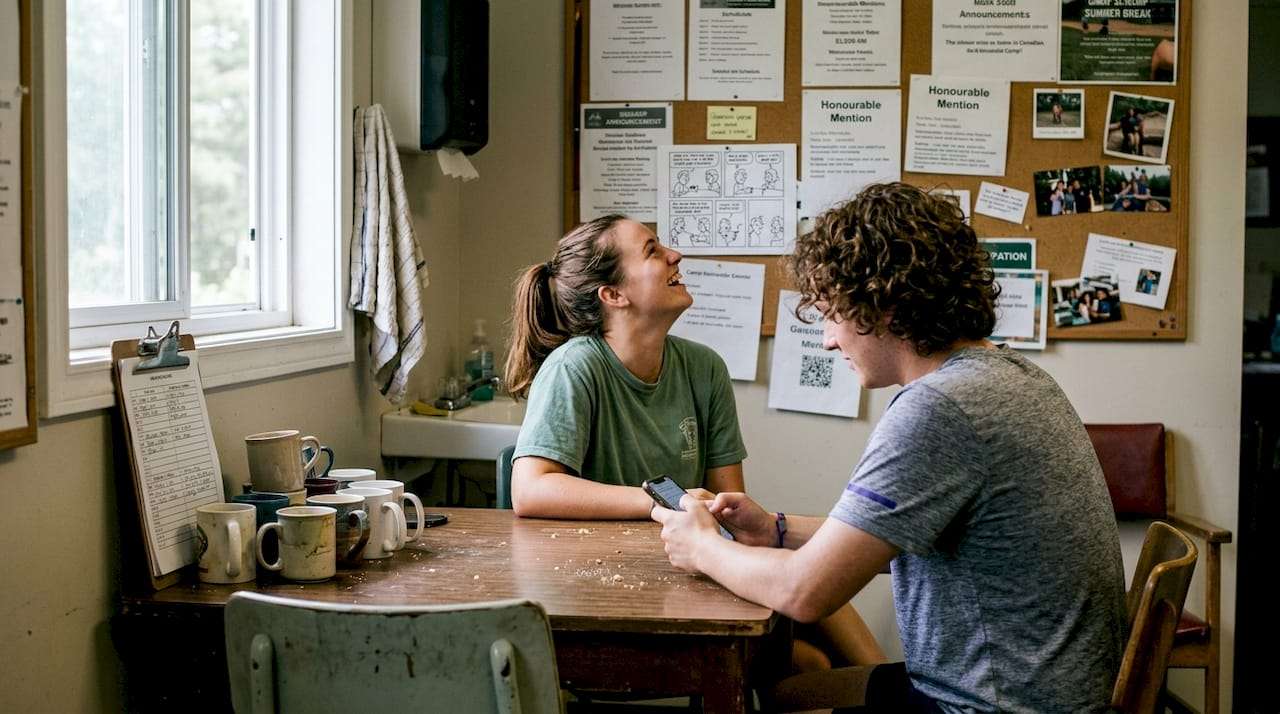
Some camps actively support their staff community through midyear meetups, which help staff reconnect and process the season together. These initiatives acknowledge that the camp experience does not end when the summer does.
Couples who treat the long-distance aspect of camp work as a chance to build trust rather than a threat to survive often come out stronger. The key is framing. Camp can teach you both about resilience, shared values, and commitment. But it requires you to be deliberate about protecting your relationship from the seasonal work pressures that come with the territory.
- Treat camp season as a defined chapter, not an indefinite state.
- Agree on communication expectations before the season starts.
- Acknowledge that both experiences, at camp and at home, are valid and hard.
Practical strategies for reconnecting after camp
Having seen what camps do for and against closeness, now apply practical ways to reconnect as a couple. The research is clear: proactive effort works. Waiting for things to feel natural again is the least effective strategy.
Here are the steps that make the biggest difference:
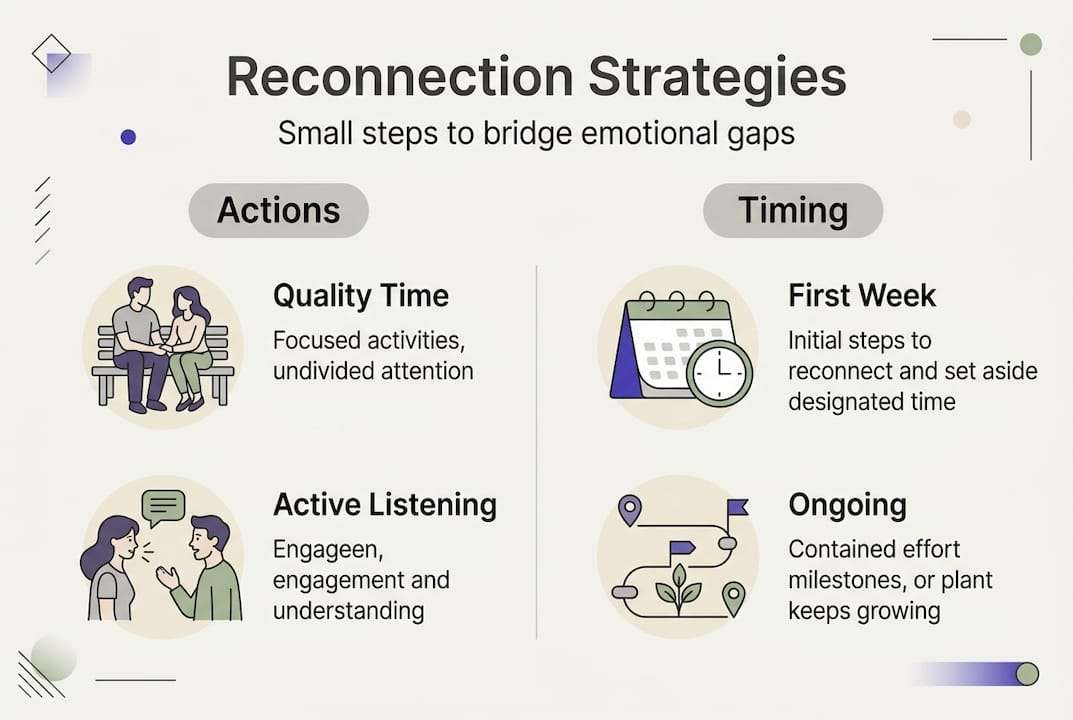
- Schedule intentional reconnect time. Block off one to two hours together with no phones, no screens, and no agenda beyond being present. This is not a problem-solving session. It is just time to be together.
- Create a post-camp plan. Before the season ends, use camp’s momentum to have honest conversations about what you both need in the first week back. Set small, shared goals.
- Mix your communication methods. Daily rituals like good morning texts, virtual dates, and weekly check-ins all serve different emotional needs. A handwritten note carries weight that a text cannot.
- Acknowledge the adjustment period. Give each other permission to feel awkward. Naming it out loud reduces its power significantly.
- Rebuild physical closeness gradually. Start with small gestures, a hand on the shoulder, sitting close on the couch, before expecting deeper intimacy to return.
| Reconnection strategy | Effectiveness | Best timing |
|---|---|---|
| Scheduled distraction-free time | Very high | First week back |
| Daily appreciation rituals | High | Ongoing |
| Post-camp planning conversation | High | Before season ends |
| Mixed communication formats | Moderate to high | During and after camp |
| Couples counselling sessions | Very high | When stuck or overwhelmed |
| Handwritten notes or letters | Moderate | During separation |
If you are preparing to take a more structured approach, understanding how to prepare for couples counselling can help you get the most from professional support. And if you are wondering whether counselling actually works, the evidence around marriage counselling effectiveness is genuinely encouraging.
Pro Tip: Celebrate small wins. Did you have one honest conversation this week? That counts. Did you sit together without your phones for twenty minutes? That counts too. Tracking small progress builds momentum and reinforces that you are moving in the right direction.
Rebuilding emotional intimacy is not a single event. It is a series of small, consistent choices made by two people who have decided the relationship is worth the effort.
How Interactive Counselling can support your reconnection
If you and your partner are finding it hard to bridge the gap on your own, that is not a sign of failure. It is a sign that you need a different kind of support. At Interactive Counselling, our licensed counsellors work with couples across Kelowna, Vernon, Grande Prairie, Penticton, and online nationwide. We understand the specific pressures that seasonal and camp work place on relationships. Whether you are navigating the re-entry blues, rebuilding trust, or simply trying to feel close again, we offer in-person, phone, and online sessions at times that work for your schedule. Reaching out is the most practical step you can take toward a stronger, more connected relationship.
Frequently asked questions
How can we stay emotionally connected while one of us works at camp?
Establish daily rituals like good morning texts, set weekly check-ins, and vary your communication formats to maintain emotional presence across the distance.
What if emotional distance continues after camp season?
Structure more intentional time together and consider professional support. Quality time has been shown to increase relationship satisfaction by up to 30%, so consistency matters.
Can camp jobs ever strengthen a relationship?
Yes. Camp’s teamwork culture and shared values can deepen trust and commitment, provided both partners approach the separation proactively and communicate openly.
How do I help my partner readjust after returning from camp?
Give them space to decompress, listen without trying to fix anything, and schedule low-pressure quality time. High burnout risk means returning staff often need recovery time before they can fully reconnect.
Recommended
- Rebuilding emotional intimacy in couples: a 2026 guide
- Overcome emotional neglect in marriage: reconnect in 2026
- How to repair after a big fight: 40% fewer conflicts
- Co-Parent Counselling: Essential Support for Separated Couples