Driving can suddenly feel overwhelming after a car accident, even for the most confident Canadian drivers. What you are feeling is a natural response—your brain is working overtime to keep you safe, sometimes long after the danger has passed. Driving anxiety after an accident is your brain’s protective response—not a permanent condition. Understanding how your mind and body react to trauma, and why these feelings linger, is the first step toward regaining your independence on the road. For more information, see our anxiety counselling.
Table of Contents
- Understanding Driving Anxiety Post-Accident
- Types of Trauma Experienced by Drivers
- Symptoms and Effects on Daily Life
- Canadian Therapy Options and Support
- Legal Rights and Recovery Responsibilities
- Common Mistakes and How to Avoid Them
Key Takeaways
| Point | Details |
|---|---|
| Understanding Driving Anxiety | Driving anxiety post-accident is a protective response of the nervous system, not a permanent state. Proper recognition can aid recovery efforts. |
| Types of Trauma | Drivers may experience physical, psychological, or social trauma affecting their recovery process, necessitating tailored therapeutic interventions. |
| Treatment Options | Cognitive Behavioural Therapy (CBT) and Exposure Therapy are effective treatments for driving anxiety, providing coping strategies and gradual reintegration into driving. |
| Legal Responsibilities | Understanding your legal rights after an accident is crucial for recovery, including documenting the incident and engaging with insurance processes promptly. |
Understanding Driving Anxiety Post-Accident
Driving anxiety after an accident isn’t a sign of weakness—it’s your nervous system responding exactly as it evolved to. After a car crash, your brain has experienced something your body registered as life-threatening, and it adapts accordingly.
When you’ve been in an accident, your brain enters a heightened state of alert. How the brain responds to stress after traumatic events varies significantly from person to person. Some people see symptoms fade within weeks; others experience lasting effects that interfere with daily activities like driving.
Your nervous system doesn’t distinguish between past danger and present safety. Every time you approach the steering wheel, your amygdala (the brain’s alarm system) may still perceive threat where none exists. This is why a green light might trigger a racing heart, or another vehicle’s sudden movement can send you into panic mode.
Safe driving requires integration of multiple brain functions:
- Sensory processing (seeing hazards, hearing horns, feeling road feedback)
- Motor control (steering, braking, coordinating hand and foot movements)
- Cognitive functions (decision-making, attention, predicting other drivers’ behaviour)
Anxiety disrupts this delicate balance. When your stress response activates, your prefrontal cortex (responsible for reasoning) quiets down, while your amygdala takes over. You’re essentially operating on survival instinct rather than logical thinking.
Post-accident driving anxiety is your brain’s protective response—not a permanent condition. Understanding this distinction helps you work with your nervous system rather than against it.
Every person’s recovery timeline differs. Some drivers feel nervous for a few weeks; others struggle for months. There’s no “right” timeline, and no shame in either experience. The variation in responses reflects how individual our trauma responses truly are.
What matters now is recognizing that driving anxiety is treatable. With proper support—whether through counselling, gradual exposure, or therapeutic techniques—your brain can learn that driving is safe again. This rewiring takes time, but it’s absolutely possible.
If you’re struggling with the mental aftermath of your accident, professional counselling can provide structured support tailored to your specific experience and recovery pace.
Pro tip: Start tracking when your anxiety feels worst (certain roads, times of day, weather conditions) so you and a therapist can address these specific triggers systematically rather than feeling overwhelmed by the entire driving experience.
Types of Trauma Experienced by Drivers
Car accident trauma isn’t one-size-fits-all. Drivers experience different types of trauma depending on the accident’s severity, their role in it, and what happened to others involved.
Physical trauma occurs when your body experiences injury or intense physical threat. Broken bones, whiplash, internal injuries, or simply the violent jolting of impact leaves your nervous system in overdrive. Your body remembers the pain and shock, even after wounds heal.
Psychological trauma develops when your mind registers the accident as life-threatening. You may have feared you wouldn’t survive, watched someone else get hurt, or felt completely helpless as the crash unfolded. Emotional and physical impacts from traumatic events like serious accidents shape how your brain processes safety and danger going forward.
Social trauma happens when the accident affects your relationships and independence. Losing your ability to drive independently, depending on others for transportation, or dealing with guilt if someone else was injured all create emotional weight.
These trauma types often overlap:
- Physical injury + fear of another accident = heightened anxiety behind the wheel
- Witnessing someone else’s injury + guilt = avoidance and shame
- Loss of control during the crash + feeling trapped = panic when driving
- Self-blame + uncertainty about your driving ability = loss of confidence
Different trauma types require different healing approaches. Understanding which type affects you most helps your therapist tailor treatment specifically to your experience.
Some drivers experience single-incident trauma—one accident that changed everything. Others have accumulated trauma from multiple smaller accidents or years of anxious driving before the crash happened. Your history matters when understanding your current anxiety.
A passenger in the accident may develop trauma differently than the driver. The driver often carries guilt and self-blame; passengers may feel trapped and powerless. Motor vehicle accident PTSD symptoms manifest uniquely based on each person’s experience during the crash.
Your trauma isn’t permanent, even though it feels overwhelming right now. Professional support helps you process what happened and rebuild your sense of safety on the road.
Pro tip: When talking to a therapist, describe not just what happened in the accident, but how your body reacted (racing heart, freezing up, feeling numb)—these physical details help them understand your trauma type and design targeted treatment.
Symptoms and Effects on Daily Life
Driving anxiety after an accident shows up differently for everyone, but the symptoms are real and measurable. Understanding what you’re experiencing helps you recognise that you’re not overreacting—your nervous system is simply doing what it evolved to do.
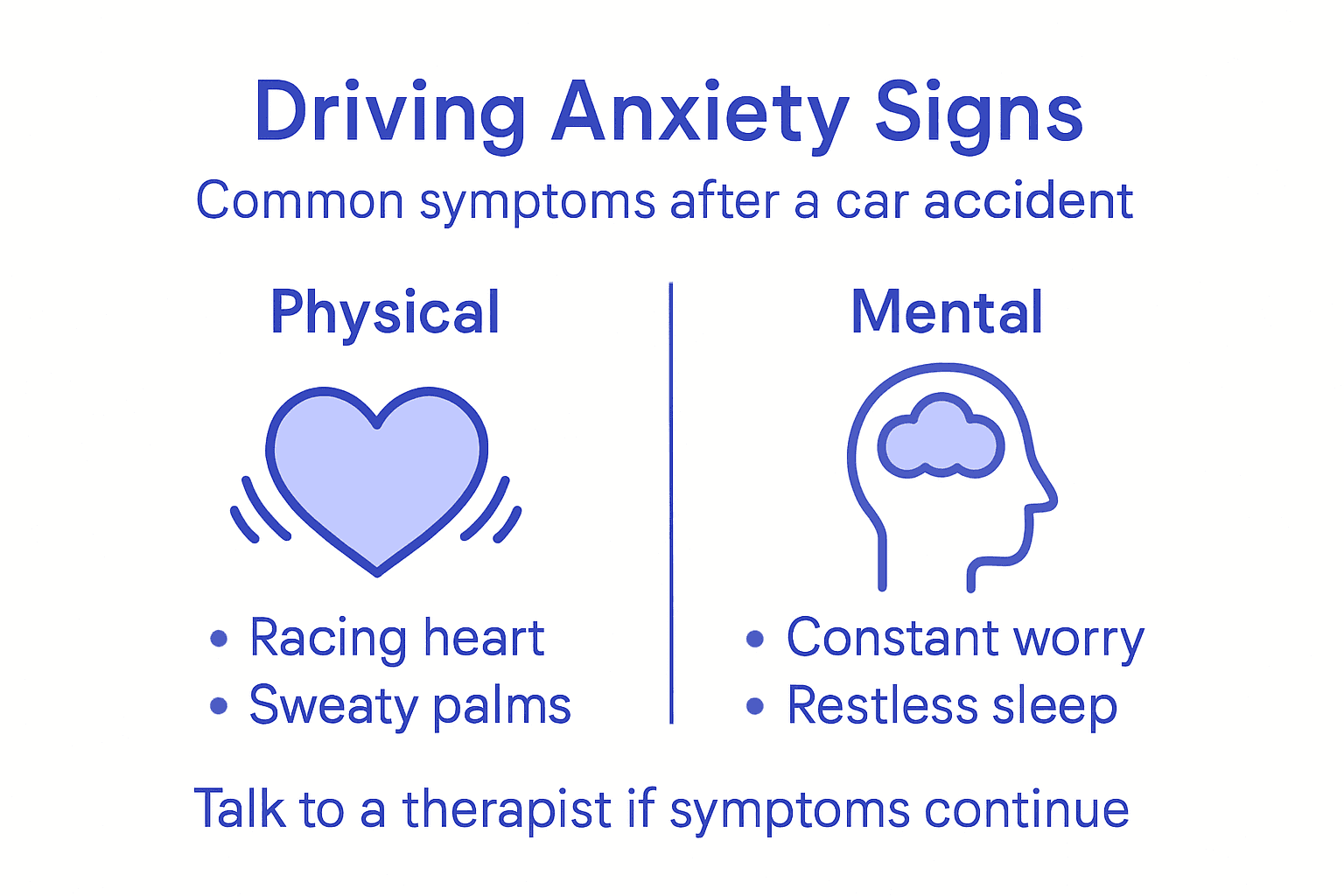
Physical symptoms hit first and hardest. Your heart races when you see an oncoming car. Your hands grip the steering wheel so tightly they ache. You might experience shortness of breath, nausea, or a tight sensation in your chest before you even turn the key. Physical symptoms of anxiety like these stem from your autonomic nervous system responding to perceived danger.
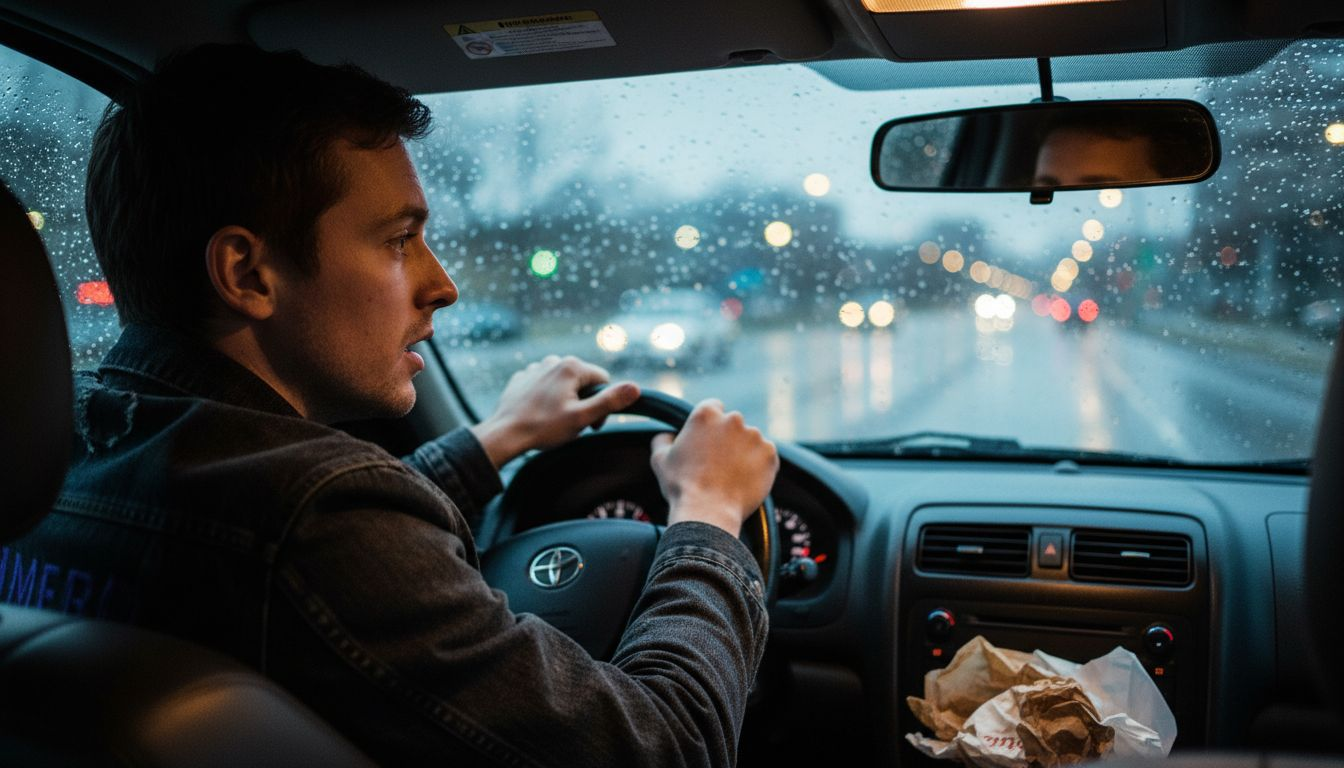
Psychological symptoms include intrusive thoughts, hypervigilance, and flashbacks. You replay the accident obsessively. You notice every potential hazard on the road—sometimes real, sometimes imagined. Concentration becomes nearly impossible when driving feels unsafe.
Behavioural changes often follow:
- Avoiding highways or busy roads
- Refusing to drive after dark
- Taking circuitous routes to avoid certain intersections
- Sitting in the passenger seat instead of driving
- Cancelling plans that require driving
- Feeling trapped and dependent on others
These effects ripple through your daily life quickly. Missing work or appointments damages your professional reputation. Losing independence affects your sense of self-worth. Relying on others creates guilt and frustration. The anxiety about driving becomes anxiety about everything else.
Avoidance feels protective in the moment, but it actually strengthens anxiety over time. Your brain learns that driving is dangerous because you avoid it, creating a reinforcing cycle.
Sleep suffers too. You lie awake replaying the crash or worrying about tomorrow’s commute. Poor sleep amplifies anxiety and makes everything feel worse. The exhaustion compounds your difficulty concentrating.
Some people develop delayed anxiety symptoms that emerge weeks or months after the accident. You might feel fine initially, then suddenly panic attacks strike without warning. This delayed onset confuses people—they think they’d moved past it.
Relationships strain under the weight of your anxiety. Loved ones don’t always understand why you can’t just drive. Frustration builds on both sides. Social isolation increases as you turn down invitations.
Pro tip: Keep a symptom log for one week, noting when anxiety spikes (specific roads, weather, time of day, nearby vehicles)—this data reveals your actual triggers versus imagined ones, giving your therapist concrete patterns to address.
Canadian Therapy Options and Support
Canada offers multiple pathways to professional support for driving anxiety after an accident. You don’t have to navigate this alone, and treatment options are more accessible than you might think.
Cognitive Behavioural Therapy (CBT) is the gold standard for driving anxiety. A therapist helps you identify thought patterns that fuel anxiety (“I’ll crash if I drive on highways”) and gradually rewire them through evidence and exposure. CBT typically requires 8 to 16 sessions, though some people need more depending on severity.
Exposure therapy works by carefully reintroducing driving situations in a controlled way. You might start with sitting in a parked car, progress to driving on quiet residential streets, then gradually tackle busier roads. The goal is teaching your nervous system that driving is safe through repeated, successful experiences.
Acceptance and Commitment Therapy (ACT) teaches you to coexist with anxiety rather than fight it. Instead of trying to eliminate every anxious thought, you learn to acknowledge the anxiety and drive anyway. This approach reduces the struggle that often intensifies anxiety.
Canadian therapy comes in several formats:
Here’s a summary of how trauma types can uniquely affect accident survivors:
| Trauma Type | Common Experiences | Impacts on Recovery |
|---|---|---|
| Physical Trauma | Bodily injury or pain | May delay return to driving |
| Psychological Trauma | Persistent fear/threat | Increases anxiety triggers |
| Social Trauma | Loss of independence | Strains relationships |
Understanding the difference between main therapy approaches can help you make an informed choice:
| Therapy Type | Core Approach | Typical Benefit |
|---|---|---|
| Cognitive Behavioural Therapy (CBT) | Reshape thought patterns | Builds coping skills |
| Exposure Therapy | Gradual desensitisation | Reduces fear response |
| Acceptance & Commitment Therapy | Accept anxiety, act anyway | Eases struggle with symptoms |
- Individual in-person sessions at clinics in Kelowna, Vernon, Grande Prairie, and Penticton
- Online therapy sessions from your home across Canada
- Phone-based coaching and support
- Group therapy with others recovering from accident trauma
- Combination approaches mixing formats based on your needs
Professional support isn’t luxury—it’s a practical investment in reclaiming your independence and confidence on Canadian roads.
Interactive Counselling offers trauma-informed therapy specifically designed for accident recovery. Therapists understand the neurological changes driving anxiety causes and tailor treatment to your timeline. Starting therapy in Canada doesn’t require a referral; you can book directly and work with a registered therapist.
Free or low-cost options exist too. BounceBack® provides free mental health skill-building through telephone coaching and online resources specifically for managing anxiety after stressful events. It’s available across Canada through the Canadian Mental Health Association.
Most Canadian therapists have experience with driving anxiety because it’s common after accidents. Your therapist will assess whether you need additional support (medication evaluation, physician consultation) and coordinate care accordingly.
Pro tip: When booking your first therapy session, mention your car accident upfront and describe your specific anxiety triggers—this helps the therapist prepare targeted treatment from day one instead of spending sessions identifying your situation.
Legal Rights and Recovery Responsibilities
After a car accident, you have legal rights and responsibilities that directly affect your recovery—both financial and emotional. Understanding these protects you and ensures you receive the support you’re entitled to.
Your immediate responsibilities are clear and non-negotiable. You must stop at the scene, provide your name and insurance information to other parties involved, and call emergency services if anyone is injured. Leaving the scene is a criminal offence in Canada. You should also document the accident with photos and witness details if safe to do so.
Your legal rights include the right to compensation for injuries, property damage, and lost income. In Canada, motor vehicle accident liability depends on who caused the crash. If another driver was at fault, their insurance typically covers your damages.
Compensation may include:
- Medical and rehabilitation expenses
- Lost wages from time off work
- Vehicle repair or replacement costs
- Pain and suffering damages
- Future care needs related to your injuries
Canadian provinces have different insurance systems. Some use fault-based systems where the at-fault driver’s insurer pays; others use no-fault systems where your own insurer covers you regardless of blame. Knowing your province’s system matters for your claim strategy.
Reporting your accident to your insurance company promptly—typically within 30 days—is crucial. Delays can jeopardise your claim, even if you weren’t at fault.
Your recovery timeline has legal implications. Negligence claims and compensation procedures often require documentation of ongoing symptoms and treatment. This is why keeping detailed records of your therapy, medical visits, and how anxiety affects your daily functioning matters legally, not just medically.
Contributory fault can reduce your compensation. If you were partially responsible for the accident, your damages may be reduced proportionally. For example, if you were 20% at fault, you’d receive 80% of damages. Some provinces bar recovery entirely if you exceed a certain fault threshold.
Statutes of limitations matter. In most Canadian provinces, you have two years from the accident date to sue for personal injury. Missing this deadline eliminates your legal right to compensation, regardless of legitimacy.
Consider consulting a personal injury lawyer, especially if injuries are significant or liability is disputed. Many work on contingency—you pay nothing unless you win your case. Their expertise protects your rights and maximises your recovery.
Pro tip: Keep a detailed file of everything post-accident: medical reports, therapy invoices, prescription receipts, missed work documentation, and journal entries describing how anxiety affects your driving—this documentation strengthens both your legal claim and your therapy treatment plan.
Common Mistakes and How to Avoid Them
Recovering from driving anxiety involves both practical and psychological steps. Many people unknowingly sabotage their own recovery by making preventable mistakes that delay healing and reinforce anxiety patterns.
Mistake 1: Avoiding driving entirely. Complete avoidance feels safe in the short term, but it teaches your brain that driving is genuinely dangerous. Your anxiety actually intensifies because you never gather evidence proving you can drive safely. Gradual exposure—even sitting in a parked car—starts rewiring your nervous system.
Mistake 2: Hiding your accident from loved ones. Isolation makes anxiety worse. Partners, family, and friends can’t support you if they don’t know what happened. Their confusion about your sudden anxiety can create conflict when honest communication would build understanding and practical help.
Mistake 3: Skipping the legal and insurance steps. Failing to document evidence or report promptly jeopardises your compensation claim and creates additional stress. Keep records of the accident scene, medical treatment, therapy sessions, and how anxiety affects your daily life.
Common recovery mistakes include:
- Pushing yourself too hard, too fast into anxiety-triggering situations
- Refusing professional help because you think you should “just get over it”
- Admitting fault or apologising unnecessarily at the accident scene
- Making major driving decisions (selling your car) while in acute anxiety
- Comparing your recovery timeline to others’ experiences
- Neglecting sleep, exercise, or nutrition while anxious
Avoiding mistakes requires honest self-awareness. If you’re isolating, procrastinating on therapy, or white-knuckling through panic, you’re working against your recovery, not with it.
Mistake 4: Not understanding your province’s insurance system. Different Canadian provinces handle fault and compensation differently. Misunderstanding your coverage or not filing claims within required timeframes costs you money and options.
Mistake 5: Catastrophising about future driving. One accident doesn’t mean you’re a dangerous driver or destined for another crash. This distorted thinking fuels anxiety. Working with a therapist to challenge these thoughts directly addresses the psychological component of recovery.
Mistake 6: Staying silent about anxiety in relationships. Communication breakdowns happen when partners don’t understand why you’re avoiding driving or feeling overwhelmed. Clear conversations prevent resentment and isolation.
The most critical mistake is waiting too long to seek help. The sooner you engage with a therapist, the faster your nervous system begins rewiring toward safety. Weeks of untreated anxiety become months of ingrained patterns.
Pro tip: Write down your specific anxiety triggers before your first therapy session—not just “highways scare me” but “four-lane highways at rush hour with trucks nearby” so your therapist addresses your actual fears, not generalised driving anxiety.
Reclaim Your Confidence Behind the Wheel with Support Designed for You
If driving anxiety after an accident is holding you back from regaining your independence and peace of mind, you are not alone. This article highlights how your nervous system reacts to trauma and why gradual, personalized care is essential to healing. Feeling overwhelmed by physical symptoms, intrusive thoughts, or avoidance behaviours can make everyday life feel daunting. At Interactive Counselling, we understand these challenges and offer tailored therapy solutions including cognitive behavioural therapy and exposure therapy that help retrain your brain and rebuild your confidence.
Don’t let anxiety define your journey forward. Whether you prefer in-person sessions in Canadian cities like Kelowna or Penticton, or require the convenience of online mental health support, our diverse team of licensed therapists provides compassionate care focused on your unique experience. Take the first step to address your specific triggers and receive targeted treatment designed for accident recovery by visiting Interactive Counselling. Learn more about how to start therapy in Canada and explore expert guidance on motor vehicle accident PTSD symptoms. Your road to confidence begins by reaching out today.
Frequently Asked Questions
What causes driving anxiety after an accident?
Driving anxiety after an accident is caused by your nervous system’s response to perceived threats. The brain registers the traumatic event as life-threatening, leading to heightened alertness and anxiety when driving.
How long does driving anxiety last after a car accident?
The duration of driving anxiety varies significantly among individuals. Some may feel anxious for a few weeks, while others could struggle for months. Recovery timelines differ, reflecting how personalized trauma responses are.
What are some effective treatments for driving anxiety?
Effective treatments for driving anxiety include Cognitive Behavioural Therapy (CBT), Exposure Therapy, and Acceptance and Commitment Therapy (ACT). These methods help individuals address fearful thoughts, gradually reintroduce driving situations, and coexist with anxiety.
How can I cope with driving anxiety in daily life?
Coping strategies for driving anxiety include tracking specific triggers, seeking professional support, gradually exposing yourself to driving situations, and maintaining open communication with loved ones. It’s crucial to acknowledge your anxiety and work with a therapist to develop treatment tailored to your needs.
Recommended
- 8 Effective Strategies to Overcome the Fear of Driving After an Accident
- Your Guide to Mental Health Recovery After a Motor Vehicle Accident
- How Counselling Helps After a Car Accident: Finding Your Footing Again
- Car Accident Trauma – How Delayed Symptoms Affect Life