
Scrolling through social media or waiting for a friend’s approval can feel like a daily routine for many young Canadians. These moments shape how you see yourself and influence your confidence, but the line between healthy feedback and overreliance is easy to blur. Understanding the difference between external validation and genuine self-acceptance equips you to break free from common myths and build resilience. This article offers clear strategies to help you navigate social influences and strengthen your self-worth. For more information, see our youth counselling.
Table of Contents
- Defining External Validation and Common Myths
- Types of External Validation in Social Contexts
- Psychological Roots and Developmental Influences
- How External Validation Impacts Anxiety and Self-Esteem
- Risks of Excessive Validation Seeking Behaviour
- Building Self-Worth and Healthy Coping Strategies
Key Takeaways
| Point | Details |
|---|---|
| Understanding External Validation | External validation is a natural psychological mechanism that influences self-worth, but reliance on it can lead to emotional vulnerability and anxiety. |
| Balancing Internal and External Validation | Developing internal self-acceptance is crucial; it enables resilience and emotional intelligence while reducing dependence on external approval. |
| Impact of Social Media | Social media enhances the complexity of validation experiences, often leading to superficial self-worth and increased anxiety among youth. |
| Building Healthy Self-Worth | Strategies like self-compassion, emotional intelligence development, and realistic goal-setting are essential for cultivating authentic self-worth independently of external validation. |
Defining External Validation and Common Myths
External validation is a fundamental psychological mechanism where individuals seek approval and acceptance from others to reinforce their sense of self-worth. While seeking social validation is natural, understanding its nuances can help young Canadians develop healthier self-perception strategies.
Many psychological myths surround external validation, creating misunderstandings about its role in personal development. Common misconceptions include:
- Believing that external validation is entirely negative
- Thinking validation only comes from others
- Assuming seeking validation demonstrates personal weakness
- Perceiving validation as a binary experience
In reality, external validation represents a complex psychological process deeply rooted in human social interactions. Research indicates that validation involves intricate interactions between individual self-perception and social feedback. Young adults often struggle with understanding these subtle dynamics, which can significantly impact their mental health and self-esteem.
Psychological experts suggest that while external validation plays a role in human experience, internal self-acceptance remains crucial. Learning to balance external feedback with personal self-worth helps individuals develop resilience and emotional intelligence. This balanced approach allows for constructive social interactions without becoming overly dependent on others’ opinions.
Here is a quick comparison of internal versus external validation to guide personal growth:
| Aspect | Internal Validation | External Validation |
|---|---|---|
| Source | Self, personal beliefs | Others, social feedback |
| Long-term Impact | Build lasting confidence | Fluctuates with social environment |
| Emotional Outcome | Greater resilience | Increased vulnerability |
| Dependency Level | Independent from others | Relies on outside approval |
Pro tip: Practice self-reflection by journaling about your validation sources and gradually build internal confidence independent of external approval.
Types of External Validation in Social Contexts
External validation manifests in diverse social settings, each offering unique psychological impacts on young adults. Academic validation represents a critical dimension where recognition from educators and institutions shapes an individual’s self-perception and confidence.
Primary types of external validation in social contexts include:
- Professional validation: Recognition from colleagues and supervisors
- Academic validation: Acknowledgment from educators and academic institutions
- Social media validation: Likes, comments, and digital engagement
- Interpersonal validation: Emotional support from friends and family
- Peer validation: Acceptance and approval within social groups
Each validation type carries distinct psychological implications. Professional and academic validation can significantly influence an individual’s sense of competence and self-worth. These external affirmations provide crucial feedback mechanisms that help young Canadians understand their strengths, areas for improvement, and social positioning.
Digital platforms have transformed validation experiences, introducing complex layers of social interaction. Social media validation, characterized by instant feedback through likes and comments, creates a rapid, often superficial validation cycle that can impact mental health and self-esteem. Understanding these dynamics helps young adults develop more resilient self-perception strategies.
The following table summarizes how different types of external validation affect the psychological well-being of Canadian youth:
| Validation Type | Typical Source | Influence on Self-Esteem | Risk Factor for Anxiety |
|---|---|---|---|
| Professional | Workplace supervisors | Boosts sense of competence | Performance stress |
| Academic | Educators, institutions | Enhances achievement identity | Fear of failure |
| Social media | Online communities | Temporary self-worth boost | FOMO, comparison |
| Interpersonal | Friends and family | Supports emotional security | Boundary issues |
| Peer group | Social circles | Builds belonging and approval | Social exclusion risk |
Pro tip: Diversify your validation sources to build a more balanced and healthy self-image, reducing dependence on any single social context.
Psychological Roots and Developmental Influences
Early childhood experiences fundamentally shape an individual’s validation-seeking patterns, creating a complex psychological blueprint that influences self-worth and interpersonal relationships. Attachment theory provides critical insights into how initial caregiver interactions establish foundational emotional frameworks for seeking external validation.
Key developmental influences on validation-seeking behaviours include:
- Parental response patterns during childhood
- Early social interactions and peer experiences
- Attachment style formation
- Cultural and familial communication norms
- Individual temperament and personality traits
Psychological research reveals that validation needs emerge from fundamental human motivations for belonging and recognition. Developmental experiences profoundly impact how young Canadians interpret and seek external affirmation, with each interaction contributing to their evolving self-perception and emotional resilience.

Maslow’s hierarchy of needs provides a crucial lens for understanding validation’s psychological significance. The need for esteem and belonging drives individuals to seek external confirmation, particularly during formative adolescent and young adult years. These validation experiences become integral to identity formation, helping young people construct their sense of self within social contexts.
Pro tip: Reflect on your childhood attachment experiences to understand your current validation-seeking patterns and develop more balanced emotional responses.
How External Validation Impacts Anxiety and Self-Esteem
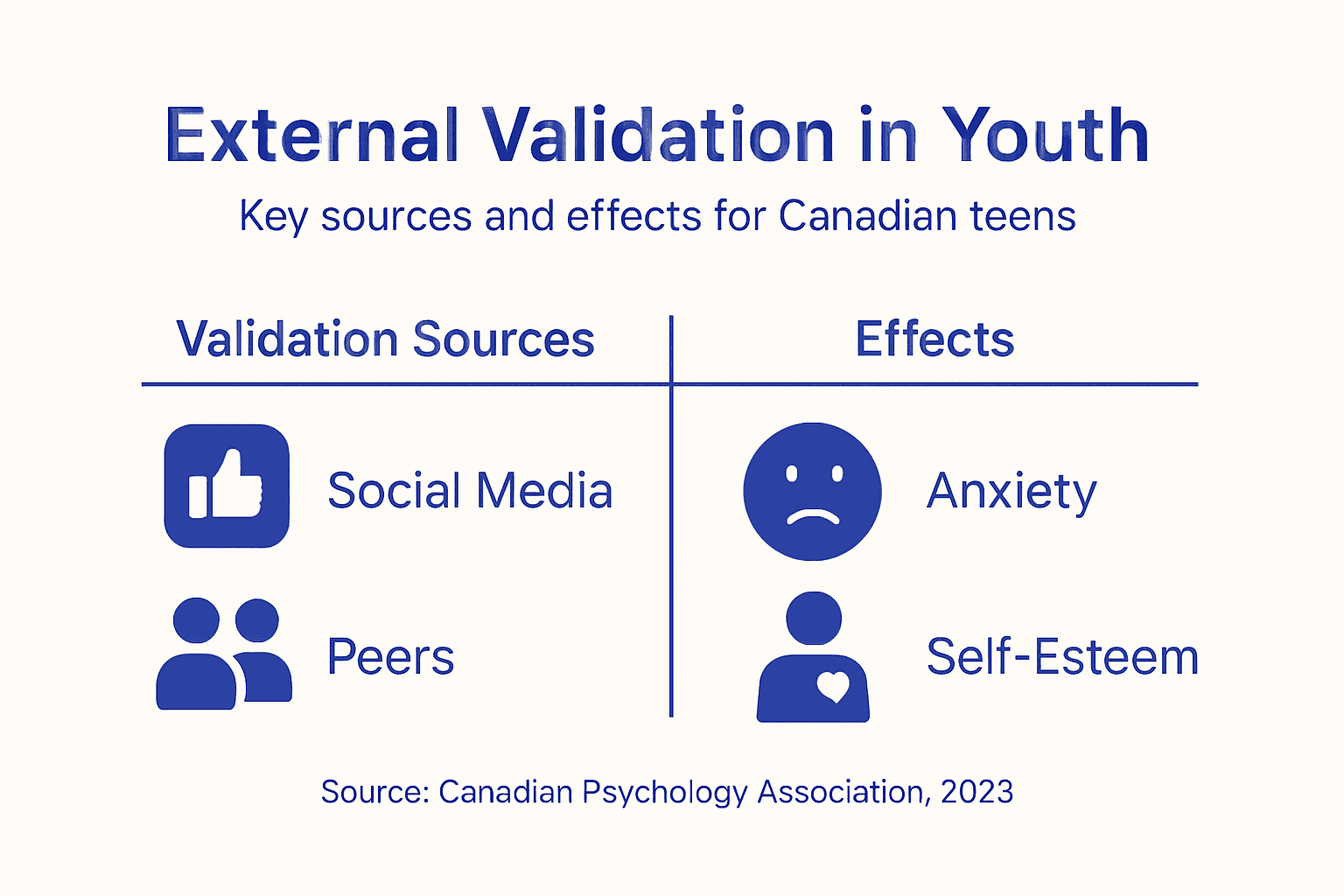
Social connections profoundly influence mental health and self-esteem among Canadian youth. Psychological research reveals a complex relationship between external validation and emotional well-being, where the quality and quantity of social affirmation directly impact an individual’s anxiety levels and self-perception.
Key psychological impacts of external validation include:
- Increased emotional vulnerability
- Heightened sensitivity to social rejection
- Potential development of anxiety disorders
- Fluctuating self-esteem levels
- Compromised personal boundaries
Social media dynamics have intensified external validation challenges. Excessive validation-seeking behaviours can create significant psychological strain, particularly among young Canadians navigating complex social landscapes. The constant comparison and fear of missing out (FOMO) generate additional psychological pressure that can trigger anxiety and diminish self-worth.
The neurological impact of validation is profound. When individuals receive positive external feedback, their brain releases dopamine and serotonin, reinforcing validation-seeking behaviors. However, inconsistent or negative validation can create psychological instability, leading to increased anxiety and potential long-term emotional challenges. Young people become particularly susceptible to these psychological mechanisms during formative developmental stages.
Pro tip: Develop internal validation strategies by practicing self-compassion and recognizing your intrinsic worth beyond external acknowledgment.
Risks of Excessive Validation Seeking Behaviour
Youth mental health challenges in Canada reveal complex psychological risks associated with excessive external validation seeking. Psychological dependency emerges when individuals consistently prioritize others’ opinions over their intrinsic self-worth, creating a precarious emotional landscape that undermines personal resilience and authentic identity development.
Potential risks of excessive validation seeking include:
- Compromised personal boundaries
- Increased emotional vulnerability
- Diminished self-trust and autonomy
- Heightened anxiety and social performance stress
- Potential development of codependent relationship patterns
- Reduced capacity for genuine self-expression
The psychological mechanism driving excessive validation seeking often stems from deep-seated insecurities and unresolved developmental experiences. Young individuals become trapped in a cyclical pattern where external affirmation temporarily alleviates internal discomfort, but ultimately reinforces underlying emotional instability. This dynamic can lead to chronic anxiety, depression, and a fundamental disconnection from one’s authentic self.
Neurologically, repeated validation-seeking behaviours create neural pathways that reinforce maladaptive coping strategies. The brain becomes conditioned to seek short-term emotional relief through external confirmation, gradually eroding intrinsic self-worth and personal agency. These patterns can significantly impact long-term mental health, creating sustained psychological vulnerabilities that extend well beyond adolescence.
Pro tip: Practice daily self-compassion exercises to build internal validation strength and gradually reduce dependence on external approval.
Building Self-Worth and Healthy Coping Strategies
Positive mental health strategies are essential for Canadian youth developing resilient psychological frameworks. Self-worth emerges not from external validation, but from intentional practices that nurture internal strength and authentic self-understanding.
Effective self-worth building strategies include:
- Practicing daily self-compassion
- Setting realistic personal goals
- Developing emotional intelligence
- Challenging negative self-talk
- Cultivating meaningful relationships
- Engaging in regular self-reflection
Psychological research emphasizes the importance of adaptive coping mechanisms that transform external challenges into opportunities for personal growth. Young individuals can gradually replace validation-seeking behaviours with robust internal resources by developing skills that enhance self-understanding and emotional regulation. This process involves recognizing personal worth as an intrinsic quality independent of external recognition.
Neurologically, consistent self-compassion practices rewire neural pathways, gradually reducing dependency on external validation. By intentionally practicing self-acceptance and developing healthy boundary-setting skills, individuals can create more stable and resilient psychological environments. These strategies empower young Canadians to build genuine self-confidence rooted in authentic personal experiences rather than fleeting external approvals.
Pro tip: Create a daily gratitude journal focusing on personal strengths and authentic achievements to systematically build internal validation.
Take Control of Your Self-Worth with Expert Support
Understanding the psychology behind external validation reveals how deeply it can affect young Canadians’ anxiety and self-esteem. If you find yourself struggling with the emotional vulnerability, social anxiety, or fluctuating self-esteem described in the article, you are not alone. Many youth face challenges balancing external feedback with healthy internal validation. Recognizing this pattern is the first step toward emotional resilience and self-compassion.
At Interactive Counselling, our licensed therapists specialize in guiding individuals through these complex psychological dynamics. Whether you are dealing with anxiety from social pressures, the effects of excessive validation seeking, or the need to build healthier coping strategies, we can provide personalised therapy solutions tailored to your unique needs. Explore our services for children, youth, and families and take advantage of flexible in-person and online therapy options across Kelowna, Vernon, Grande Prairie, and Penticton.
Start building lasting self-worth today by connecting with supportive, non-judgmental professionals who understand the critical balance of internal and external validation. Visit Interactive Counselling to book your appointment and take the next step toward emotional strength and authentic confidence.
Frequently Asked Questions
What is external validation?
External validation is the process of seeking approval and acceptance from others to reinforce one’s self-worth. It is a natural psychological mechanism that plays a significant role in shaping self-perception and emotional well-being.
How does external validation impact mental health?
External validation can lead to increased emotional vulnerability, heightened sensitivity to social rejection, and fluctuations in self-esteem. Excessive reliance on external validation may result in anxiety and affect overall mental health negatively.
What are the different types of external validation?
Types of external validation include professional validation from colleagues, academic validation from educators, social media validation, interpersonal validation from friends and family, and peer validation within social groups. Each type influences self-esteem and emotional well-being differently.
How can individuals reduce dependence on external validation?
To reduce dependence on external validation, individuals can practice self-compassion, engage in self-reflection, set realistic personal goals, and challenge negative self-talk. Building internal validation is crucial for developing resilience and a healthier self-image.
Recommended
- Supporting Emotional Growth—Why Validation Matters
- Youth Counselling: Supporting Children & Teens Through Emotional Challenges
- Big Emotions in Childhood – How They Shape Development
- 7 Key Signs of Depression in Youth Every Parent Should Know