Many couples in Kelowna and Vernon find themselves caught in repeated arguments, struggling to feel truly understood by their partner. Relationship experts from Simon Fraser University have shown that the way partners communicate about sensitive issues, especially emotions, can shape the health and future of their relationship. By learning to spot and shift common communication mistakes, couples can build stronger connections, reduce conflict, and create a safe space for honest dialogue and mutual support. For more information, see our Kelowna couples counselling.
Table of Contents
- Defining Communication Mistakes In Relationships
- Recognizing Patterns That Cause Disconnection
- The Impact Of Avoidance And Defensiveness
- Assumptions, Mind-Reading, And Unmet Needs
- How To Shift Patterns – Practical Therapy Tools
Key Takeaways
| Point | Details |
|---|---|
| Effective Communication is Crucial | Open dialogue and active listening are essential for fostering intimacy and understanding in relationships. |
| Recognizing Destructive Patterns | Identifying communication pitfalls such as defensiveness and emotional invalidation can help partners address issues before they escalate. |
| Express Needs Clearly | Articulating feelings and needs directly prevents misunderstandings and builds a foundation of mutual respect. |
| Practice and Commitment | Regularly engaging in communication strategies, like check-ins and active listening, enhances emotional connection over time. |
Defining Communication Mistakes In Relationships
Communication is the lifeblood of any relationship, yet many couples struggle to communicate effectively. Research from Simon Fraser University’s Close Relationships Research Lab reveals that how partners discuss critical issues like emotions and sensitive topics dramatically impacts relationship health and longevity. For more information, see our counselling in Kelowna.
Relationship communication mistakes often stem from deeply ingrained patterns that couples unknowingly repeat. These patterns can create significant barriers to understanding, empathy, and connection. Key communication errors typically include: For more information, see our couples counselling.
- Defensive responding instead of listening openly
- Invalidating partner’s emotions accidentally
- Avoiding difficult conversations out of discomfort
- Making assumptions about partner’s intentions
- Using harsh or critical language during disagreements
Understanding communication dynamics requires recognizing that relationship communication involves complex emotional exchanges where expectations and responses constantly evolve. Partners must learn to adapt their communication styles, test boundaries respectfully, and create safe spaces for vulnerable dialogue.
Successful couples develop communication skills that transform potential conflicts into opportunities for deeper understanding. This means actively listening, expressing feelings without blame, and approaching discussions with curiosity rather than judgment. Learning to communicate effectively is not about being perfect, but about creating genuine connection through mutual respect and empathy.
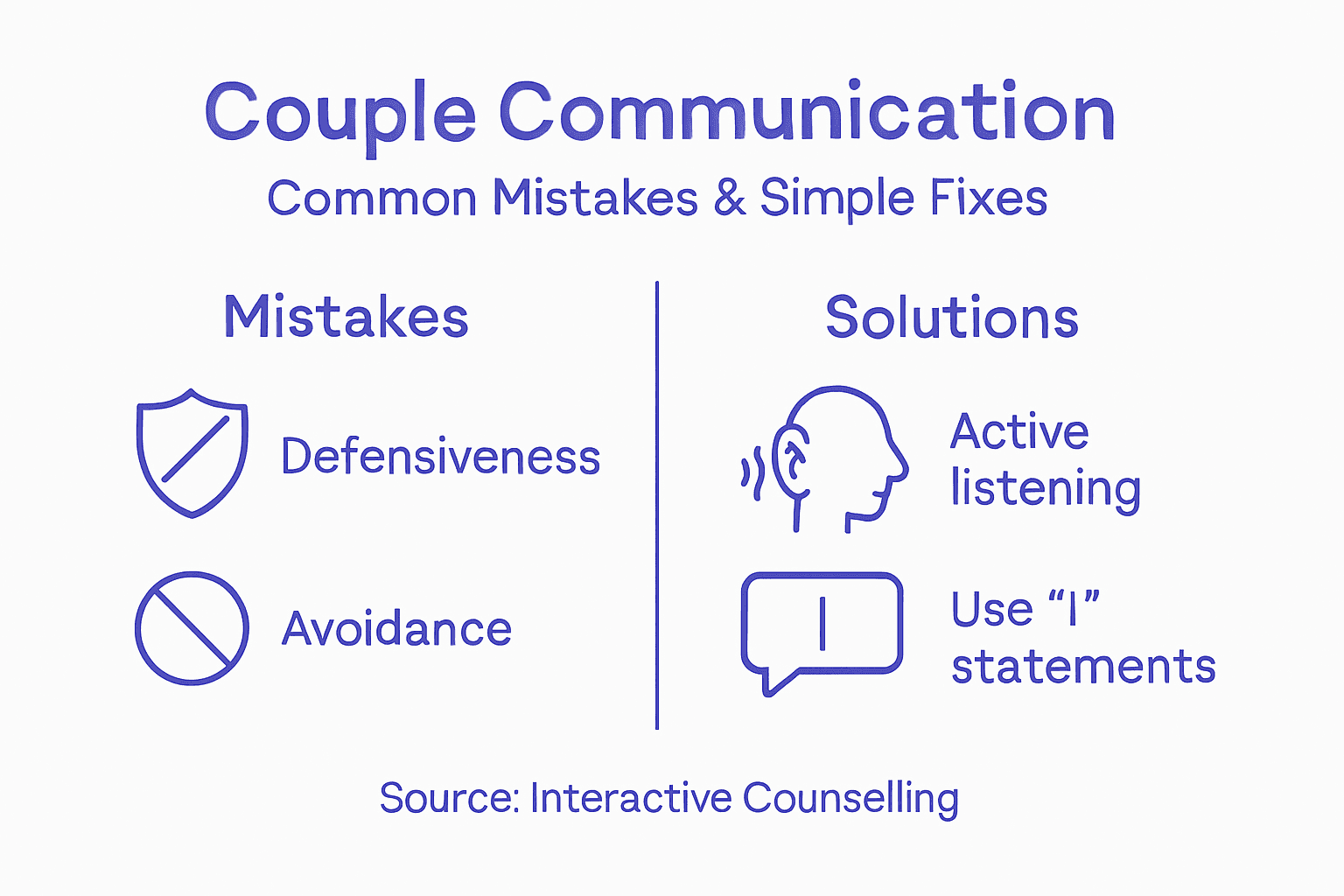
Here’s a summary of key communication pitfalls and their emotional impact:
| Mistake Type | Typical Response | Emotional Impact | Long-term Effect |
|---|---|---|---|
| Defensiveness | Rejecting feedback | Feel dismissed | Chronic disconnection |
| Emotional invalidation | Minimizing feelings | Resentment builds | Erodes trust |
| Avoidance | Shifting topics | Unresolved issues linger | Reduced openness |
| Assumptions | Presuming intent | Misunderstandings escalate | Persistent frustration |
| Harsh language | Critical tone | Increased tension | Greater conflict |
Pro tip: Practice paraphrasing your partner’s statements to ensure you truly understand their perspective before responding.
Recognizing Patterns That Cause Disconnection
In long-term relationships, certain communication patterns can quietly erode connection and intimacy, creating invisible barriers between partners. Emotional distancing occurs subtly, often through repeated interactions that might seem insignificant but gradually undermine relationship trust and understanding.
Common disconnection patterns include:
- Stonewalling or completely withdrawing during conflicts
- Criticism that attacks partner’s character instead of addressing specific behaviours
- Contemptuous communication involving eye-rolling, mockery, or dismissive language
- Constant defensiveness that prevents genuine listening
- Emotional invalidation where one partner’s feelings are minimized or dismissed
When partners consistently engage in these destructive communication styles, they create an environment of emotional unsafety that prevents genuine vulnerability and connection.
Recognizing these patterns requires self-awareness and a commitment to honest reflection. Partners must be willing to identify their own contributions to communication breakdowns, understanding that changing these ingrained behaviours takes consistent effort and practice. The goal is not perfection, but progressive improvement in emotional attunement and mutual respect.
Healthy relationships demand ongoing intentional communication where both partners feel heard, valued, and emotionally supported. This means actively challenging unproductive communication habits, learning to express needs compassionately, and creating space for authentic, non-judgmental dialogue.
The following table compares healthy and unhealthy communication dynamics:
| Communication Style | Approach | Resulting Atmosphere | Outcome for Relationship |
|---|---|---|---|
| Healthy | Open, curious listening | Safe and supportive | Increased intimacy |
| Unhealthy | Defensive, critical | Unsafe, tense | Emotional distancing |
| Healthy | Clear needs expression | Mutual respect | Stronger connection |
| Unhealthy | Mind-reading, blaming | Misinterpretations | Growing frustration |
Pro tip: Commit to a weekly “communication check-in” where you discuss your relationship dynamics openly and constructively.
The Impact Of Avoidance And Defensiveness
Defensive communication is a silent relationship killer that gradually erodes intimacy and understanding between partners. Defensiveness in relationships acts as a psychological shield, preventing genuine emotional connection and creating layers of misunderstanding that can permanently damage relationship dynamics.
The most destructive manifestations of avoidance and defensiveness include:
- Emotional shutdowns where partners completely withdraw
- Blame-shifting to avoid personal accountability
- Passive-aggressive behaviours that mask true feelings
- Minimizing partner’s emotional experiences
- Refusing to acknowledge relationship problems
Defensiveness emerges not as intentional manipulation, but as an automatic self-protection mechanism designed to prevent emotional vulnerability and perceived potential harm.
Psychologically, defensive responses originate from deep-seated fears of rejection, criticism, or inadequacy. Partners who consistently respond defensively create communication barriers that prevent authentic dialogue, making genuine problem-solving nearly impossible. These patterns typically develop through learned behaviours, often originating from past relationship traumas or childhood experiences.

Breaking these destructive communication cycles requires conscious effort, emotional intelligence, and a commitment to vulnerability. Partners must learn to recognize defensive patterns, develop empathy, and create safe emotional spaces where both individuals feel heard and validated without fear of judgment or retaliation.
Pro tip: Practice responding to criticism with curiosity instead of immediate self-protection, asking clarifying questions to understand your partner’s perspective.
Assumptions, Mind-Reading, And Unmet Needs
Relationship assumptions create invisible barriers that silently undermine communication and emotional intimacy between partners. When couples rely on unspoken expectations and imagined interpretations, they inadvertently create a landscape of misunderstandings that can lead to significant emotional disconnection.
Common relationship assumption patterns include:
- Believing partners should automatically understand unexpressed needs
- Expecting mind-reading capabilities during emotional moments
- Interpreting silence as intentional rejection
- Projecting past relationship experiences onto current interactions
- Assuming negative intentions without clarification
Assumptions are emotional shortcuts that prevent genuine communication, replacing authentic dialogue with imagined narratives.
Mind-reading expectations emerge from deep-seated fears of vulnerability and communication challenges. Partners who believe their significant other should intuitively understand their emotions without explicit communication create impossible emotional standards. These unspoken expectations generate frustration, resentment, and ultimately, relationship disconnection.
Healthy relationships require intentional, explicit communication where needs are articulated clearly and compassionately. Partners must develop the courage to express their feelings, desires, and concerns directly, creating a foundation of mutual understanding that transcends assumptions and unspoken expectations.
Pro tip: Practice using “I” statements to express your needs and feelings transparently, focusing on your experience rather than your partner’s perceived shortcomings.
How To Shift Patterns – Practical Therapy Tools
Transforming destructive communication patterns requires deliberate, strategic approaches that challenge existing relationship dynamics. Emotional pattern recognition becomes the foundational first step in breaking cyclical negative interactions that erode relationship health.
Practical therapy tools for shifting communication patterns include:
- Active listening techniques that prioritize understanding over responding
- Emotional regulation strategies to manage triggered reactions
- Non-defensive communication frameworks
- Vulnerability mapping to identify emotional blockages
- Collaborative conflict resolution methods
Sustainable relationship change happens through consistent, intentional micro-adjustments rather than dramatic, unsustainable transformations.
Successful pattern interruption involves developing meta-awareness about communication habits. Partners must learn to observe their automatic responses without judgment, creating space between stimulus and reaction. This requires developing emotional intelligence skills that allow individuals to pause, reflect, and choose more constructive communication approaches.
Therapeutic interventions focus on helping couples build new neural pathways by practicing alternative communication strategies. This means consistently choosing curiosity over defensiveness, empathy over criticism, and collaborative problem-solving over win-lose confrontations.
Pro tip: Implement a daily 10-minute “communication practice” where you take turns speaking and listening without interruption, focusing entirely on understanding each other.
Overcome Communication Barriers and Rebuild Connection Today
Struggling with common couple communication mistakes like defensiveness, avoidance, or assumptions can leave you feeling unheard and emotionally distant. This article highlights how these patterns damage trust and intimacy, making it hard for couples to find genuine understanding and support. If you are seeking to move beyond frustration and disconnection, personalized therapy can offer the tools to transform these challenges into opportunities for deeper connection.
At Interactive Counselling, our licensed therapists across Kelowna, Vernon, Grande Prairie, and Penticton provide compassionate, non-judgmental care designed to address destructive communication patterns head-on. Whether you prefer in-person or confidential online sessions, our tailored approach helps you develop skills like active listening, emotional regulation, and vulnerability mapping that directly relate to the issues discussed in this article. Take the first step to reshape your relationship by exploring our therapy options and booking a session where you can begin practicing new communication strategies in a safe supportive environment. Don’t let these patterns erode what matters most contact us now to reclaim emotional intimacy and build a healthier future together.
Frequently Asked Questions
What are common communication mistakes couples make?
Common communication mistakes among couples include defensive responding, invalidating partner’s emotions, avoiding difficult conversations, making assumptions about intentions, and using harsh or critical language during disagreements.
How can I improve communication with my partner?
Improving communication involves actively listening, expressing feelings without blame, and approaching discussions with curiosity instead of judgment. Regular check-ins and practicing paraphrasing can also enhance mutual understanding.
What impact does avoidance have on relationships?
Avoidance creates unresolved issues that linger and can lead to emotional distancing between partners. It prevents necessary discussions, resulting in reduced openness and trust in the relationship.
How do assumptions affect couple communication?
Assumptions create invisible barriers that undermine communication. When one partner expects the other to read their mind or understand unexpressed needs, it can lead to misunderstandings, frustration, and a breakdown in emotional intimacy.
Recommended
- How to Communicate Better in Relationships: A Gentle Guide
- When Love Languages Don’t Match: How to Reconnect When You Feel Out of Sync
- Why Couples Argue Over the Same Issues
- Complete Guide to What to Expect From Couples Therapy – Interactive Counselling