Recurring arguments can make even loving relationships in Canada feel tense and disconnected. When the same issues keep resurfacing, couples often find themselves caught in familiar patterns like criticism and stonewalling that block real progress. Recognizing these toxic cycles is the first step towards building stronger communication and restoring emotional closeness. This guide explains what drives repeated conflicts and shows Canadian couples how mental health professionals can help break the cycle for a healthier partnership.
Table of Contents
- Recurring Arguments In Relationships Defined
- Emotional Triggers And Communication Patterns
- The Role Of Unmet Needs And Expectations
- Impact On Relationship Satisfaction And Well-Being
- Breaking The Cycle: Effective Resolution Strategies
Key Takeaways
| Point | Details |
|---|---|
| Understand Recurring Arguments | Recognise that recurring arguments stem from unmet emotional needs and ineffective communication patterns that require strategic intervention. |
| Emotional Triggers Matter | Identify and manage emotional triggers to prevent miscommunication and escalated conflicts in relationships. |
| Address Unmet Needs | Articulate and communicate unmet emotional needs clearly to enhance connection and reduce misunderstandings. |
| Adopt Effective Resolution Strategies | Develop a collaborative mindset and employ structured conflict resolution techniques to transform arguments into opportunities for growth. |
Recurring Arguments in Relationships Defined
Relationship conflicts are intricate communication patterns where partners experience repeated disagreements over core issues. Recurring arguments emerge when underlying emotional needs or perspectives remain unresolved, creating cyclical communication patterns that strain relationship dynamics. These interactions are more complex than simple disagreements, representing deeper interpersonal challenges that require nuanced understanding and strategic intervention.
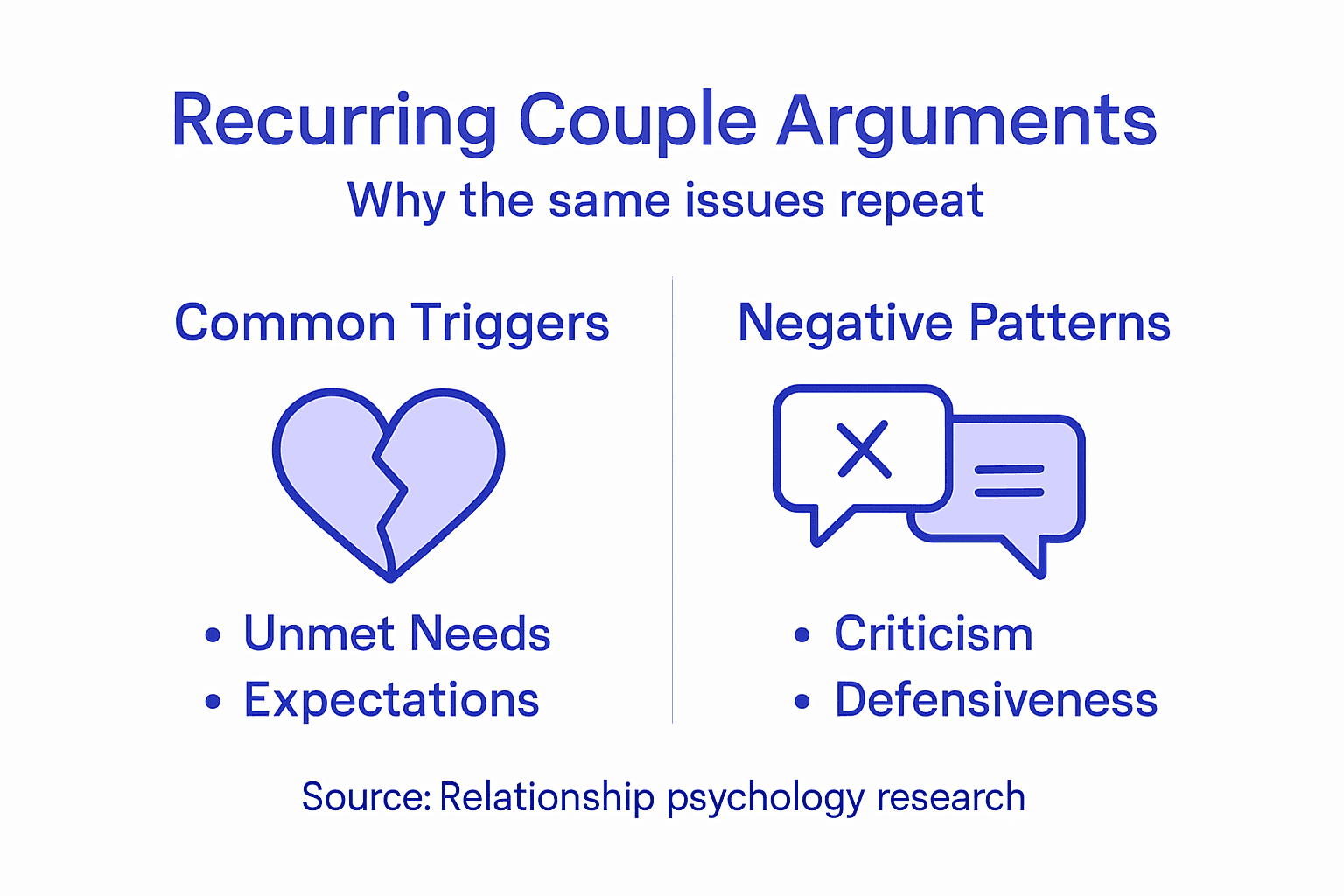
Research reveals that recurring arguments often involve specific communication patterns known as the “four horsemen” – criticism, contempt, defensiveness, and stonewalling. These toxic interaction cycles systematically undermine relationship health by preventing constructive dialogue and emotional connection. Partners trapped in these patterns frequently find themselves rehashing the same conflicts without meaningful resolution, creating frustration and emotional distance.
Here’s how common communication patterns differ in their impact on relationships:
| Pattern | Main Characteristic | Effect on Relationship |
|---|---|---|
| Criticism | Attacking personality | Erodes trust |
| Contempt | Expressing superiority | Breeds resentment |
| Defensiveness | Rejecting responsibility | Escalates conflict |
| Stonewalling | Emotional withdrawal | Blocks resolution |
Understanding recurring arguments requires recognizing their fundamental structure. These conflicts typically stem from unmet emotional needs, divergent communication styles, or fundamental differences in core values and expectations. They are not random occurrences but predictable interaction patterns that reveal deeper relationship dynamics. Identifying these patterns allows couples to interrupt negative cycles and develop more empathetic, collaborative communication strategies.
Pro Tip: Track the specific triggers and emotional undercurrents in your recurring arguments to understand the genuine underlying concerns driving your conflicts.
Emotional Triggers and Communication Patterns
Couples navigate complex emotional landscapes where deeply rooted psychological responses shape their interactions and communication dynamics. Emotional triggers represent unconscious psychological reactions that emerge from past experiences, attachment styles, and unresolved personal wounds. These triggers can transform seemingly routine disagreements into intense emotional exchanges, causing partners to respond from a place of vulnerability rather than mutual understanding.
The psychological mechanisms behind emotional triggers are intricate and multifaceted. When activated, these triggers activate defensive communication patterns that often have little to do with the current situation and everything to do with historical emotional wounds. Fear, anxiety, and unprocessed trauma can cause individuals to misinterpret their partner’s intentions, leading to reactive responses that escalate conflicts rather than resolve them. Emotional regulation strategies become critical in interrupting these automatic response patterns and creating space for genuine connection.
Understanding emotional triggers requires deep self-awareness and compassionate exploration. Partners must learn to recognize their own reactive patterns, identify the underlying emotions driving their responses, and develop healthier communication strategies. This process involves acknowledging vulnerability, practicing active listening, and creating a safe emotional environment where both individuals feel heard and validated without judgment.
Pro Tip: Practice mindful pausing during heated moments, taking three deep breaths to create emotional distance and prevent reactive communication patterns.
The Role of Unmet Needs and Expectations
Unmet needs represent the silent architects of relationship conflicts, creating invisible barriers that prevent genuine emotional connection. Partners often enter relationships with deeply personal expectations shaped by their unique life experiences, childhood backgrounds, and unconscious emotional blueprints. These underlying expectations frequently remain unspoken, creating a complex landscape of potential misunderstandings and interpersonal communication challenges.
The psychological mechanism of unmet needs operates like an underground river, silently influencing relationship dynamics. When fundamental emotional requirements such as validation, security, intimacy, or respect remain unacknowledged, partners develop compensatory behaviours that can manifest as criticism, withdrawal, or passive-aggressive communication. These adaptive strategies represent unconscious attempts to signal unresolved emotional gaps, transforming routine interactions into potential battlegrounds of unexpressed vulnerability.
Recognizing and articulating unmet needs requires profound self-awareness and emotional intelligence. Partners must develop the capacity to introspect, identify their core emotional requirements, and communicate these needs with clarity, vulnerability, and compassion. This process involves transcending surface-level arguments to explore the deeper emotional currents driving relationship dynamics. Successful navigation demands mutual empathy, active listening, and a commitment to understanding each other’s internal emotional landscapes.
Pro Tip: Create a monthly “needs check-in” where both partners share their current emotional requirements and validate each other’s experiences without judgment or defensiveness.
Impact on Relationship Satisfaction and Well-Being
Recurring arguments create profound psychological impacts that systematically erode relationship satisfaction and individual emotional well-being. Relationship satisfaction declines predictably when partners experience chronic unresolved conflicts, creating a cumulative emotional toll that extends far beyond momentary disagreements. Relationship satisfaction becomes a delicate ecosystem constantly threatened by unaddressed communication patterns and unresolved emotional tensions.
The psychological consequences of persistent conflicts are multifaceted and deeply intrusive. Chronic disagreements trigger stress responses that activate the body’s sympathetic nervous system, generating physiological reactions such as increased cortisol levels, elevated heart rates, and diminished emotional resilience. External stressors compound relationship challenges, creating additional layers of complexity that can transform routine interactions into potential emotional minefields where partners feel increasingly disconnected and misunderstood.

Understanding the intricate dynamics of relationship satisfaction requires recognizing that emotional well-being is fundamentally interconnected. Partners experiencing recurring arguments often report decreased personal happiness, reduced intimacy, and a pervasive sense of emotional exhaustion. These experiences can lead to psychological defence mechanisms such as emotional withdrawal, increased criticism, and a gradual erosion of trust and mutual respect. The cumulative impact extends beyond the relationship, potentially affecting mental health, professional performance, and overall quality of life.
Pro Tip: Develop a collaborative conflict resolution strategy that prioritizes understanding over winning, focusing on shared emotional healing rather than individual perspectives.
Breaking the Cycle: Effective Resolution Strategies
Breaking recurring argument cycles requires intentional, strategic approaches that transform destructive communication patterns into opportunities for deeper understanding and connection. Effective conflict resolution techniques involve developing a collaborative mindset where partners view disagreements as shared challenges to solve together, rather than battles to win individually. Conflict resolution becomes a skill that demands emotional intelligence, active listening, and a genuine commitment to mutual growth.
The IDEAL model provides a structured framework for navigating complex relationship conflicts. Systematic conflict resolution steps encourage partners to methodically approach disagreements by first identifying underlying emotions, exploring alternative perspectives, and collaboratively developing solutions. This approach shifts the interaction from reactive emotional exchanges to purposeful, empathetic problem-solving. Key strategies include creating a safe communication environment, practicing non-defensive listening, and maintaining a spirit of curiosity about each other’s experiences.
Successful resolution strategies require partners to develop emotional self-regulation skills that interrupt automatic reactive patterns. This involves recognizing personal triggers, practicing mindful communication, and cultivating the ability to pause and reflect before responding. Partners must learn to distinguish between the content of an argument and the underlying emotional needs driving the conflict. By addressing root emotional concerns with compassion and vulnerability, couples can transform recurring arguments into opportunities for deeper intimacy and mutual understanding.
Below is a summary of effective strategies to break recurring argument cycles:
| Strategy | Core Goal | Typical Benefit |
|---|---|---|
| Collaborative Mindset | Solve as a team | Reduces blame |
| IDEAL Model Steps | Address emotions systematically | Promotes constructive dialogue |
| Mindful Pausing | Self-regulate before reacting | Prevents escalation |
| “Timeout” Ritual | Allow emotional reset | Encourages thoughtful response |
Pro Tip: Create a personal “timeout” ritual where either partner can respectfully request a brief pause during heated discussions to reset emotional temperatures and return to dialogue with greater clarity.
Find Lasting Relief From Recurring Relationship Arguments
Struggling with the frustration of arguing over the same issues repeatedly can leave couples feeling emotionally exhausted and disconnected. This article highlights complex challenges like emotional triggers, unmet needs, and toxic communication patterns that keep conflicts cycling without resolution. If you recognise the toll chronic disagreements are taking on your relationship satisfaction and well-being, know that you are not alone. Understanding these patterns is a crucial first step toward breaking free from the cycle.
At Interactive Counselling, we offer personalized therapy solutions tailored to help couples develop healthier communication skills, emotional regulation strategies, and conflict resolution techniques. Whether you prefer in-person sessions in Canadian cities like Kelowna and Vernon or convenient online therapy nationwide, our licensed professionals provide compassionate, non-judgmental support designed to address the root causes of recurring arguments. Take control of your relationship health today by visiting our website to learn more and book your first appointment. Start transforming those repeating conflicts into opportunities for genuine connection and mutual growth.
Frequently Asked Questions
What are recurring arguments in relationships?
Recurring arguments refer to repeated conflicts that partners experience over core issues, often stemming from unresolved emotional needs or differing perspectives.
What are the main communication patterns that lead to recurring arguments?
The primary communication patterns involved are criticism, contempt, defensiveness, and stonewalling, which create toxic cycles that undermine relationship health.
How can couples break the cycle of recurring arguments?
Couples can break the cycle by adopting a collaborative mindset towards conflicts, using structured resolution frameworks like the IDEAL model, and practicing mindful communication strategies.
Why do emotional triggers play a role in recurring conflicts?
Emotional triggers can cause partners to react defensively based on past experiences and unresolved issues, transforming minor disagreements into more intense emotional exchanges that escalate conflicts.
Recommended
- When Love Languages Don’t Match: How to Reconnect When You Feel Out of Sync
- Why Couples Stress During the Holidays: Why Tension Builds So Quickly
- Couples Counselling | Interactive Counselling
- Complete Guide to What to Expect From Couples Therapy – Interactive Counselling