
Nearly one in three Canadian adults report feeling uneasy or disconnected in their closest relationships. When anxiety and emotional patterns disrupt daily life, finding true relief can seem out of reach. Therapy offers a personalized approach that helps Canadians reveal the source of these struggles, giving practical guidance to transform self-awareness into lasting emotional health and better relationships. For more information, see our couples counselling.
Table of Contents
- How Therapy Supports Emotional Awareness
- Recognizing Patterns In Everyday Emotions
- Personal Stories: Emotional Patterns Over Time
- From Insight To Change: Therapy In Action
- Common Roadblocks And Self-Compassion
Key Takeaways
| Point | Details |
|---|---|
| Emotional Awareness is Essential | Therapy facilitates the development of emotional self-awareness through structured support and professional guidance, leading to healthier emotional regulation. |
| Recognizing Patterns is Key | Identifying emotional patterns through self-observation enhances understanding and helps in developing effective emotional management strategies. |
| Self-Compassion Aids Growth | Practising self-compassion can transform self-criticism into healing, easing the journey of emotional growth and resilience. |
| Action is Required for Change | Translating insights from therapy into actionable steps is crucial for sustainable personal growth and emotional transformation. |
How Therapy Supports Emotional Awareness
Therapy offers a structured pathway for individuals to develop deeper emotional self-awareness, providing professional guidance through complex psychological landscapes. Unlike self-reflection alone, therapeutic approaches systematically help people recognize, understand, and transform their emotional patterns. Emotional patterns shape our psychological experiences in profound ways that often remain hidden without expert support.
Professional therapists use specialized techniques to illuminate emotional dynamics that operate beneath conscious awareness. These methods might include reflective listening, exploring childhood experiences, identifying recurring relationship challenges, and examining underlying belief systems. By creating a safe, non-judgmental environment, therapists help clients unpack emotional responses, trace their origins, and understand how past experiences influence current behavioural patterns.
The process of building emotional awareness through therapy involves multiple interconnected strategies. Clients learn to recognize emotional triggers, understand their physiological responses, and develop healthier coping mechanisms. Therapists guide individuals in distinguishing between reactive emotional states and more balanced, intentional responses. This transformation enables people to move from unconscious emotional patterns to deliberate, self-directed emotional regulation.
The following table compares key therapeutic techniques for building emotional awareness:
| Technique | Focus Area | Typical Benefit |
|---|---|---|
| Reflective listening | Emotional clarity | Deepened self-understanding |
| Mindfulness practices | Present moment awareness | Reduced emotional reactivity |
| Journalling | Emotional tracking | Recognizing recurring patterns |
| Cognitive strategies | Thought-emotion links | Improved emotional regulation |
Pro tip: Start tracking your emotional responses in a journal, noting patterns, triggers, and bodily sensations to enhance your self-awareness between therapy sessions.
Recognizing Patterns in Everyday Emotions
Emotional patterns are complex psychological processes that shape our daily experiences and interactions. Emotional patterns reflect unique ways individuals experience and respond to feelings, influenced by personal history, environmental factors, and learned behavioural responses. Understanding these patterns allows individuals to gain deeper insights into their psychological landscape and develop more effective emotional management strategies.
Recognizing emotional patterns involves careful self-observation and reflection. Common indicators include recurring emotional reactions in specific situations, predictable mood shifts, and consistent physiological responses to stress. For instance, someone might notice they always become defensive during workplace conflicts or experience anxiety when facing uncertain circumstances. These repeated emotional responses are not random but rather interconnected psychological mechanisms developed through past experiences and coping strategies.

The process of identifying emotional patterns requires patience and non-judgmental awareness. Individuals can start by tracking their emotional reactions, noting triggers, physical sensations, thought processes, and subsequent behaviours. Therapeutic techniques like journaling, mindfulness practices, and professional counselling can help uncover underlying emotional dynamics. By understanding these patterns, people can interrupt automatic negative responses and consciously choose more balanced, adaptive emotional reactions.
Pro tip: Create a simple emotion tracking chart where you record daily emotional experiences, noting triggers, intensity, and associated thoughts to help reveal your unique emotional patterns.
Personal Stories: Emotional Patterns Over Time
Personal narratives reveal the intricate ways emotional patterns evolve throughout an individual’s lifetime. These stories demonstrate how emotional resilience develops through understanding and navigating complex psychological landscapes, highlighting the transformative power of self-awareness and therapeutic intervention.
One common narrative involves childhood experiences that shape long-standing emotional responses. For example, someone who experienced inconsistent parental support might develop a pattern of seeking external validation or struggling with trust in relationships. Over time, recognizing these patterns enables individuals to consciously interrupt automatic emotional reactions, replacing them with more balanced and intentional responses. Therapy provides a critical framework for understanding how early experiences create enduring emotional blueprints that influence adult behaviour and interpersonal dynamics.
Emotional patterns are not static but continuously evolving psychological mechanisms. Personal growth involves developing increased emotional intelligence, learning to observe one’s reactions without judgment, and cultivating more adaptive coping strategies. Individuals who engage in consistent self-reflection and therapeutic work often report significant shifts in their emotional landscapes, discovering newfound ability to navigate complex emotional terrain with greater ease and understanding.
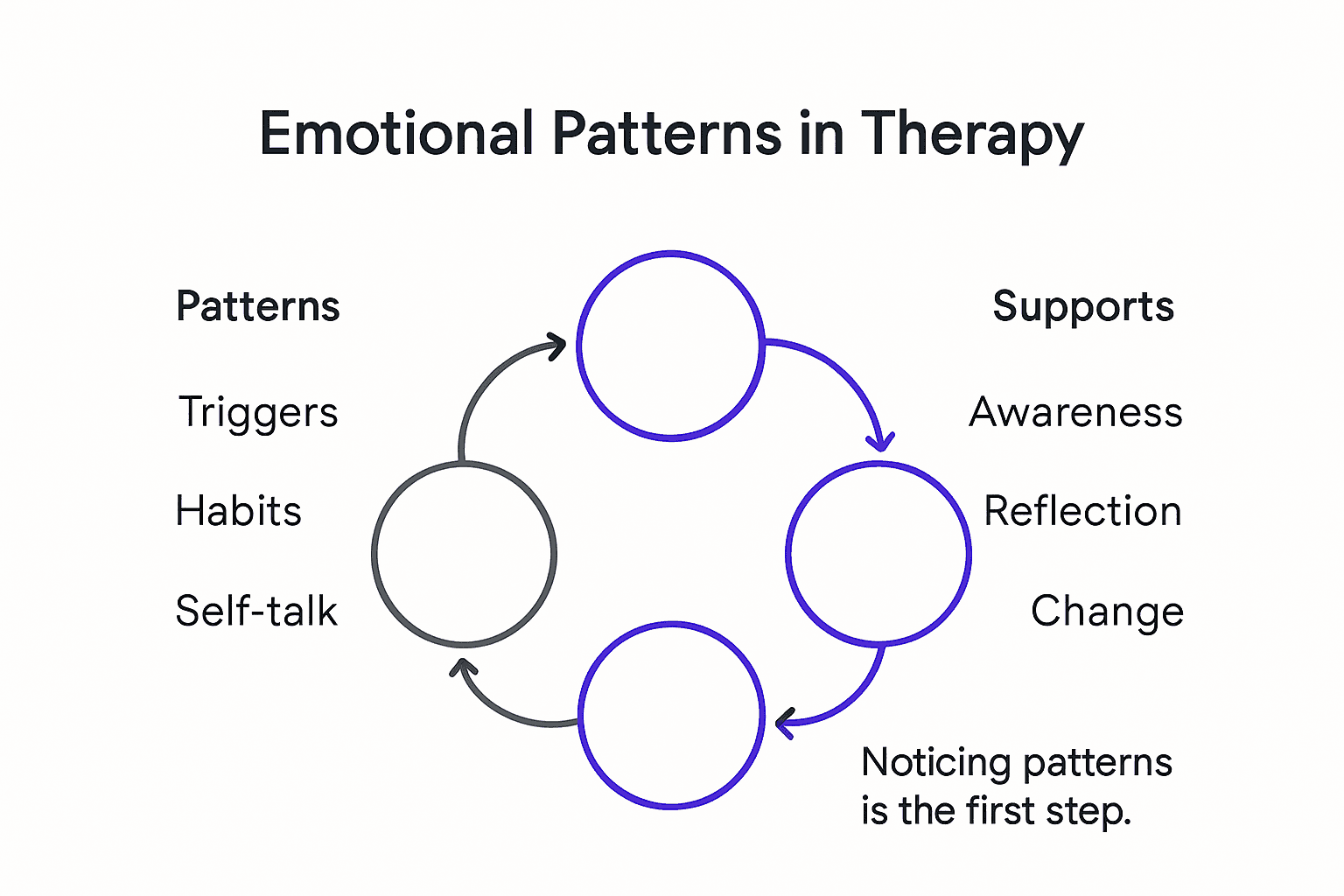
Pro tip: Create a personal timeline mapping significant emotional experiences and noting how your responses have changed over different life stages to gain deeper insights into your emotional development.
From Insight to Change: Therapy in Action
Transforming emotional insights into meaningful change requires more than just understanding—it demands active, intentional engagement. Therapeutic approaches offer structured pathways for translating self-awareness into practical personal growth, bridging the critical gap between recognition and transformation.
The journey from insight to change involves several interconnected stages. Initially, individuals develop awareness of their emotional patterns, learning to observe their reactions without immediate judgment. This metacognitive skill allows them to step back and examine underlying triggers, thought processes, and habitual responses. Therapists guide clients through this exploration, helping them understand the root causes of their emotional experiences and developing alternative strategies for responding to challenging situations.
Practical change emerges through consistent practice and intentional behavioural modification. Clients learn to implement new coping mechanisms, challenge long-standing belief systems, and gradually reshape their emotional responses. This process is not linear but involves continuous reflection, adjustment, and compassionate self-understanding. Therapeutic techniques like cognitive behavioural strategies, mindfulness practices, and experiential exercises provide concrete tools for translating insights into sustainable personal transformation.
Pro tip: Practice micro-commitments by selecting one small emotional response you want to change and consistently applying a new approach for at least two weeks to build sustainable transformation.
Common Roadblocks and Self-Compassion
The journey of emotional growth is often hindered by internal obstacles that challenge our progress and self-perception. Understanding the practice of self-compassion supports emotional resilience during these challenging moments, transforming self-criticism into a path of healing and personal development.
Common roadblocks emerge through deeply ingrained patterns of negative self-talk, perfectionism, and unresolved emotional wounds. These internal barriers manifest as persistent self-judgment, fear of vulnerability, and resistance to change. Individuals often find themselves trapped in cyclical thinking, where past experiences and internalized critical voices create significant emotional resistance. Recognizing these patterns requires gentle self-observation and a willingness to approach personal challenges with curiosity rather than judgment.
Self-compassion becomes a powerful antidote to these emotional roadblocks. By cultivating kindness towards oneself, individuals can develop a more supportive internal dialogue, acknowledging that imperfection and struggle are universal human experiences. This approach involves treating oneself with the same understanding and patience one might offer a close friend, recognizing that personal growth is a complex, non-linear journey. Therapeutic techniques help individuals learn to interrupt negative thought patterns, reframe self-critical narratives, and develop more nurturing, constructive approaches to personal challenges.
Here is a summary of common emotional roadblocks and effective approaches for overcoming them:
| Roadblock | Typical Origin | Supportive Approach | Outcome Potential |
|---|---|---|---|
| Negative self-talk | Internalized criticism | Self-compassion practices | Improved self-esteem |
| Perfectionism | High personal standards | Reframing expectations | Reduced anxiety |
| Fear of vulnerability | Past emotional wounds | Gradual exposure and therapy | Increased emotional openness |
| Resistance to change | Comfort with old patterns | Mindfulness and reflection | Greater adaptability |
Pro tip: Create a compassionate inner dialogue by practicing daily affirmations that acknowledge your humanity, challenges, and inherent worth.
Enhance Your Emotional Awareness with Expert Support
Many people struggle to recognize and understand their emotional patterns which can lead to persistent negative self-talk, difficulty managing stress, and challenges in relationships. This article highlights how therapy provides essential tools for building emotional self-awareness, turning unconscious emotional responses into conscious, intentional actions. At Interactive Counselling, we understand that developing this insight requires compassionate guidance and flexible support tailored to your unique experiences.
Our licensed therapists specialize in helping individuals identify emotional triggers, practice self-compassion, and overcome common roadblocks such as perfectionism and fear of vulnerability. Whether you prefer in-person sessions in Kelowna, Vernon, Grande Prairie, Penticton or the convenience of online counselling nationwide, our goal is to empower you with practical strategies for lasting change. Visit our General – Interactive Counselling page to explore how therapy can help you transform emotional patterns into strengths. Take the first step today by booking an appointment through Interactive Counselling and begin your journey towards greater self-awareness and emotional well-being.
Frequently Asked Questions
How can therapy help improve emotional self-awareness?
Therapy provides structured support to help individuals recognize, understand, and transform their emotional patterns, enhancing self-awareness through professional guidance.
What techniques do therapists use to uncover emotional patterns?
Therapists employ various techniques, including reflective listening, mindfulness practices, journalling, and cognitive strategies, to help clients identify their emotional triggers and responses.
How can I track my emotional patterns between therapy sessions?
You can maintain a journal or create an emotion tracking chart to note daily emotional experiences, triggers, and associated thoughts, which can enhance your self-awareness.
What are common roadblocks in emotional growth, and how can I overcome them?
Common roadblocks include negative self-talk, perfectionism, fear of vulnerability, and resistance to change. Practicing self-compassion and employing mindfulness techniques can help you navigate these challenges.
Recommended
- How Emotional Patterns Shape Canadian Wellbeing
- Why Self-Awareness Matters for Emotional Wellness
- Emotional Regulation: Building Resilience in Everyday Life
- 7 Types of Couples Therapy and How They Can Help Relationships – Interactive Counselling