Nearly one in five Canadian adults recognize themselves as neurodivergent, yet so many still face misunderstanding when seeking mental health support. Living as a neurodivergent adult in Canada can complicate anxiety and relationship challenges, leaving many searching for guidance that truly fits their lived experience. This introduction highlights what neurodiversity really means in adulthood and shows how personalized online therapy can be a vital source of compassion and clarity.
Table of Contents
- Defining Neurodiversity In Adulthood
- Common Types Of Neurodivergence In Adults
- Mental Health Impacts And Unique Challenges
- Therapy Approaches For Neurodivergent Adults
- Navigating Stigma And Accessing Resources
Key Takeaways
| Point | Details |
|---|---|
| Neurodiversity as Strength | Embracing neurodiversity recognises neurological differences as valuable aspects of human identity rather than deficits. |
| Understanding Neurodivergent Conditions | Familiarity with various neurodivergent conditions helps reduce stigma and promotes inclusive support for individuals. |
| Mental Health Considerations | Neurodivergent adults often face unique mental health challenges that require tailored support strategies to foster well-being. |
| Advocacy and Resources | Building a personal advocacy toolkit can empower neurodivergent individuals to navigate societal challenges effectively. |
Defining Neurodiversity in Adulthood
Neurodiversity represents a profound paradigm shift in understanding human neurological differences, moving beyond traditional deficit-based models towards a framework of natural variation and acceptance. Emerging research from Harvard Health explores how adults uniquely experience neurological differences, highlighting that neurodivergence is not a medical condition to be “fixed” but a fundamental aspect of human diversity.
At its core, neurodiversity acknowledges that variations in neurological functioning are normal and valuable. This perspective includes a wide range of neurotypes such as Autism Spectrum Disorder, Attention Deficit Hyperactivity Disorder (ADHD), Dyslexia, and other cognitive variations. Understanding neurodiversity involves recognizing these differences as natural human variations, each bringing unique strengths, perspectives, and challenges to social and professional environments.
For adults, embracing neurodiversity means developing self-understanding, advocating for personal needs, and challenging societal misconceptions. This approach encourages individuals to view their neurological differences not as limitations, but as integral components of their identity. Neurodivergent adults often possess exceptional skills in areas like pattern recognition, detailed thinking, creative problem-solving, and specialized focus that can be tremendous assets in professional and personal contexts.
Pro tip: Consider working with a therapist specializing in neurodiversity to develop personalized strategies for understanding and leveraging your unique neurological profile.
Common Types of Neurodivergence in Adults
Neurodivergence encompasses a diverse range of neurological variations that significantly shape an individual’s cognitive processing, social interactions, and sensory experiences. Comprehensive research highlights multiple neurodivergent conditions that manifest distinctly in adult populations, revealing the complexity and richness of human neurological differences.
Some prominent types of neurodivergence include Autism Spectrum Disorder (ASD), which affects social communication and interaction patterns, and Attention Deficit Hyperactivity Disorder (ADHD), characterized by challenges with focus, impulse control, and executive functioning. Other significant neurodivergent experiences include Dyslexia, which impacts reading and language processing, Dyspraxia, affecting motor coordination and planning, and Tourette Syndrome, involving involuntary motor and vocal tics.
Each neurodivergent condition represents a unique neurological profile with its own strengths and challenges. While these conditions can present specific difficulties, they also bring extraordinary capabilities such as enhanced pattern recognition, deep specialization in specific interests, creative problem-solving, and unique perspectives that contribute valuable diversity to professional and personal environments. Understanding these variations helps reduce stigma and promote more inclusive approaches to supporting neurodivergent adults.
Here’s a summary comparison of common types of neurodivergence in adults:
| Condition | Key Characteristics | Strengths Highlighted | Unique Challenges |
|---|---|---|---|
| Autism Spectrum Disorder | Social communication differences | Pattern recognition, deep focus | Navigating social settings |
| ADHD | Impulsivity and distractibility | Creative thinking, adaptability | Organizing tasks, sustaining focus |
| Dyslexia | Reading and language processing | Visual thinking, problem-solving | Decoding written information |
| Dyspraxia | Motor coordination difficulties | Innovative approaches, resilience | Fine and gross motor skills |
| Tourette Syndrome | Involuntary tics | Strong determination, humour | Managing vocal/motor tics |
Pro tip: Consider maintaining a personal journal to track your unique cognitive patterns, strengths, and potential challenges, which can provide valuable insights for self-understanding and professional development.
Mental Health Impacts and Unique Challenges
Neurodivergent adults face complex mental health challenges that extend far beyond traditional diagnostic frameworks, with intersecting social identities profoundly influencing their psychological experiences and outcomes. These challenges are not simply medical conditions but deeply personal experiences shaped by societal interactions, personal resilience, and systemic barriers.

The mental health landscape for neurodivergent individuals is characterized by elevated risks of anxiety and depression, often exacerbated by societal stigma and a persistent deficit-based understanding of neurodevelopmental differences. Research highlights how neurodivergent adults frequently internalize negative societal narratives, leading to increased psychological distress, masking behaviours, and challenges in developing authentic self-understanding and acceptance.
Critical factors impacting mental health include sensory processing differences, social communication challenges, executive functioning variations, and the constant need to navigate neurotypical environments. These experiences can lead to chronic stress, emotional exhaustion, and a sense of perpetual adaptation. However, recognizing these challenges also opens pathways to developing targeted support strategies, self-advocacy skills, and strengths-based approaches that honour neurodivergent individuals’ unique cognitive landscapes.
The following table presents mental health challenges and positive support strategies for neurodivergent adults:
| Challenge | Contributing Factors | Support Strategy |
|---|---|---|
| Anxiety & depression | Stigma, exclusion | Neurodiversity-affirming therapy |
| Emotional exhaustion | Sensory overload, masking | Sensory-aware routines, self-care |
| Self-acceptance struggles | Internalized negative narratives | Peer support, identity affirmation |
| Chronic stress | Navigating neurotypical norms | Workplace accommodations, advocacy |
Pro tip: Develop a personalised emotional regulation toolkit that includes sensory comfort strategies, communication scripts, and self-compassion practices tailored to your specific neurodivergent profile.
Therapy Approaches for Neurodivergent Adults
Therapy for neurodivergent adults has evolved significantly, moving away from traditional remediation models towards neurodiversity-affirming approaches that validate individual cognitive differences. These contemporary therapeutic frameworks prioritize understanding and supporting each individual’s unique neurological profile, rather than attempting to normalize or modify inherent neurodivergent characteristics.
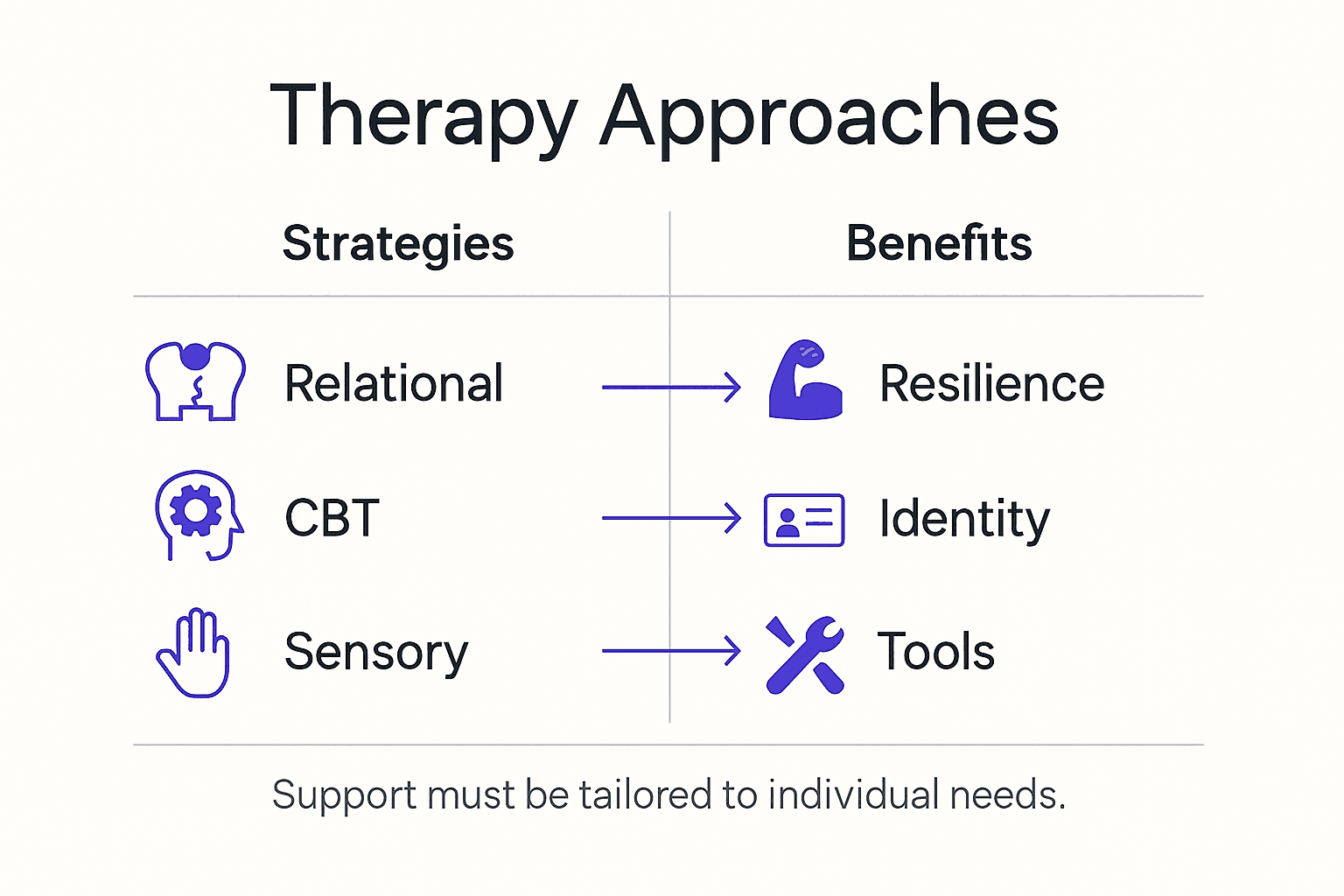
Relational therapy emerges as a particularly effective approach, emphasizing emotional connection and identity affirmation over behavioural modification. This method focuses on understanding the client’s lived experience, addressing internalized stigma, and developing personalized coping strategies that honour their neurodivergent identity. Key elements include creating safe therapeutic spaces, validating personal experiences, and collaboratively developing communication and emotional regulation techniques specific to each individual’s cognitive processing style.
Successful therapy for neurodivergent adults typically incorporates multiple strategies, such as cognitive behavioural techniques adapted for neurodivergent processing, strengths-based approaches, sensory-informed interventions, and skill-building that respects individual neurological differences. The goal shifts from remediation to empowerment, helping neurodivergent adults develop self-understanding, build resilience, and cultivate strategies for navigating a predominantly neurotypical world while maintaining authentic self-expression.
Pro tip: When seeking therapy, prioritize professionals who demonstrate a clear understanding of neurodiversity-affirming practices and can articulate how they will support your unique cognitive profile.
Navigating Stigma and Accessing Resources
Neurodivergent adults frequently encounter complex systemic barriers that extend far beyond individual interactions, with workplace environments often presenting significant challenges in understanding and supporting neurodivergent experiences. These barriers manifest through pervasive stigma, unrealistic expectations of conformity, and limited accommodations that force neurodivergent individuals into exhausting masking behaviours.
Systemic approaches must shift towards genuine inclusion and validation of neurodivergent experiences, moving beyond superficial diversity statements to meaningful structural changes. This involves developing robust support networks, creating accessible communication channels, and implementing educational initiatives that challenge deficit-based narratives about neurodevelopmental differences. Critical strategies include developing workplace accommodations, promoting neurodiversity awareness, and creating safe spaces for self-advocacy and identity expression.
Accessing appropriate resources requires a proactive and strategic approach. Neurodivergent adults benefit from connecting with specialized support groups, seeking neurodiversity-affirming mental health professionals, and developing personal networks that validate their experiences. Understanding legal rights, workplace accommodation processes, and community resources becomes essential in navigating systemic challenges and building personal resilience.
Pro tip: Create a personal advocacy toolkit that includes documentation of your specific needs, communication strategies, and a list of supportive resources to help you confidently navigate professional and personal environments.
Empower Your Neurodivergent Journey with Expert Support
Navigating the unique challenges of adult neurodiversity and mental health requires compassionate understanding and personalised strategies that honour your individual cognitive profile. If you face anxiety, emotional exhaustion, or the persistent pressure to mask your authentic self, know that you are not alone. At Interactive Counselling, we specialise in neurodiversity-affirming therapy that focuses on your strengths while addressing mental health impacts such as anxiety and depression with tailored approaches designed just for you.
Take confident steps today to find a therapist who truly sees you and can help you build resilience through flexible in-person or online sessions across Kelowna, Vernon, Grande Prairie, Penticton, and nationwide. Discover how our diverse team embraces and supports neurodivergent adults by creating safe spaces for authentic expression and self-acceptance. Start your healing journey now by visiting Interactive Counselling to explore therapy options and book a session. Your unique mind deserves expert care that respects and empowers you.
Frequently Asked Questions
What is neurodiversity in adulthood?
Neurodiversity in adulthood refers to the natural variations in neurological functioning among individuals, encompassing conditions like Autism Spectrum Disorder, ADHD, and Dyslexia. It emphasizes acceptance of these differences as integral parts of human identity rather than deficits to be corrected.
How does neurodiversity impact mental health for adults?
Neurodivergent adults often face elevated risks of anxiety and depression, mainly due to societal stigma and internalized negative narratives. Their mental health can be affected by challenges in sensory processing, social communication, and navigating neurotypical environments.
What therapy approaches are effective for neurodivergent adults?
Effective therapy approaches for neurodivergent adults include relational therapy, which emphasizes understanding the individual’s unique experiences, and strengths-based techniques that focus on enhancing their skills and resilience while respecting their neurological differences.
How can neurodivergent adults navigate stigma in the workplace?
Neurodivergent adults can navigate workplace stigma by seeking supportive networks, understanding their legal rights regarding accommodations, and developing personal advocacy toolkits that include communication strategies and documentation of their specific needs.
Recommended
- Autism Counselling for Children, Teens & Adults | Interactive Counselling
- Grande Prairie Autism Counselling | Interactive Counselling
- Challenges of ADHD: Can Counselling Help? – Interactive Counselling
- Vernon Autism Counselling | Interactive Counselling