For some people, actions truly do speak louder than words. That's the heart of the acts of service love language. It’s not about grand, sweeping gestures. It's about feeling seen, valued, and genuinely cared for through the small, helpful things people do for you day in and day out. When someone's emotional tank is filled by practical, thoughtful support, it often feels more real and reassuring than a stream of compliments or a pile of gifts. It's the quiet, steady proof that you’re on the same team, navigating life together.
What Acts of Service Really Means

If this is your partner’s primary love language, it's not about them wanting a personal assistant or expecting you to do everything. It’s about the powerful message tucked inside the action itself. Every helpful gesture is like a quiet promise that says, "I see you, I care about your well-being, and I want to make your life a little bit easier."
It's easy to mistake this love language for a simple tally of household chores. But while sharing the load at home is definitely part of a healthy relationship, a true act of service goes much deeper. It’s about being attentive and showing up as a real partner in the day-to-day chaos of life. For someone who speaks this language, watching their partner proactively tackle a dreaded task without being asked can feel more romantic than a dozen roses.
Here are some things to keep in mind:
- It's about the thought, not just the task. The real magic isn't in the chore itself, but in what it represents: you’re paying attention, anticipating their needs, and actively trying to lighten their load.
- It’s not a transaction. Genuine acts of service come from a place of generosity, not from a "you owe me" mindset. It's about giving freely to make your partner's life better.
- It’s a powerful non-verbal "I love you." For many people, seeing their partner in action is the most authentic and believable expression of care.
This expression of love is incredibly common. In fact, research suggests that roughly 20-25% of people identify acts of service as their top love language, viewing that practical support as a cornerstone of a strong partnership. Of course, this is just one way people give and receive love. You can learn about all of them in our guide on what are the 7 love languages.
Why Help Feels Like Love for This Love Language
Have you ever felt a bigger surge of affection from your partner washing the car without being asked than from getting a fancy gift? Or felt a wave of relief wash over you when they quietly take out the recycling on a cold night? If that sounds familiar, you've tapped into the heart of the acts of service love language. It’s about so much more than just ticking things off a to-do list.
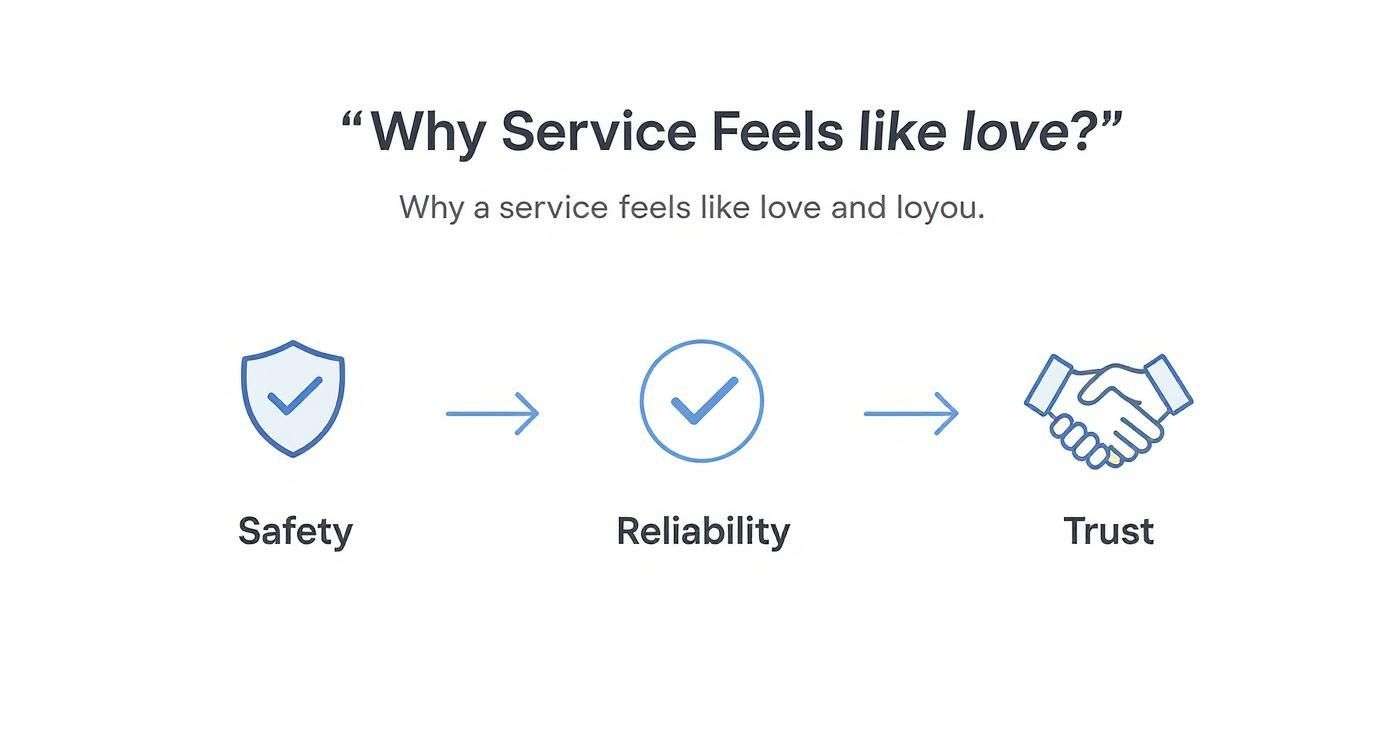
For people who feel loved this way, practical help is a direct translation of safety, reliability, and deep emotional investment. It’s tangible proof that their partner is a true teammate, actively sharing the load of life, not just watching from the sidelines.
Helpful actions are a powerful form of emotional support through actions. When your partner anticipates a need—maybe by making a fresh pot of coffee before you’re even awake—it sends a crystal-clear message: "I'm thinking of you. Your comfort matters to me." This goes way beyond convenience; it’s about feeling truly seen and prioritized in their world.
Here’s why it feels so much like love:
- It builds trust. These gestures show that you can count on your partner not just for the big, dramatic life events, but for the small, everyday moments that really make up a life together.
- It creates safety. Seeing that reliability in action is incredibly calming and reassuring, and it builds a rock-solid foundation of security in the relationship.
- It reduces the mental load. Taking initiative on tasks lifts the invisible weight of planning, remembering, and delegating that so often falls on one person.
- It demonstrates genuine care. It shows a partner is paying close attention to your stress levels and actively wants to make your life easier.
This form of practical love is often a direct response to feeling overwhelmed. When one partner carries an unequal share of household labour, relationship satisfaction can plummet. So, when someone’s primary love language is acts of service, it can sometimes be a signal that they’re looking for more balance and support.
Acts of Service in Romantic Relationships
Putting the acts of service love language into practice means more than just splitting the chores. It’s about becoming fluent in a language of thoughtful, hands-on support that shows you truly care. The real goal is to go beyond simple helpful tasks and create meaningful gestures that hit right in the heart.
Think about the difference. Grabbing takeout on your way home is helpful, for sure. But noticing your partner is completely drained and quietly making their favourite comfort meal from scratch? That’s a powerful act of service. One is about convenience; the other is a genuine expression of emotional support through actions.
Making this shift from task to gesture requires you to really tune into your partner's world.
- What truly saps their energy?
- What unspoken worries are they carrying around?
- What small thing could you do that would make a big difference in their day?
A truly meaningful act of service often means anticipating a need or lifting some of their mental load before they even have to ask. It’s a way of showing you're not just on their team, but you're an active, engaged player. When you consistently show up like this, you build a foundation of safety and reliability. Your partner learns they can count on you, which is the bedrock of trust.
To make your actions more impactful, think about what would feel most supportive to your partner.
- Ease their burden. If they had a brutal day at work, you could take over dinner, dishes, and bedtime routines without a word.
- Provide practical support. If the dishwasher breaks, you could handle all the calls to find and book a repair person.
- Show you’re listening. You could quietly fix that squeaky cabinet door they complained about a week ago.
- Anticipate a need. You could notice the car is low on gas and fill it up before they even have a chance to worry about it.
These thoughtful acts send a clear message: you're not just a roommate sharing chores, but a deeply invested partner who truly has their back.
Acts of Service in Parenting & Co-Parenting
For parents and co-parents, acts of service often feels less like a romantic gesture and more like an essential survival tool. When you're deep in the trenches of raising children, practical support isn't just nice—it's a lifeline. It becomes the language of teamwork, spoken through actions when everyone is too exhausted for words.
This goes way beyond just splitting chores 50/50. It’s about anticipating needs and shouldering the invisible labour that comes with running a family.
- It's one parent noticing the other is at their absolute limit and just taking over the chaotic bedtime routine, no questions asked.
- It’s tackling the mountain of school forms, packing the lunches, or scheduling dentist appointments to lift that mental burden from your partner.
- It’s making sure there's always milk for the morning cereal or diapers in the bag, so your partner doesn’t have to think about it.
In a co-parenting relationship, especially after a separation, consistent, reliable actions are the bedrock of trust. This is where emotional support through actions helps create a stable and safe environment for everyone involved, especially the kids.
Small, dependable gestures can completely rebuild a cooperative foundation.
- Be consistently on time for pickups and drop-offs. It seems minor, but this simple act shows you respect the other parent's time and proves they can count on you.
- Handle your share of responsibilities without needing a reminder. This isn't about getting credit; it's about showing you're an equal, engaged co-parent who is fully present.
- Communicate clearly about logistics and schedules. A quick text about a traffic delay or a heads-up about a school event prevents last-minute chaos and shows you’re thinking ahead for the whole family.
When your actions consistently match your words, it fosters a profound sense of security. It reassures everyone that both parents are committed to a predictable routine that puts their children’s needs first. Parenting is a marathon, not a sprint, and this kind of practical teamwork is the best defence against burnout.
Acts of Service & Burnout

The acts of service love language is truly beautiful when it flows both ways, but what happens when the giving becomes a one-way street? This is where the risk of burnout in relationships becomes very, very real. When one person is consistently doing more, they can start to feel less like a cherished partner and more like an unpaid, unappreciated employee.
A significant household imbalance doesn't just create extra work; it can quietly erode the warmth and connection that those thoughtful actions were meant to build in the first place. Burnout from over-giving often creeps up on you. You might not notice it at first, but over time, the signs can become impossible to ignore.
You might be heading toward burnout if you find yourself feeling:
- Constant Fatigue: You're mentally and physically drained, even after a full night's sleep.
- Growing Irritability: Little things that never used to bother you now feel intensely annoying or frustrating.
- A Sense of Obligation: Your helpful actions start to feel like chores you have to do, not loving gestures you want to do.
- Feeling Unseen: You're putting in a ton of effort, but it feels like your partner doesn't even notice or acknowledge it.
- Loss of Joy: That satisfaction you once felt from helping has vanished, replaced by a feeling of emptiness or even resentment.
These feelings are your mind and body sending a clear signal that something needs to change. Recognizing them is the first step toward finding balance again. During particularly demanding life stages like new parenthood, some couples look for external support. Tapping into comprehensive postpartum support services can bring in professional help, offering much-needed relief and preventing burnout before it takes hold. It’s a powerful way to ensure the flow of love remains sustainable and mutual.
When Acts of Service Turns Into Resentment
There’s a painful side effect to burnout that can quietly poison a relationship: resentment. It’s that slow, creeping feeling that happens when one partner’s joyful acts of service start to feel more like thankless chores. More often than not, this feeling stems from a household imbalance that’s been left to fester for too long.
This isn't about pointing fingers. It’s about being honest about a dynamic where unspoken expectations and a lack of appreciation have started to silently eat away at your connection. Suddenly, what once felt like a loving gesture now feels like just another job no one else wants to do.
When the acts of service primarily flow in one direction, the giver can begin to feel completely invisible. Their efforts, which are their main way of saying “I love you,” get taken for granted. All the love drains out of the action. Before you know it, making that fresh pot of coffee or taking the bins out is no longer a small act of love. It becomes an obligation, heavy with frustration.
This is a critical tipping point. Resentment is often a warning sign that one partner feels their emotional support through actions isn't being seen, valued, or, most importantly, returned in a meaningful way.
Take a quiet moment and think honestly about how you feel when you’re doing things for your partner.
- Do you feel a quick flash of irritation when you notice a certain task has been left for you again?
- Do you ever catch yourself keeping a mental scorecard of everything you do compared to what your partner does?
- When your partner asks for a favour, does it land like a demand rather than a request?
- Do you avoid asking for help yourself, figuring you’ll just have to do it in the end anyway?
If you answered yes to some of these, it doesn’t mean your relationship is in trouble. It’s simply a signal that it’s time for an honest, kind conversation. The goal is to bring back that feeling of mutual appreciation and teamwork.
Let’s Find Your Balance Together
Let's be honest: talking about who does what around the house isn't exactly romantic. But when those conversations get stuck on a loop, or stop happening altogether, they can really start to erode a relationship.
If you're feeling a growing sense of resentment or burnout from a household imbalance, it can feel like you're speaking different languages. Trying to fix it on your own can feel impossible, and that's exactly where couples counselling in Kelowna can be a game-changer.
Counselling creates a safe, neutral space where you can finally have these conversations without them escalating into an argument. Our therapists can help you both untangle the expectations, understand what's really going on underneath the surface, and find a way forward that feels fair and sustainable for both of you. This isn't just about making a better chore chart; it's about remembering you're on the same team.
With our counsellors across BC and Alberta and through virtual therapy across Canada, we're here to help you reconnect. Think of it as a proactive step toward building a partnership where you both feel seen, appreciated, and genuinely supported—not just with words, but with the actions that truly matter.
Frequently Asked Questions
{
“@context”: “https://schema.org”,
“@type”: “FAQPage”,
“mainEntity”: [
{
“@type”: “Question”,
“name”: “What does acts of service mean as a love language?”,
“acceptedAnswer”: {
“@type”: “Answer”,
“text”: “It means feeling loved and valued through thoughtful actions that make your life easier. It’s not about the chore itself, but the message behind it: ‘I see you, I care about your well-being, and I want to support you.’ For someone with this love language, a helpful gesture is a powerful and tangible expression of love.”
}
},
{
“@type”: “Question”,
“name”: “Why do actions matter more than words for some people?”,
“acceptedAnswer”: {
“@type”: “Answer”,
“text”: “For many, actions are tangible proof of care and commitment. Words can be easy to say, but actions require time, effort, and thought. When a partner consistently shows up with practical help, it builds a deep sense of trust and security, proving that their love is reliable and real.”
}
},
{
“@type”: “Question”,
“name”: “Can acts of service reduce relationship stress?”,
“acceptedAnswer”: {
“@type”: “Answer”,
“text”: “Absolutely. When partners actively share the mental and physical load of daily life, it prevents one person from feeling overwhelmed. This teamwork reduces stress, minimizes resentment from household imbalance, and reinforces the feeling that you are a supportive, united team.”
}
},
{
“@type”: “Question”,
“name”: “What if acts of service feel unappreciated?”,
“acceptedAnswer”: {
“@type”: “Answer”,
“text”: “This is a common source of frustration and often points to a communication gap. It’s important to have an open, gentle conversation. Explain that these actions are how you show love and that feeling acknowledged is important. Likewise, make a point to verbally appreciate the helpful things your partner does for you.”
}
},
{
“@type”: “Question”,
“name”: “Can burnout affect this love language?”,
“acceptedAnswer”: {
“@type”: “Answer”,
“text”: “Yes, significantly. Burnout happens when the giving becomes one-sided. If one partner is constantly performing acts of service without receiving support or appreciation in return, it leads to exhaustion and resentment. This can drain the love from their actions, turning them into obligations instead of gifts.”
}
},
{
“@type”: “Question”,
“name”: “Can counselling help restore balance?”,
“acceptedAnswer”: {
“@type”: “Answer”,
“text”: “Yes. Counselling provides a neutral space to discuss household imbalances and misaligned expectations without blame. A therapist can help you both communicate your needs more effectively and develop practical strategies to create a more balanced, supportive, and appreciative partnership.”
}
}
]
}
What does acts of service mean as a love language?
It means feeling loved and valued through thoughtful actions that make your life easier. It's not about the chore itself, but the message behind it: 'I see you, I care about your well-being, and I want to support you.' For someone with this love language, a helpful gesture is a powerful and tangible expression of love.
Why do actions matter more than words for some people?
For many, actions are tangible proof of care and commitment. Words can be easy to say, but actions require time, effort, and thought. When a partner consistently shows up with practical help, it builds a deep sense of trust and security, proving that their love is reliable and real.
Can acts of service reduce relationship stress?
Absolutely. When partners actively share the mental and physical load of daily life, it prevents one person from feeling overwhelmed. This teamwork reduces stress, minimizes resentment from household imbalance, and reinforces the feeling that you are a supportive, united team.
What if acts of service feel unappreciated?
This is a common source of frustration and often points to a communication gap. It's important to have an open, gentle conversation. Explain that these actions are how you show love and that feeling acknowledged is important. Likewise, make a point to verbally appreciate the helpful things your partner does for you.
Can burnout affect this love language?
Yes, significantly. Burnout happens when the giving becomes one-sided. If one partner is constantly performing acts of service without receiving support or appreciation in return, it leads to exhaustion and resentment. This can drain the love from their actions, turning them into obligations instead of gifts.
Can counselling help restore balance?
Yes. Counselling provides a neutral space to discuss household imbalances and misaligned expectations without blame. A therapist can help you both communicate your needs more effectively and develop practical strategies to create a more balanced, supportive, and appreciative partnership.