The quality time love language means feeling most loved when someone gives you their undivided attention — not gifts, not help around the house, but focused, uninterrupted presence. It is one of the five love languages described by Gary Chapman, and for the people who speak it, half an hour of real conversation with phones away counts for more than an entire weekend spent side by side while distracted. For more information, see our couples counselling.
That distinction is where most couples come unstuck. One partner counts the hours; the other counts the moments of actual attention inside them. This guide covers what quality time really means, why divided attention reads as rejection, and how to rebuild it with a partner, with children, and with yourself.
What Quality Time Really Means
Quality time isn't measured on a clock; it's measured in connection. It’s the difference between passively sitting on the couch while you both scroll on your phones and intentionally putting those devices away to truly engage with each other. For someone who values quality time, your focused attention is the clearest signal that they are seen, heard, and cherished.
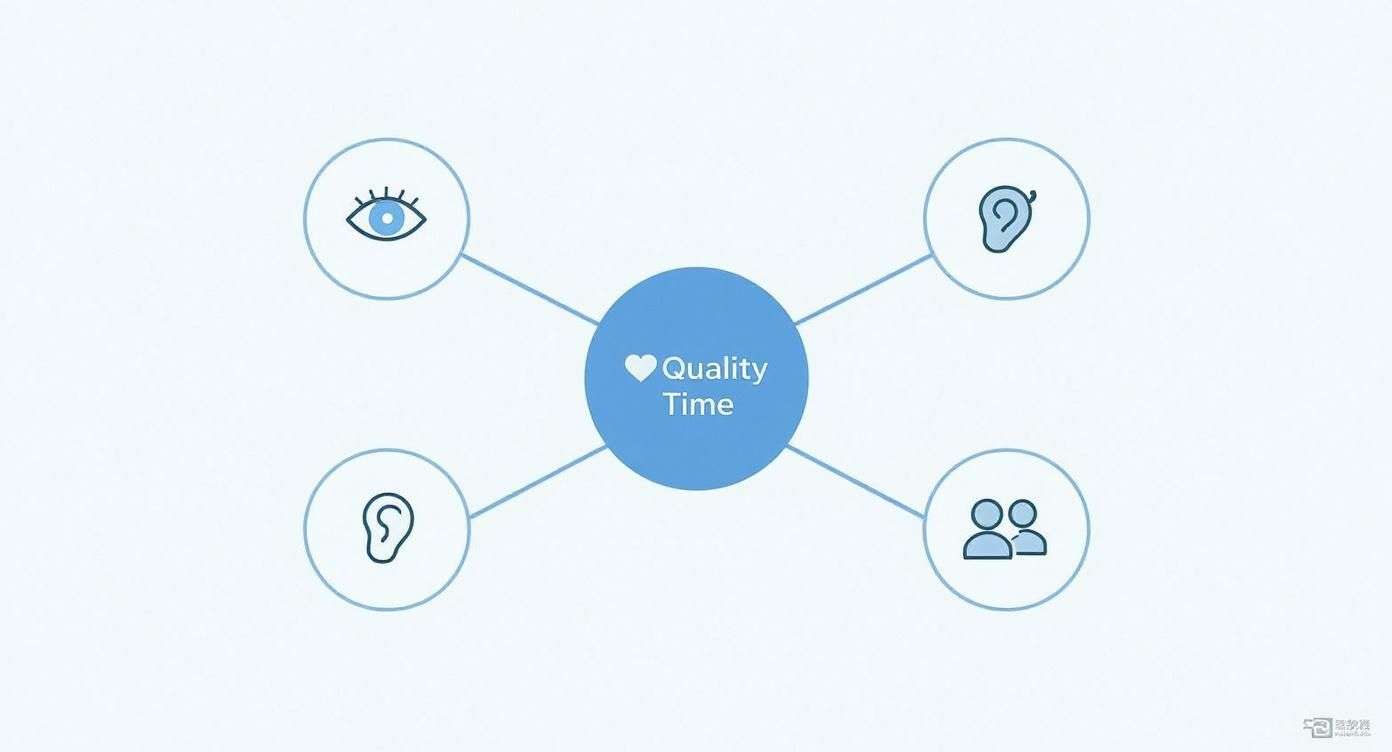
It’s about creating an emotional space where the other person feels like the only one in the world. This doesn’t require grand gestures, just genuine presence. It’s a combination of a few key ingredients:
- Undivided Attention: This is the non-negotiable foundation. It means phones are out of sight, the TV is off, and your focus is completely on them.
- Active Listening: This goes beyond just hearing words. It’s about leaning in, asking curious questions, and listening to understand their feelings, not just to respond.
- Emotional Presence: This is about tuning into their emotional state. Are they excited? Stressed? Sad? Being present means sharing in that feeling with them, creating a sense of shared experience.
- Shared Activities: Doing things together, from a simple walk to cooking a meal, creates a bank of positive memories that strengthens your bond over time.
This isn't just a niche preference. Research shows that Quality Time is the most popular love language, especially among women. When you read the full research about these findings, it becomes clear that this need for focused connection is a fundamental part of feeling loved and secure for many people. To understand your own needs better, our guide on how to find your love language accurately is a great starting point.
Why Distraction Damages Emotional Safety

In our hyper-connected world, our attention has become one of our most valuable resources. When your loved one’s primary love language is quality time, your undivided attention isn’t just a nice-to-have; it’s the very foundation of their emotional safety within the relationship.
Every time a notification pings or your eyes drift to a screen while they’re talking, it can feel like a small betrayal. It sends a powerful, even if unintentional, message: "Something else is more important than you right now." Over time, these small moments of divided attention can create significant emotional distance. They chip away at the trust and security that a strong connection is built upon.
This isn’t about blame. We’re all pulled in a million directions by work, family, and the constant digital buzz. The key is to build awareness of how these distractions land for the person you love. For them, your fractured focus can feel like a form of emotional abandonment, leaving them feeling lonely and unimportant even when you’re sitting right beside them. They are left feeling like they have to compete for your attention, which is the opposite of the secure connection they need.
There's an interesting social perception at play here, too. While most people find it easy to give quality time themselves, many believe others struggle with it. This gap highlights a cultural challenge: we value presence, but our environment makes it difficult to practice. You can discover more insights about these social perceptions and see how common this struggle is.
Quality Time for Couples
Ready to put quality time into practice with your partner? The good news is that it’s less about grand, expensive gestures and more about small, consistent moments of intentional connection. For a partner whose love language is quality time, your undivided attention is the most meaningful gift you can offer.
Here are some grounded, practical ways to make quality time a natural part of your life together:
- Start a Daily Ritual:
- Find just 10-15 minutes each day to connect without screens. Maybe it’s over coffee in the morning or before bed. Ask questions like, “What was the best part of your day?” or “What’s on your mind tonight?”
- Make hellos and goodbyes count. Pause for a moment to make eye contact, share a real hug, and be fully present instead of rushing through it.
- Turn Chores into Connection:
- Cook dinner together. Put on some music, chat while you chop, and turn a mundane task into a shared, positive experience. The focus is on the togetherness, not the task.
- Plan Weekly Connection Points:
- Redefine "date night." It doesn't have to be fancy. It can be a walk in a park, a trip to a bookstore, or a competitive board game night at home. The goal is a shared experience.
- Have a "dream session." Set aside time to talk about your hopes, goals, or even plan a future vacation. It’s about aligning your lives and sharing what’s in your hearts.
- Learn something new together. Taking a one-time class, like cooking or pottery, creates a unique memory and strengthens your bond as a team.
Research shows that while 31% of people identify Quality Time as their main love language, a stunning 59% believe it's the most vital for long-term success. You can learn more about these love language findings. This underscores how critical these moments of shared presence are. For more creative ideas, check out these love language examples.
Quality Time for Families & Children
For children, a parent’s focused attention is like emotional sunshine—it’s absolutely essential for their healthy development. The quality time love language is one of the most powerful tools a parent has to build a child’s self-worth and create a secure attachment that lasts a lifetime.
When a child feels they have your complete, undivided attention, it sends a profound message: "You are important. You are seen. You matter to me." This isn't about expensive toys or elaborate outings. It's about the small, everyday moments where you make them feel like the centre of your universe, even if it’s just for ten minutes.
Here are some simple but powerful ways to connect with your children:
- Get on Their Level: Literally sit on the floor with them and enter their world. Let them lead the play, whether it’s with blocks, dolls, or an imaginary game. Your presence, without an agenda, is what matters.
- "Special Time": If you have more than one child, schedule brief, one-on-one time with each one. This makes them feel uniquely seen and valued outside of their sibling dynamics.
- Be a Great Listener: When they come to you with a story, put your phone down, turn to face them, and truly listen. The story might seem small to you, but your attention makes them feel significant.
- Share an Activity: Work on a puzzle together, bake cookies, or read a book out loud. The concept of the magic of sustained shared thinking shows how working on a task together builds teamwork and deepens your connection.
Even 15 minutes of focused, uninterrupted time can fill a child's emotional cup for the whole day. It's about quality, not quantity.
Quality Time with Yourself (Emotional Regulation)

While we often focus on giving quality time to others, applying this love language to ourselves is a foundational part of emotional well-being. This isn’t about being selfish; it’s about building the inner resources you need to show up as a grounded, present person for others.
Giving yourself quality time means intentionally offering yourself the same undivided attention you would give a loved one. It’s about creating quiet moments to listen to your own thoughts and feelings without judgment. This practice is at the heart of emotional regulation. When you can sit with yourself calmly, you build a deep sense of inner safety and resilience.
Here are some gentle ways to practice giving quality time to yourself:
- Have a Mindful Moment: For five minutes, just sit with a cup of tea or coffee. No phone, no TV. Simply notice the warmth of the mug, the taste, and the feeling of a quiet pause.
- Take a "Notice" Walk: Go for a short walk without headphones. Pay attention to your surroundings—the sound of the wind, the color of the leaves, the feeling of your feet on the ground.
- Journal Without an Agenda: Spend a few minutes writing down whatever comes to mind. Don’t worry about making it perfect. This is simply a space for your inner voice to be heard.
By practicing this form of self-connection, you are filling your own emotional cup. This makes it possible to pour into your relationships from a place of fullness rather than depletion.
Rebuilding Connection After Disconnection
It’s a quiet, painful ache—looking at someone you love and feeling an emotional distance between you. Life gets busy, stress takes over, and slowly, a gap can form. If you’re feeling this disconnection, please know you’re not alone, and there is a gentle way back. The quality time love language is one of the most effective tools for rebuilding connection.
When a relationship feels strained, grand gestures can feel overwhelming. The path back to each other often starts with small, consistent moments of shared, positive attention. It’s about creating safe, low-pressure opportunities to remember your bond.
Here are a few gentle steps you can take to start rebuilding:
- Share a Silent Activity: You don't have to force a deep conversation. Try doing a puzzle, gardening side-by-side, or just sitting together to watch a sunset. The goal is comfortable, shared presence, which rebuilds emotional safety.
- Start a "Good Things" Jar: Each day, write down one positive thing you appreciate about the other person. At the end of the week, take a few minutes to read them aloud to each other. This helps shift the focus back to gratitude.
- Implement a 5-Minute Check-in: Set aside just five minutes each day—no phones—to ask, "How are you, really?" Then, your only job is to listen with your full attention. This small ritual can powerfully re-establish your connection.
Rebuilding is a process of laying one small brick of positive connection at a time. Each moment of shared presence helps repair the foundation of your relationship.
Need Support Rebuilding Your Connection?
Sometimes, no matter how hard you try, bridging that emotional distance on your own feels overwhelming. When communication patterns are stuck and disconnection feels deep, seeking professional support is a sign of strength and commitment to your relationship.
Counselling provides a safe, neutral space where you can learn to hear each other again. It’s a place to understand the root causes of the disconnection and learn practical tools to express your needs and listen with empathy. Our counsellors across BC and Alberta are skilled in helping couples and families navigate these challenges and find their way back to one another. With options like Interactive Counselling’s Kelowna couples team and virtual therapy across Canada, compassionate, professional support is accessible. Reaching out is the first step toward building a stronger, more resilient connection for the future.
How to Tell If Quality Time Is Your Partner’s Love Language
The clearest signal is what they complain about. A partner whose love language is quality time rarely asks for more presents or more help with chores — they say things like "you’re always on your phone", "we never talk any more", or "you’re here but you’re not really here". Those are not nagging; they are a request stated in the only terms that register.
The second signal is what lifts their mood. Notice whether they seem most settled after an evening walk or a long conversation, rather than after you have ticked something off their list. And notice what stings: for someone who speaks this language, being interrupted mid-sentence by a notification lands harder than a forgotten anniversary.
One caution worth holding lightly. The love languages are a useful shorthand, not a diagnostic tool, and the research base behind them is thinner than their popularity suggests. Treat the framework as a way to start a conversation about what each of you actually needs, rather than as a fixed category that explains everything.
Frequently Asked Questions (FAQ)
What is quality time as a love language?
Quality time as a love language is the need to feel loved and valued through someone’s undivided attention. It's less about the amount of time spent together and more about the quality of that time—being truly present, engaged, and focused on the other person without distractions.
How much time is enough for quality time?
There is no magic number. Quality always trumps quantity. A focused, distraction-free 15-minute conversation can be more meaningful than a whole evening spent in the same room but mentally distant. Consistency is key; small, regular moments of connection are often more powerful than infrequent grand gestures.
Can quality time repair emotional distance?
Yes, absolutely. When a relationship feels disconnected, intentionally creating moments of quality time is one of the most effective ways to start rebuilding connection. It creates new positive experiences and gently re-establishes emotional safety and trust, reminding both people of the bond they share.
Does quality time require constant conversation?
Not at all. While meaningful conversation is a wonderful form of quality time, so is comfortable, shared silence. Activities like hiking, gardening, visiting a museum, or simply watching a sunset together can create a powerful sense of connection without the need for constant talking. The key is the shared, present experience.
Can parents use quality time with children?
Yes, it is essential for a child's emotional development. A parent's undivided attention makes a child feel seen, safe, and valued. This can look like getting on the floor to play with them, reading a book together without distractions, or actively listening to their stories about school.
Can counselling help couples reconnect?
Counselling can be incredibly helpful for couples feeling disconnected. A therapist provides a safe, neutral space to explore communication breakdowns and teaches practical skills for rebuilding emotional intimacy. It offers a guided path to help you understand each other’s needs (like the need for quality time) and strengthen your bond.