
Has a simple compliment ever completely turned your day around? Or have you felt how a few kind, encouraging words can feel like a warm hug for your soul? If that sounds familiar, you already understand the heart of the words of affirmation love language. For many of us, spoken or written words are the most direct and powerful way we feel truly loved, seen, and appreciated. When our emotional well-being is so closely tied to language, kind words can build a deep sense of security, while harsh ones can feel deeply wounding. This guide will explore why words hold such power and how you can use them to strengthen your connections. If finding the right words feels like a struggle, remember that counselling support can help you and your loved ones learn healthier communication patterns.
What Words of Affirmation Really Means
At its core, the words of affirmation love language is about using words to build up the people we love. It’s not just about paying compliments or dishing out flattery. It’s about sincere, heartfelt communication that makes someone feel seen, safe, and truly valued for who they are. For someone who speaks this love language, hearing "I love you" is important, but the words hit so much deeper when they come with a "why."
There's a world of difference between a vague "You're great" and something specific like, "I love how you always listen so patiently when I'm stressed out." That detail? That’s what makes the words stick, building a real sense of security and appreciation.
More Than Just Compliments
This love language is a beautiful blend of encouragement, empathy, and genuine praise. It’s about being your partner’s biggest cheerleader, offering a soft place to land when they’re down, and being the voice that reminds them of their own strengths.
People who thrive on affirming words often tuck kind phrases away in their hearts for years, drawing strength from them long after they were spoken. They feel most loved when their partner, parent, or friend verbally recognizes their character, celebrates their wins, and offers gentle support through the tough times. It’s all about using your words to make someone feel unconditionally cherished.
This is a perfect illustration of how it works—kind words lead directly to feeling loved and valued.
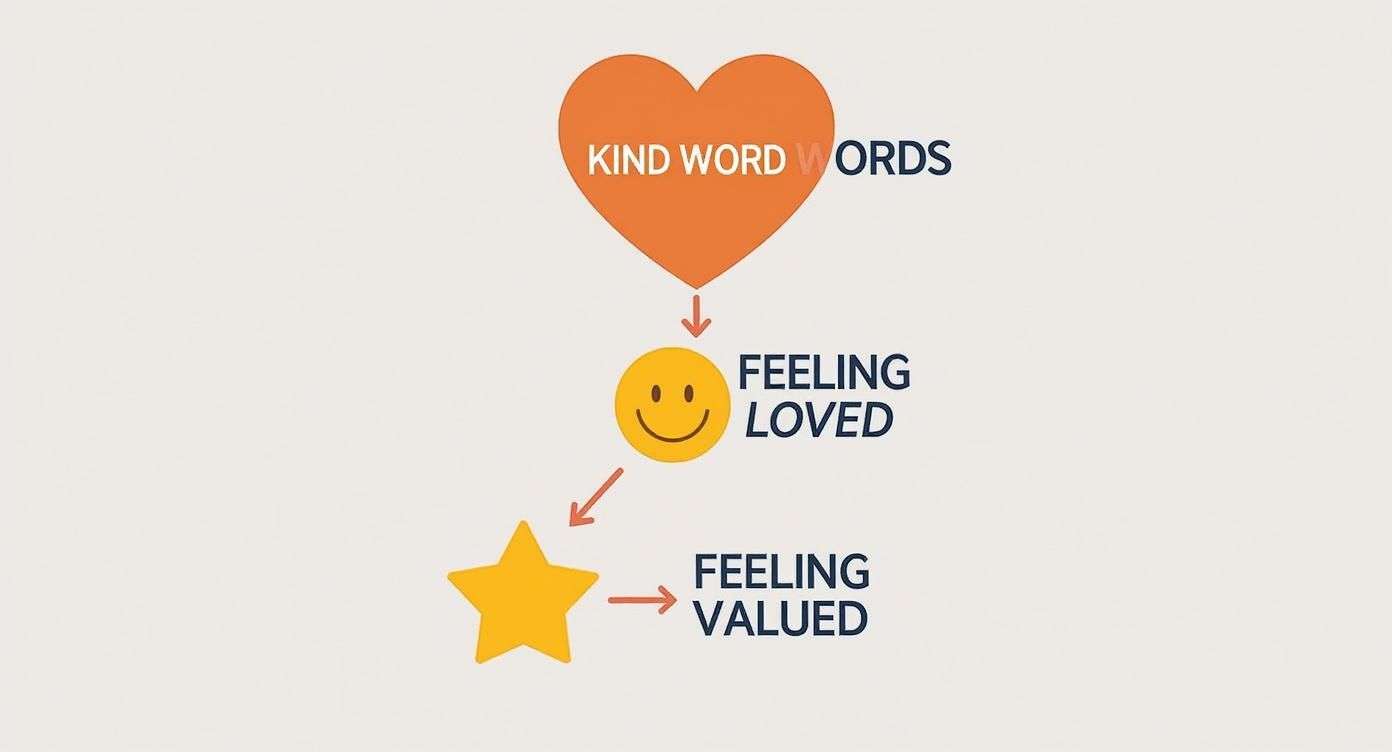
This simple flow from words to feelings shows just how vital positive communication is for someone with this primary love language.
The Pillars of Affirming Language
To get a better grip on how this plays out in daily life, it helps to break affirming words down into a few key types. Each one fills a different, but equally important, emotional need.
- Words of Encouragement: This is about being a believer in their potential. It’s saying, "I see your strength, and I know you can do this." For example: "I know you're nervous about the presentation, but you are so prepared. You've got this."
- Words of Appreciation: This is verbal gratitude for their efforts. It communicates, "I see what you do, and I'm grateful for you." An example would be: "Thank you so much for making dinner tonight. It made my stressful day so much better."
- Words of Empathy: This is about validating their feelings. It shows that you're in their corner emotionally. For example: "It sounds like that was a really tough meeting. I'm sorry you went through that."
- Words of Praise: This involves admiring their specific qualities. It communicates, "I admire who you are as a person." For example: "You have such a kind and generous way of dealing with people. It's truly special."
Mastering these pillars gives you a complete toolkit for speaking this language fluently and authentically. If you're curious about your own style, you can learn more about how to find your love language accurately in our detailed guide.
Why Harsh Words Hurt More for This Love Language
For someone whose primary love language is Words of Affirmation, positive words are like sunshine and water for the soul. It’s what helps them feel secure, valued, and connected. But the flip side is that harsh or critical words can feel like a devastating blow, cutting right to their core.
Think of it this way: if your partner’s sense of security is built on the words you share, then negative language isn’t just an argument. It can feel like you’re taking a sledgehammer to the very foundation of the relationship. It’s a direct hit to their self-worth and their feeling of safety with you.
The Lingering Sting of a Negative Comment
Have you ever said something in the heat of the moment that you immediately regretted? For someone who thrives on verbal affirmation, a single thoughtless comment that might bounce off someone else can stick around for days, weeks, or even longer. They’ll likely replay it in their mind, trying to figure out what they did wrong or why they weren't shown kindness.
This isn't about being overly sensitive; it's simply how they’re wired to connect. Their emotional world is tuned into verbal signals, so insults, a dismissive tone, or even a sarcastic jab aren't just minor disagreements. To them, these moments can feel like proof that the love and respect they depend on is starting to crumble.
When your words are the main way someone feels your love, the absence of kindness—or worse, the presence of cruelty—can create a profound sense of emotional abandonment.
This is exactly why that old "sticks and stones" saying is a complete myth for this love language. Words absolutely can and do hurt, often far more than any physical blow ever could.
The Emotional Echo of Criticism
The pain from harsh words often creates an echo. It doesn’t just sting once and then fade away; it can ripple outwards, creating lasting insecurities that affect future conversations.
- It breaks down trust. If criticism becomes a regular thing, it gets harder for them to believe your positive words are sincere. They might find themselves constantly waiting for the other shoe to drop.
- It creates fear. They might start holding back, afraid to be vulnerable or share their true feelings for fear of being met with judgment instead of support.
- It damages self-esteem. A constant diet of negativity can wear down their self-worth, making them start to believe the critical words are the truth about who they are.
This doesn't mean you have to walk on eggshells or that you can never disagree. Every healthy relationship needs honest conversations. The difference is how you say it. It’s about addressing a specific behaviour without making it a personal attack on their character. Instead of saying, "You never listen to me!" you could try, "I'm feeling a bit unheard right now. Could we talk this through so I can feel understood?" This simple change sidesteps blame and invites teamwork, turning a conflict into a chance to connect.
Words of Affirmation for Couples (Examples)
If your partner’s primary love language is words of affirmation, you have a beautiful roadmap to their heart. It’s not just about tossing out a few compliments; it's about building a powerful, lasting bond through thoughtful communication. The goal is to make your words count, not just on special occasions, but in all the small, everyday moments.

It’s time to move beyond the classic "I love you." True affirmation is found in the details.
Notice and Acknowledge the Small Things
Honestly, the most powerful affirmations often spring from noticing the little things that might otherwise go unmentioned. It’s the ultimate proof that you’re paying attention and that you genuinely see your partner.
- Praise their character. "I was so impressed by how you managed that difficult phone call with such grace."
- Acknowledge their effort. "I see how much passion you're pouring into your new project, and I'm so proud of you."
- Show gratitude for daily tasks. "Thank you for always making the coffee in the morning. It's such a great way to start my day."
These specific compliments carry so much more weight than generic praise because they’re tied to real, observable moments.
Simple, Everyday Actions That Speak Volumes
Weaving words of affirmation into your daily routine doesn't have to be a big production. The most meaningful connections are built through small, consistent acts of verbal kindness.
- Leave a handwritten note. A sticky note on the bathroom mirror or a message tucked into their lunch bag can completely change the tone of their day.
- Send a thoughtful text. A quick midday message like, "Thinking of you and how much you mean to me," is a powerful reminder that you're connected.
- Tell them what you admire. Make it a habit to verbally express what you appreciate, whether it's their sense of humour, their kindness, or their resilience.
If this feels a bit awkward at first, you're not alone. Many people find it challenging to express themselves this way. You can discover more insights about these communication challenges in Toronto and other Canadian cities. For more inspiration, you can explore various love language examples for different relationships to find phrases that feel authentic to you.
Words of Affirmation for Children & Teens
For kids and teenagers, words of affirmation are more than just compliments; they're the building blocks for a strong, confident spirit. This love language is essential in shaping their inner voice and how they see their own worth. When a child grows up hearing positive, supportive language, they learn to speak to themselves with that same kindness.
The secret is to be genuine and specific. It’s one thing to say "good job," but it's far more powerful to praise their effort and character. This small shift teaches them that their value isn't just in what they do, but in who they are.
Building a Strong Inner Voice
Think about it—the words kids hear from the people they trust most often become the script for their own internal monologue. By consistently offering encouragement and validation, you're literally helping them build a compassionate inner voice that will stick with them for life.
Here are a few simple ways to put this into practice:
- Praise the process, not just the result. Notice their persistence when they’re wrestling with a tough puzzle, or their creativity in a drawing. "I love how you kept trying even when that part was tricky!"
- Acknowledge their feelings. When they're upset, saying, "It sounds like you're feeling really frustrated right now," shows them you see and accept their emotions.
- Say "I love you" and "I'm proud of you" out loud. Don't ever assume they just know it. Hearing those words freely and often makes all the difference.
Supporting Teens Through Turbulent Times
Teenage years can be a rollercoaster of big emotions and nagging insecurities. Your affirming words can be a steadying anchor in a stormy sea. Even if you don’t fully get what they’re going through, you can still validate their experience. A simple, “That sounds incredibly tough. I’m here to listen whenever you want to talk,” can be a lifeline. This guide to building your child's confidence offers more great insights.
A teenager's world can feel overwhelming. Your affirming words can be their safe harbour—a consistent source of unconditional love and belief in their potential.
Show them you see them as capable by saying things like, "I know this is a big decision, and I trust you to make a thoughtful choice." This doesn't just feel good; it empowers them.
Words of Affirmation for Self-Talk & Mental Health
The words of affirmation love language isn't just about what we say to others—it's also a powerful clue about what we need to hear from ourselves. If encouraging words from a partner or friend fill you up, imagine what turning that same energy inward could do for you. Learning to practice positive self-talk is essentially learning to speak your own love language to yourself. It’s a game-changer for mental health.

This means actively catching those automatic, harsh thoughts and consciously replacing them with words that are supportive and kind. It’s about offering yourself the same grace you’d give a friend.
How to Reframe Your Inner Critic
The first step is simply noticing what that inner voice is saying. For many of us, it’s a jab of self-criticism. The goal isn't to silence that voice, but to gently challenge and reframe its message.
- Instead of: "I completely messed that up, I'm so useless."
- Try reframing to: "That didn't go as planned, but I learned something valuable for next time."
See the difference? That subtle shift takes you out of a shame spiral and puts you on a path of growth and self-respect. It’s not about pretending mistakes don't happen; it's about changing how you talk to yourself about them.
Treating yourself with verbal kindness isn’t selfish; it’s a foundational part of mental and emotional wellness. It builds resilience and proves that you are your own greatest ally.
Simple Practices for Positive Self-Talk
Building a habit of positive self-talk takes practice. It’s a skill, just like any other. Here are a few gentle ways to get started:
- Start a daily affirmation practice. Each morning, say something kind to yourself. It could be as simple as, "I am capable and strong," or "I am worthy of peace today."
- Write it down. At the end of each day, jot down one thing you appreciate about yourself—maybe it was the effort you put in or a moment of patience.
- Celebrate the small wins. Did you finish a tough project? Acknowledge it! Give yourself credit by saying, "I handled that really well."
Over time, these small actions start to rewire your brain’s default patterns. You’re not just saying nice things; you’re actively building self-compassion.
Common Mistakes to Avoid
Learning to speak the words of affirmation love language fluently can take some practice. Knowing what to watch out for can help ensure your words are building connection, not accidentally creating distance. When someone's sense of being loved is so closely tied to what you say, your words carry a lot of weight.
Here are a few common pitfalls to be mindful of:
- Being Insincere: Your words have to be real. Insincere compliments or empty flattery can feel even worse than silence because they ring hollow and can feel manipulative. Instead of a generic "You're great," try something specific that shows you're actually paying attention.
- Using Backhanded Compliments: These are verbal jabs disguised as praise. A comment like, "You look so nice today, I almost didn't recognize you!" isn't a compliment; it’s an insult that can be incredibly hurtful.
- Affirming with an Agenda: Your words should be a gift, offered with no strings attached. As soon as you start using affirmations to get something in return, they lose their power and start to feel like a transaction.
- Forgetting to Listen: Affirmation isn't just about talking—it’s just as much about listening. Truly affirming someone means validating their feelings and their point of view, even when you don't agree. Making space for them to speak and showing that you hear them can be one of the most powerful affirmations you can offer.
The goal is to speak from the heart, with kindness and authenticity. Research on love languages has found that while verbal affirmation is highly valued, most people are just happy to receive any form of loving expression. The gesture itself often matters more than the specific type. You can read the full research about these love language findings for more on this.
Ready to Strengthen Your Communication?
Exploring the world of words of affirmation is a brilliant first step toward creating richer, more satisfying relationships. Learning to be more mindful with your words is a journey worth taking. But sometimes, knowing what to do and actually doing it are two different things. Old communication habits can be hard to break, especially if past conflicts have built up walls. If that sounds familiar, please know you’re not alone. Counselling can provide a safe, supportive space to find your way forward. If you and your partner are in the Okanagan, our Kelowna couples counselling team can help you reconnect through more mindful communication.
Our counsellors across BC and Alberta specialize in helping individuals and couples break through these barriers. Through virtual therapy available across Canada, we can guide you in learning how to speak and hear love in ways that genuinely connect. You don't have to navigate this on your own. If you’re ready to build a more loving and affirming connection, reach out today. We’re here to help.
FAQ: Your Questions Answered
What does words of affirmation mean?
Words of affirmation is a love language where a person feels most loved and valued through spoken or written words. This isn't just about flattery; it includes genuine compliments, words of encouragement, verbal support, and expressions of appreciation. For someone with this love language, positive words are the most direct way to their heart, building a sense of security and connection.
Why do words affect some people more emotionally?
For individuals whose primary love language is words of affirmation, verbal communication is deeply wired into their sense of self-worth and emotional safety. Their brains place a higher value on verbal cues for connection. Positive words reinforce their value and the security of their relationships, while harsh or critical words can feel like a direct and painful attack on their core being.
How can I give better verbal affirmation?
To give better verbal affirmations, focus on being sincere, specific, and consistent. Instead of generic praise like "You're great," try something detailed like, "I really admire how you handled that stressful situation with so much patience." Acknowledging small, everyday efforts, praising character over just achievements, and expressing gratitude are all powerful ways to speak this language effectively.
Can negative words damage relationships long-term?
Yes, absolutely. For someone who feels loved through words, a consistent pattern of criticism, insults, or a dismissive tone can cause deep and lasting damage. Negative words can erode trust, create emotional distance, and make a person feel fundamentally unsafe and unloved in the relationship. Over time, this can lead to resentment and a breakdown of the connection.
Is self-talk part of this love language?
Yes, self-talk plays a massive and often overlooked role. If you thrive on hearing affirming words from others, it’s a strong sign that you also need to offer that same kindness to yourself. Practising positive self-talk—using an encouraging and compassionate inner voice—is essentially speaking your own love language to yourself. It's a powerful way to build self-esteem and emotional resilience.
Can counselling help with communication issues?
Without a doubt. Counselling is an excellent space for untangling communication knots. A therapist can help individuals and couples identify unhelpful communication patterns and replace them with healthier ways of expressing needs and affection. It provides a safe environment to practice giving and receiving affirmation, heal from past hurts, and build a stronger, more loving connection.
If words of affirmation feel hard to give or receive in your relationship, you’re not alone. Our team offers marriage counselling in Kelowna that helps couples rebuild appreciation and connection, one conversation at a time.