In a city as dynamic and driven as Kelowna, it’s easy to get swept up in the idea that success is a shield against struggle. We’re surrounded by ambition—from the tech entrepreneur launching their next big idea to the healthcare professional working tireless hours. The pressure to keep up, to project an image of unshakeable strength, is real. But what happens when that exterior starts to crack? The truth is, many professionals are quietly navigating serious mental and emotional hurdles, often feeling completely alone in the fight. For more information, see our Kelowna counselling.
Many Kelowna professionals delay getting mental health support due to a powerful combination of perceived stigma in a close-knit community, demanding schedules that leave little room for self-care, and a strong culture of self-reliance that mistakenly frames seeking help as a sign of weakness.

The Paradox of Success and Silence
Here’s the irony: the very traits that get you to the top—grit, resilience, a can-do attitude—can become the biggest roadblocks to asking for help. High-achievers are wired to solve problems and push through, making it incredibly difficult to admit, "I'm not okay." This creates an internal battle that stays hidden from colleagues, clients, and sometimes even family.
It's a common story. Behind a polished exterior, many successful people are dealing with immense personal challenges. Understanding these invisible battles is the first step, much like peeling back the layers to see the private struggles behind the mask that so many public figures face. The pressure to perform can feel profoundly isolating, especially in a place like Kelowna where your professional and social circles are often one and the same.
A Community of High Expectations
Kelowna’s culture of ambition and self-reliance adds another layer to this. While this environment is fantastic for driving innovation and growth, it can also breed an unspoken rule: you must have it all together, all the time. The thought of reaching out for mental health support can feel like admitting you’ve somehow failed, both personally and professionally.
This disconnect suggests that even though many of us put on a brave face, the reality is far more complicated. If you're curious, you can discover more insights about these Canadian mental health trends to get the bigger picture.
If any of this sounds familiar, please know you’re not alone. Feeling the weight of these pressures isn't a sign of weakness; it’s a perfectly human response to a demanding world.
Navigating the Pressure to Always Be Resilient
In professional circles, resilience is practically a badge of honour. It's the celebrated ability to bounce back from a tough quarter, push through punishing hours, and handle incredible pressure without ever letting it show. For Kelowna’s entrepreneurs, healthcare workers, and other high-achievers, this isn’t just a nice-to-have trait; it's woven into their professional identity.
But here’s the problem: this relentless pressure to be resilient creates a silent, powerful myth. It’s the idea that true strength means never needing to ask for help. This flips the script entirely, turning a smart strategy for success—seeking support—into something that feels like a failure. The very independence and drive that build a stellar career can become the biggest roadblocks to personal well-being.
The Myth of Self-Reliance
The "pull yourself up by your bootstraps" mentality runs deep, especially in a community as ambitious and self-starting as Kelowna. Professionals are masters at solving problems for everyone else—their clients, their patients, their teams. When it comes to their own mental health, though, applying that same logic can feel impossible. The internal monologue is often a version of, "I'm smart and capable. I should be able to figure this out on my own."
This belief gets reinforced everywhere we look. We celebrate stories of people who overcame the odds through pure grit. It’s a great narrative, but it conveniently leaves out a critical part of the story: even the most successful people have a support system.
Think of it this way: a professional athlete would never see their coach, nutritionist, or physiotherapist as a sign of weakness. They’re essential members of the performance team. Mental health support is exactly the same—it’s adding a specialist to your team to help you perform at your best, sustainably.
When Strengths Become Barriers
It's a strange paradox, but the very qualities that propel professionals to the top of their fields can be the same ones that stop them from reaching out for support when they need it most. These traits are often a double-edged sword.
Let's break down how these strengths can morph into obstacles:
- Exceptional Problem-Solving Skills: Professionals are wired to dissect a problem and engineer a solution. When faced with their own anxiety or burnout, the instinct is to try and "fix" it themselves, treating it like any other project that just requires more effort.
- High Levels of Independence: Entrepreneurs, doctors, and lawyers are praised for their autonomy. That fierce independence can make relying on someone else feel unnatural, almost like admitting defeat, especially for something as personal as one's own mind.
- Unwavering Ambition: The drive to hit the next target or crush the next goal can easily lead to self-neglect. All the focus goes toward the next milestone, leaving no time or energy to pause and address the mounting stress that's building up under the surface.
Recognizing that these admirable traits can also be blind spots is a huge first step. The goal isn't to get rid of your ambition or independence. It's about adding new skills to your toolbox and reframing what it means to be strong. Viewing professional support as a strategic move for long-term success is the key to breaking free from these internal pressures.
The Practical Hurdles: Time, Confidentiality, and Finding the Right Fit
It’s one thing to grapple with the internal pressure to seem unshakable, but it’s another thing entirely to deal with the real-world logistics of getting support. For most professionals, these practical hurdles aren't just minor inconveniences—they're major roadblocks. When you're already juggling a demanding career and personal responsibilities, the thought of adding another appointment to the mix can feel overwhelming.
These are the everyday pressures that can make prioritizing your mental well-being feel like an impossible task.
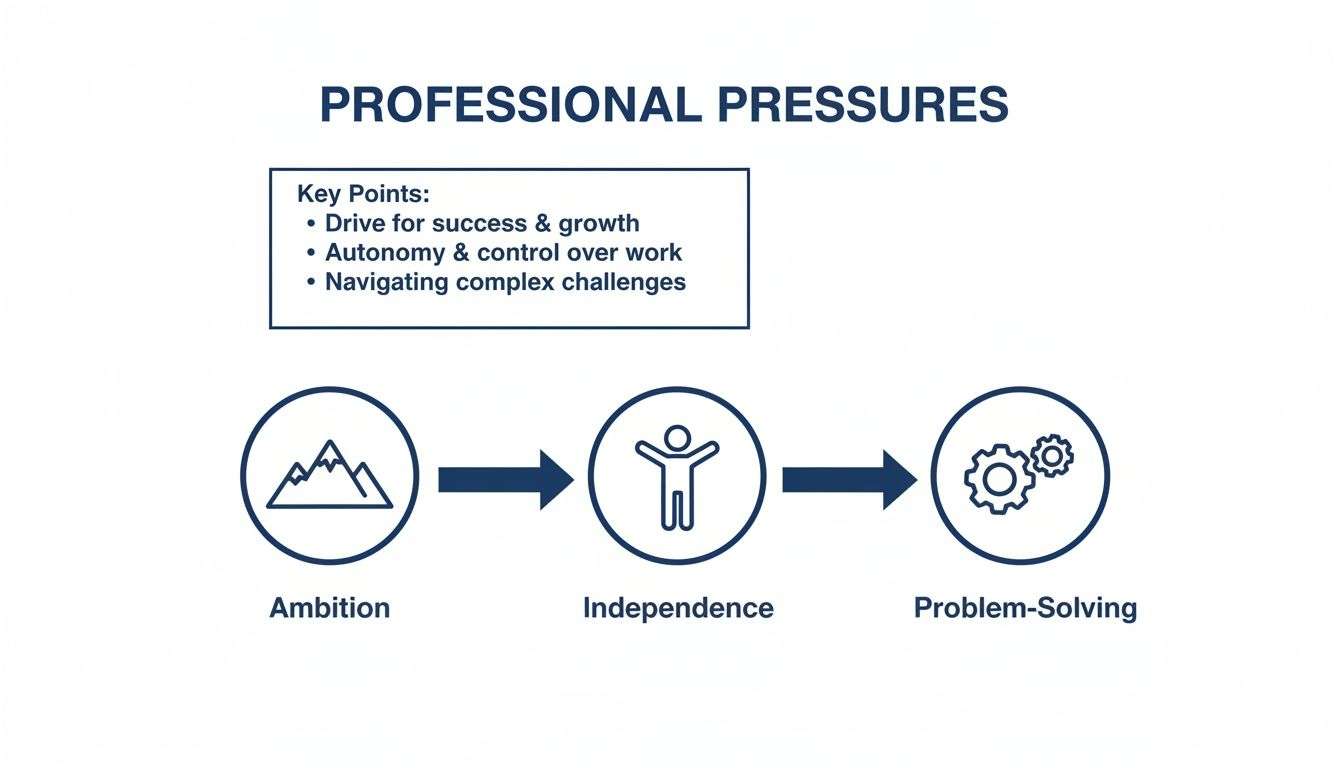
The very traits that fuel professional success—ambition, independence, and a knack for problem-solving—can ironically become personal barriers when it comes to asking for help.
The Time Scarcity Dilemma
If you ask any busy professional what their most valuable resource is, the answer is almost always time. The idea of carving out another weekly appointment from an already overflowing schedule can seem completely unrealistic. It’s a common thought: "I can't even make it to the gym consistently. How could I possibly fit this in?"
This mindset treats mental health support as a time deficit—one more hour drained from a schedule that’s already in the red. It gets filed under "one more thing to do" instead of what it really is: a tool to help you manage everything else better.
Think of it this way: what if that hour wasn't a cost, but a strategic investment? An hour spent processing stress and building stronger coping skills can return dividends. It can give you back hours of lost focus, improve your decision-making, and boost your energy for the rest of the week.
Confidentiality Concerns in a Connected Community
Kelowna is a fantastic city, but it's also a place where professional and social circles tend to overlap. While that sense of community is a huge part of its charm, it can also create very real concerns about privacy. If you’re in a leadership position or a visible role, the last thing you want is to bump into a client or colleague in a waiting room.
That fear is completely valid. For professional support to work, you have to feel safe, and confidentiality is non-negotiable. The good news is that registered counsellors are bound by strict ethical and legal codes to protect your privacy. It is the absolute foundation of the therapeutic relationship, and it’s a responsibility every professional takes seriously.
Finding someone you trust is a huge part of this, which we dive into in our guide on how to find a therapist who feels right for you.
Sometimes, just shifting our perspective on these challenges can make them feel less daunting.
Re-framing Common Barriers to Seeking Support
| Common Barrier | A Supportive Re-frame |
|---|---|
| "I don't have time for this." | "Investing one hour a week in my mental health will make me more focused and effective in all my other hours." |
| "What if someone sees me?" | "Confidentiality is a legal and ethical requirement. Virtual sessions also offer complete privacy from my own home." |
| "I can't afford it." | "This is an investment in my most important asset—my own well-being. It can prevent bigger costs down the road." |
| "Finding the right person is too hard." | "Finding the right fit is key. It’s worth a few consultations to find someone who can truly help me." |
Thinking about these barriers in a new light can be the first step toward clearing them out of your way.
Understanding Kelowna’s Unique Challenges
It’s not just about what's happening in your head or your calendar. Professionals here in the Okanagan face some very real, local hurdles when it comes to getting mental health support. If you’ve ever felt like you’re hitting a wall trying to find a counsellor, you’re not alone. It's not a personal failure; it's a systemic issue woven into the fabric of our community.
The hard truth is that public mental health services right here in the Central Okanagan are stretched to their limits. This creates a gap between the number of people who need help and the resources actually available, leading to frustratingly long waitlists.
For a professional already juggling a demanding career and dealing with burnout, being told you have to wait months for an appointment is more than just inconvenient—it can feel like a full stop. Many just give up at that point.
The Gap Between Need and Access
This isn’t just anecdotal; the numbers back it up. In British Columbia, a significant percentage of the population has unmet or partially met mental health care needs.
This gap often hits communities like Kelowna harder than larger metro areas with more concentrated resources. If you want to dive deeper into the data, you can read the full report on the state of mental health in Canada.
This shortage naturally pushes many people toward private care. Private care can offer faster, more specialized support, but it brings cost into the equation. This creates a tough choice for a lot of people, balancing the urgent need for help with the financial reality.
It's so important to depersonalize this struggle. Understanding that your difficulty finding timely care is part of a larger, regional challenge can lift a huge weight. It’s not you—it’s the system. Recognizing this helps reduce feelings of isolation and empowers you to look for different paths to get the support you deserve.
The Hidden Price Tag of Putting Off Mental Health Support
When you're juggling high-stakes projects and a packed calendar, pushing your own well-being to the bottom of the list feels almost automatic. We tell ourselves, "It's just stress, it'll pass," or "I'll get to it when things slow down." But that "slow down" moment rarely comes, and when weeks stretch into months, the unaddressed strain starts to quietly rack up costs in every corner of our lives.
Waiting doesn't make the problem go away; it just gives it room to grow. What starts as manageable work stress can quietly morph into chronic anxiety. That feeling of being constantly overwhelmed can snowball into full-blown burnout, chipping away not just at your productivity but at the very passion you once had for your career. These things don't stay neatly in their box—they spill over, affecting our relationships, our physical health, and our overall happiness.
The Ripple Effect at Work and Home
The first place you might notice the impact is at work. Unchecked stress makes it harder to focus, drains your creative energy, and can make you more irritable with colleagues. It’s like trying to run sophisticated software on a computer with a dozen heavy programs running in the background. Eventually, everything starts to lag, and you risk a total system crash.
That strain doesn't clock out at 5 p.m. It comes home with you, creating distance in your relationships and shortening your fuse with the people you care about most. It can steal the joy from your hobbies and downtime until everything feels like a chore. Over time, that internal pressure can even show up physically in the form of headaches, sleep problems, or digestive issues, creating a vicious cycle that’s hard to break.
The Financial Side of Waiting
Beyond the personal and professional toll, there's a real financial cost to consider. At first glance, delaying professional support can feel like a smart financial move. You can read more about the financial realities of Canadian mental health care.
But it’s crucial to re-frame this as an investment rather than an expense. Being proactive about your mental health is almost always less costly than managing a full-blown crisis later on. The hidden costs of doing nothing—lost income due to burnout, damaged business relationships, or simply the immense personal cost of a much bigger struggle—can be staggering.
Think of it like car maintenance. You can pay for a regular oil change now, or you can pay for a complete engine replacement later.
Supportive Pathways for Taking the First Step
Admitting you might need some support is a huge win in itself. But what's next? Figuring out how to find help shouldn't feel like another overwhelming project dropped on your desk.
The real goal is to find a path forward that feels manageable, respects your privacy, and actually fits into your life—not the other way around. Taking this step is a powerful act of self-care and a smart investment in your future.

Gentle Starting Points to Consider
Exploring your options can start with small, low-pressure actions. You don't have to commit to anything right away. Just gathering information is a solid first move.
Think of these as gentle entry points into finding support:
- Talk to Your Family Doctor: Your GP is a confidential and knowledgeable first stop. They can help you sort through what you're experiencing, rule out any underlying physical issues, and give you a professional referral if it makes sense.
- Explore Workplace Resources: Check your benefits package. Many companies offer coverage for psychological services or have programs specifically designed to support employee well-being. Look into resources like Employee Assistance Programs (EAPs), which provide confidential counselling at no direct cost.
- Consider Virtual Counselling: If time and privacy are your biggest hurdles, virtual sessions are a game-changer. You can connect with a counsellor from your home or office, cutting out the commute and ensuring total confidentiality.
Finding the Right Professional Fit
The relationship you build with your counsellor is probably the single most important factor in whether counselling works for you. It's crucial to find someone you feel comfortable with—someone who gets the unique pressures you face as a professional and whose approach resonates with your goals.
It is absolutely okay to be picky here. You'd vet a key business partner, right? It makes just as much sense to research potential counsellors. Learning more about the benefits of getting support earlier can also build your confidence in making this decision.
Taking the time to find the right person isn't a delay; it's a vital part of the process.
Common Questions from Kelowna Professionals
Making the decision to reach out for support often brings up a lot of questions. We get it. Here are some straightforward answers to the concerns we hear most often from professionals, aimed at making the whole process feel a bit more clear and a lot less intimidating.
Is what I’m feeling serious enough?
This might be the single most common question we hear, and the answer is simple: if it’s getting in the way of you enjoying your life, it’s serious enough. There's no invisible line you have to cross to "qualify" for support.
Think of it like the check engine light in your car. You wouldn't wait for the engine to seize before taking it to a mechanic. Your mental health is the same. Dealing with stress, burnout, or anxiety early is just smart maintenance—it’s proactive, not an overreaction. It’s about building the tools you need to handle life’s challenges before they become overwhelming.
How does confidentiality work in a small city?
In a tight-knit community like Kelowna, this is a perfectly reasonable worry. Let’s be clear: registered counsellors are legally and ethically bound by some of the strictest confidentiality codes that exist. Your privacy isn't just a promise; it's the law.
Everything you say in a session is protected. A counsellor cannot share your identity or any detail of your conversation with anyone—not your partner, your boss, or another professional—without your explicit, written permission. That standard is ironclad, no matter the size of the city. Virtual sessions can also offer an extra layer of privacy, letting you connect from a space where you feel completely comfortable and secure.
Are virtual sessions as effective as in-person?
It’s natural to wonder if a screen can ever replace sitting in the same room with someone. A growing mountain of evidence says it absolutely can. Study after study confirms that for common challenges like anxiety, stress, and depression, online counselling is just as effective as face-to-face therapy.
For busy professionals, virtual support also has some real-world advantages. It cuts out the commute, offers far more flexibility for scheduling, and gives you a level of discretion that many people find reassuring. For many in Kelowna, it's become the most practical way to get consistent, quality support without piling more stress onto an already full plate.
Your well-being is your most valuable asset. If you've been putting your mental health on the back burner, we hope this guide has offered some clarity and reassurance. Taking the first step, even a small one, is an act of strength.
Clinically Reviewed By
Amy Mosset, MCP, RCC-S
Amy Mosset is a Master Practitioner in Clinical Counselling, Clinical Supervisor, and the owner of Interactive Counselling. She provides trauma-informed, evidence-based care and clinical supervision to registered therapists, with a focus on ethical practice, client safety, and high-quality therapeutic outcomes.