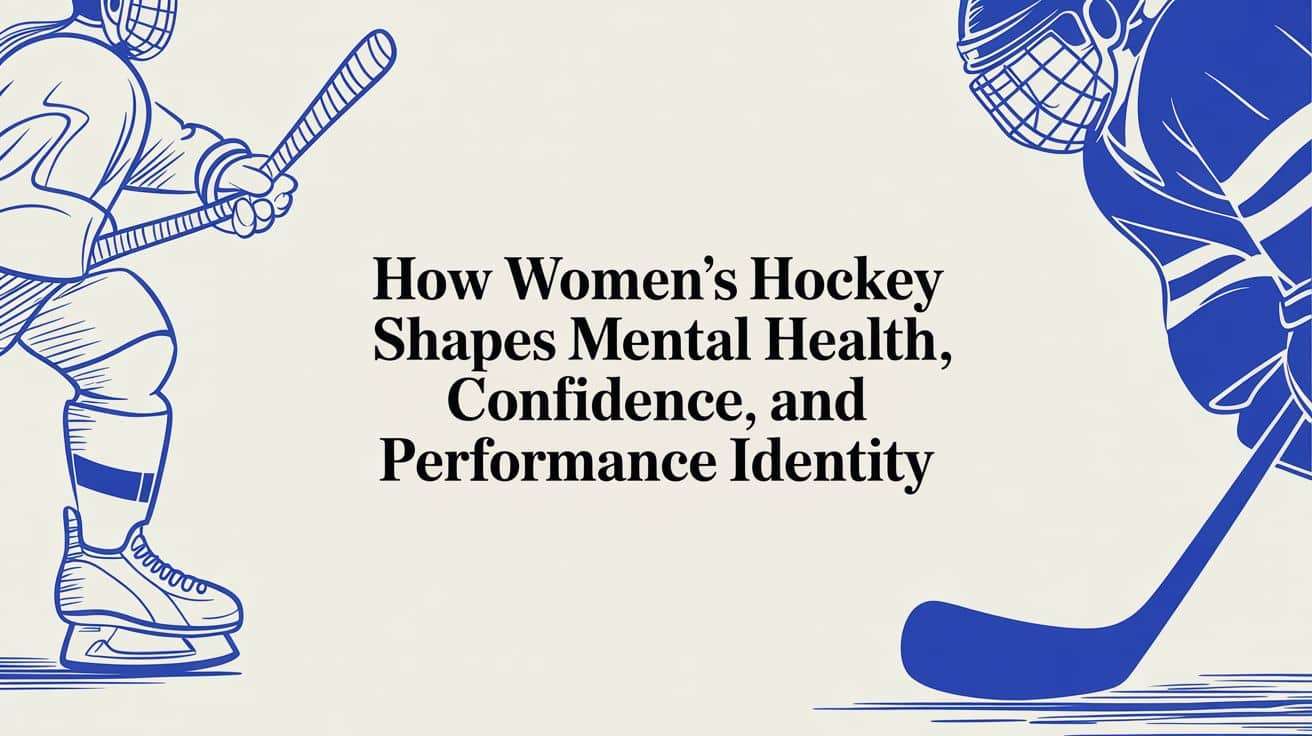
For so many female athletes, the ice rink is more than just a sheet of ice—it’s a place where mental strength is built, tested, and refined. From the early morning practices in youth leagues across the Okanagan to the bright lights of the professional stage, hockey has a profound way of shaping a woman’s mental health, confidence, and identity. It’s an environment that demands resilience and teamwork in equal measure, offering a unique space where girls and women can discover just how strong they are. For more information, see our youth counselling.
Women's hockey shapes mental health by fostering a unique environment where athletes build resilience through on-ice challenges, cultivate deep confidence from skill mastery, and develop a strong performance identity grounded in teamwork and perseverance.
Mental Health Benefits: More Than Just a Game

For countless girls and women, the sharp sound of skates on fresh ice feels like coming home. It’s a space of intense focus, shared purpose, and a camaraderie that’s hard to find anywhere else. The lessons learned here go far beyond stickhandling and power plays; they become part of who you are, equipping players with invaluable tools to navigate life’s pressures, both on and off the ice.
At its heart, hockey is a tough sport. It demands physical grit, but it also requires incredible psychological resilience. The game teaches you how to stare down adversity, manage the highs and lows of competition, and trust your teammates to achieve something you could never do alone. This blend of disciplined structure and social support creates a powerful environment for personal growth.
You can see these benefits come to life at every level of the game:
- Emotional Regulation: Learning to keep your cool on a breakaway or shake off a tough loss is a masterclass in managing your emotions under pressure.
- Social Connection: The bonds forged in the locker room and on the bench build a vital support system that helps protect against stress and isolation.
- Self-Efficacy: There’s nothing quite like the feeling of mastering a new skill, whether it’s a perfect slap shot or a key defensive play. That success builds a deep, lasting sense of competence.
The unique environment of a hockey team also creates a culture where it’s okay to be vulnerable, to ask for help, and to lift each other up. It normalizes the idea that it’s okay not to be okay, which is a powerful shield against the stress and anxiety many young women face today.
Confidence Development: Building Self-Belief on the Ice
Confidence isn’t something you’re born with—it’s built, one small victory at a time. In women’s hockey, this happens every time a player steps on the ice. Mastering a crisp breakout pass, learning to skate backwards with power, or finally nailing a complex team strategy—these are the real building blocks of deep, authentic self-belief.
Each successful drill and moment of tangible improvement adds another layer of competence. Over time, these small, consistent on-ice achievements stack up into a powerful sense of self-efficacy: the core belief in your own ability to get things done. This isn't a fleeting feeling; it’s a grounded confidence that athletes carry with them far beyond the arena doors.
This process is especially powerful for young female athletes, who often navigate a societal confidence gap. A supportive team provides a unique environment—a safe space to take risks, fail, and get back up without judgment. It’s where a player can try a risky deke knowing her teammates have her back if she loses the puck. That's a crucial part of growth.
Turning On-Ice Skills Into Off-Ice Certainty

The journey of building resilience often follows a positive cycle: you face a challenge, lean on your team for support, and emerge stronger on the other side. The confidence gained evolves as an athlete grows. What builds self-assurance in a young player learning to skate is different from what empowers a veteran leader.
Confidence Building in Women's Hockey: A Developmental View
| Athlete Stage | On-Ice Skill Development | Off-Ice Confidence Outcome |
|---|---|---|
| Youth (Ages 6-12) | Learning fundamentals like skating, stickhandling, and passing. Experiencing teamwork for the first time. | Building foundational self-esteem through skill acquisition and positive social interaction. Learning to try new things without fear. |
| Adolescent (Ages 13-18) | Mastering complex plays, developing physical strength, and taking on leadership roles (e.g., assistant captain). | Translating on-ice discipline to academic focus. Developing resilience to handle social pressures and setbacks. |
| Collegiate/Adult | Refining high-level strategy, mentoring younger players, and managing intense performance pressure. | Applying leadership, time management, and goal-setting skills to career and personal life. Navigating adult challenges with grit. |
For parents and coaches in communities like Kelowna and across the Okanagan, fostering this growth starts with shifting the focus from outcomes to effort and progress. It’s about creating a culture where trying your best is celebrated more than scoring the winning goal. Honing these abilities is a core part of what mental skills training for athletes aims to achieve, helping players build a robust psychological toolkit.
Youth Representation and Role Models
The impact of seeing strong, successful female athletes in the spotlight cannot be overstated. When a young girl in Kelowna watches a professional women’s hockey game, she sees more than just incredible skill—she sees possibility. Role models provide tangible proof that her dreams are valid and achievable, creating a powerful ripple effect on her confidence, ambition, and mental health.
The rise of the Professional Women's Hockey League (PWHL) and the continued success of Canada’s national team have brought female hockey players into the mainstream like never before. This visibility is crucial. It challenges outdated stereotypes, inspires the next generation to pick up a stick, and validates the hard work of thousands of girls playing in local leagues.
Seeing women compete at the highest level teaches young athletes invaluable lessons about perseverance, leadership, and resilience. It shows them what it looks like to handle immense pressure with grace and to support teammates through triumph and defeat. This representation helps build a stronger, more confident generation of female athletes who know they belong on the ice.
The Performance Identity: More Than a Hockey Player
For many players, "hockey player" isn't just something you do—it’s a core part of who you are. This is what we call your performance identity. It's the way your role as an athlete weaves itself into your sense of self, your purpose, and how you see your place in the world. When you pour everything you have into the game, your identity naturally syncs up with the rhythm of the rink, the feel of your jersey, and the community you build in the locker room.

This connection can be incredibly powerful. It gives you structure, teaches discipline, and fosters a powerful sense of belonging. But what happens when that single identity becomes your only identity?
The Risk of Identity Foreclosure
When your self-worth is tied almost entirely to your success on the ice, you risk identity foreclosure—committing to one role so deeply that you close the door on other parts of yourself. For a hockey player, this can mean your entire sense of value hangs on ice time, stats, or the team's win-loss record.
This over-identification makes an athlete vulnerable. An injury, being cut from a team, or the inevitable end of a playing career can feel like a total loss of self. Suddenly, the question isn't just, "What do I do now?" but "Who am I now?" This is a central challenge in Canadian women's hockey, where a strong performance identity is both a blessing and a burden. You can learn more about how identity impacts well-being in Canadian hockey.
A Clinician's Perspective on Balanced Identity
“I often work with athletes who feel completely lost when their sport is taken away, even temporarily. A key part of our work is helping them see themselves as a whole person who plays hockey, not just a hockey player who does other things. We gently explore their other strengths, interests, and relationships to build a more stable sense of self that can withstand the inevitable ups and downs of an athletic career.”
Encouraging a well-rounded identity doesn't take away from an athlete's commitment; it strengthens their overall mental health. Parents and coaches can help by celebrating off-ice roles (like being a good friend or student), encouraging other hobbies, and defining success more broadly than just athletic performance.
When Sport Becomes Unhealthy: Pressure and Burnout
While hockey offers a space for growth, it’s a high-stakes world where pressure is a constant. The desire to make the top line or land a scholarship can become so consuming that it starts to drown out the pure love of the game. This is the tipping point where healthy competition can turn into burnout, anxiety, and identity foreclosure.
Knowing the difference between the positive fire of competition and the crushing weight of unhealthy pressure is crucial for everyone involved.
- Healthy Competition is driven by an internal desire to improve. It’s about setting personal goals, enjoying the process, and viewing challenges as exciting opportunities. It feels energizing.
- Unhealthy Pressure is tied to external validation and a fear of failure. It’s when your self-worth gets tangled up with your stats or the final score. This can lead to anxiety, exhaustion, and feeling trapped by expectations.
Catching these signs early is key. If a player who once loved the rink seems withdrawn, irritable, or just isn't having fun anymore, it’s time to check in. Digging into the dynamics of performance anxiety and how to manage it can give players practical tools to work through these feelings.
Creating a team culture that puts well-being first is a collective effort. Proactively reaching out for resources like youth counselling or sports psychology support shouldn't be a last resort. Think of it as mental performance training—a way to give athletes the tools to manage stress, build confidence, and keep their passion for the game burning bright.
Your Questions About Women's Hockey and Mental Wellness
Navigating the world of women’s hockey can bring up a lot of questions. Whether you're a player, a parent, or a coach, getting clear, compassionate answers can make all the difference. This FAQ is designed to offer practical advice that reinforces a core message: taking care of mental health is key to helping female athletes thrive.
How Can I Support My Daughter If She's Struggling with Confidence?
It’s tough to watch your child grapple with self-doubt. The most powerful thing you can do is shift the focus away from outcomes—like goals and wins—and onto things she has control over. Celebrate her effort, progress, and teamwork. Praise the small, tangible actions to reinforce that the process is what matters. Most importantly, make home a place where her value is never tied to her performance. Let her know you love watching her play, period. That unconditional support is the bedrock of real, lasting self-esteem.
What Is the Difference Between Healthy Dedication and Burnout?
The line can be blurry, but it often comes down to internal motivation. Healthy dedication is fueled by a genuine love for the game and the joy of playing. It feels like a "want to." Burnout, on the other hand, is a state of deep emotional and physical exhaustion where the sport starts to feel like a "have to." Key signs include cynicism, constant fatigue, and a feeling that even wins are hollow. If you notice these signs, it's time to step back, rest, and rediscover the joy.
When Should We Consider Sports Psychology or Counselling?
The best time to seek support is long before a crisis hits. Think of a sports psychologist or counsellor as providing mental skills training, not just an emergency response. It’s like adding a specialized coach who focuses on strengthening the mind. Support can be a game-changer for managing performance anxiety, navigating team dynamics, or handling big transitions like an injury or moving to a higher level. When we treat mental health support as a normal part of an athlete's development, it becomes a powerful tool for building resilience.
How Can Coaches Create a Team Culture That Prioritizes Mental Health?
Coaches have a massive impact on an athlete's experience. Building a culture that prioritizes mental wellness starts with fostering open and honest communication. Make it clear that it’s safe to talk about struggles without fear of judgment or losing ice time. Coaches can do this by:
- Emphasizing process over outcome.
- Modeling healthy coping strategies for stress and setbacks.
- Implementing regular, informal check-ins to ask how players are doing as people, not just athletes.
- Being approachable and empathetic.
By fostering this kind of environment, coaches in communities like Kelowna and across the Okanagan can help ensure the rink is a positive, empowering place where female athletes can truly flourish.
At Interactive Counselling, we believe mental strength is a skill that can be cultivated with the right support. We are here to provide a safe, non-judgmental space for athletes and families to navigate challenges and build lasting resilience. If you're ready to explore how counselling can support you, we invite you to learn more about our approach.
Clinically Reviewed By
Amy Mosset, MCP, RCC-S
Amy Mosset is a Master Practitioner in Clinical Counselling, Clinical Supervisor, and the owner of Interactive Counselling. She provides trauma-informed, evidence-based care and clinical supervision to registered therapists, with a focus on ethical practice, client safety, and high-quality therapeutic outcomes.