Over half of Canadian adults will face a mental health challenge at some point in their lives, yet many find it hard to know where to start with therapy. Choosing the right support is personal and often feels confusing when so many options exist. This guide breaks down the key steps to help you figure out what you need, understand your choices, and confidently connect with the best therapeutic fit for your well-being.
Table of Contents
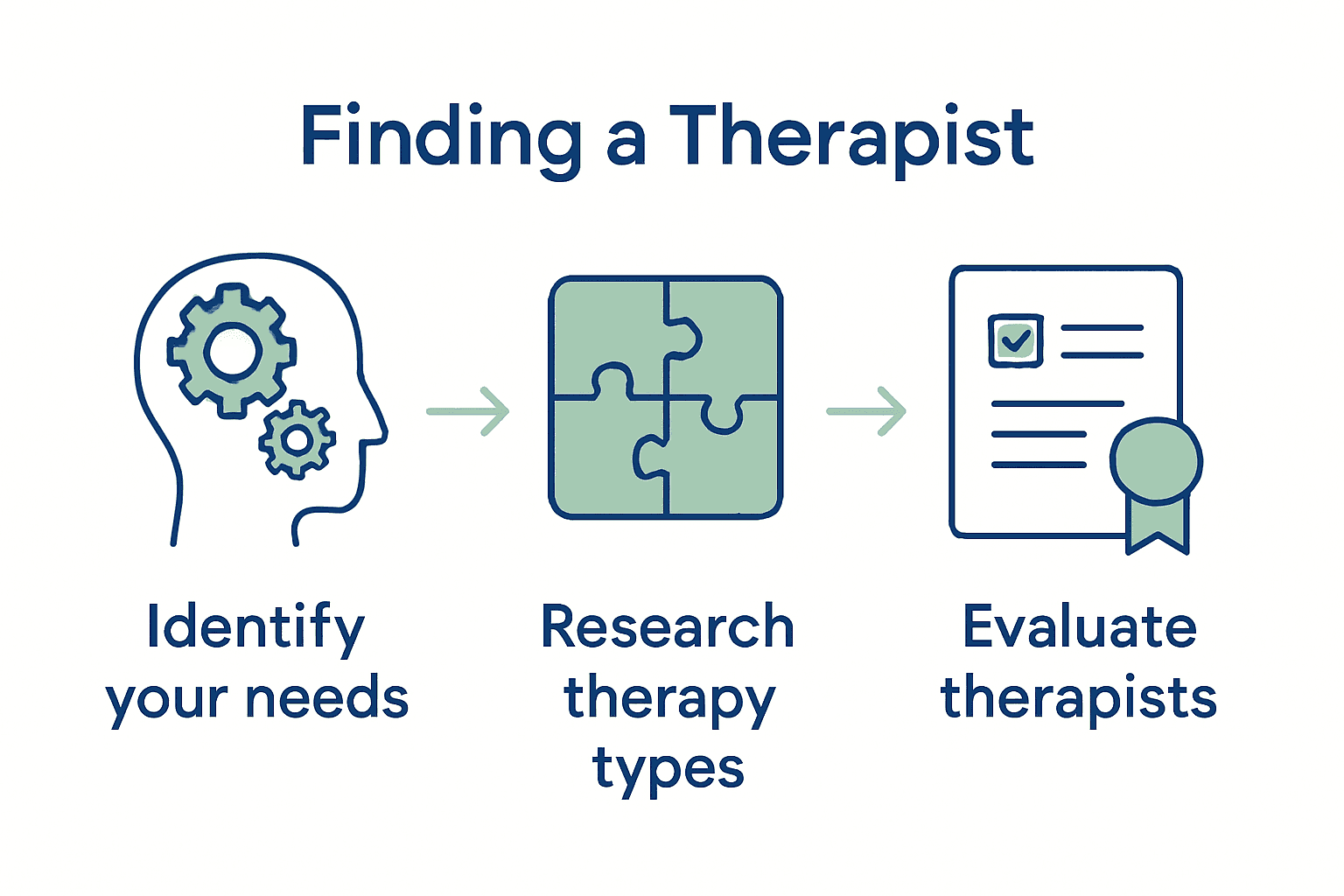
- Step 1: Assess Your Personal Therapy Needs
- Step 2: Research Therapy Types And Specialties
- Step 3: Search For Qualified Therapists Locally Or Online
- Step 4: Review Therapist Credentials And Experience
- Step 5: Schedule Consultations And Evaluate Fit
- Step 6: Confirm Your Decision And Begin Therapy
Quick Summary
| Key Insight | Explanation |
|---|---|
| 1. Identify your therapy needs | Reflect on personal challenges to clarify your therapy goals and find a suitable therapist. |
| 2. Research therapy types | Understand different therapeutic approaches to ensure they align with your emotional needs and objectives. |
| 3. Find qualified therapists | Look for registered professionals in your area or online, focusing on specialties that match your goals. |
| 4. Review credentials and experience | Validate therapist qualifications to ensure they are capable of addressing your specific issues effectively. |
| 5. Schedule consultations to assess fit | Initial consultations help gauge compatibility and comfort with therapists before committing to sessions. |
 |
Step 1: Assess your personal therapy needs
Understanding your personal therapy needs is the critical first step in finding the right mental health support. According to arxiv, identifying your specific goals and sensitivities can help clarify your therapy objectives and ensure you find a therapist who meets your unique requirements.
Start by reflecting deeply on what challenges you are currently experiencing. Are you struggling with anxiety, relationship issues, grief, trauma, or personal growth? Consider the specific areas where you feel stuck or need support. The guide on finding a therapist recommends taking time to map out your emotional landscape and pinpoint the type of support you truly need.
As you explore your needs, remember that therapy is a collaborative journey. Be honest with yourself about what you want to achieve. Some people seek short-term support for a specific issue, while others desire longer-term personal development. Your goals will help guide you towards the right therapeutic approach and professional who can best support your mental health path.
Step 2: Research therapy types and specialties
Navigating the landscape of therapy types can feel overwhelming, but understanding different approaches will help you find the most effective support for your needs. There are multiple therapeutic approaches designed to address specific mental health challenges, each with unique strategies and benefits.
Explore various therapy modalities to understand which might resonate with your personal situation. Therapy Tribe highlights several specialized approaches such as Cognitive Behavioural Therapy (CBT), which focuses on changing negative thought patterns, and Interpersonal Therapy (IPT), which helps improve relationship dynamics. For a comprehensive overview of therapeutic options, check out our guide on types of therapy explained to gain deeper insights into each approach.
Remember that finding the right therapy is a personal journey. Not every approach works the same for everyone, so be patient with yourself. Consider consulting with a professional who can help you understand which therapeutic style might best address your specific emotional needs and personal growth objectives.
Step 3: Search for qualified therapists locally or online
Finding the right therapist requires a strategic approach that balances accessibility and professional expertise. Online platforms have expanded your options, making it easier to connect with qualified mental health professionals who can meet your specific needs. When beginning your search, consider both local in person therapists and reputable online counselling services.
Explore different avenues to find potential therapists. Start by checking professional directories, reading therapist profiles, and reviewing their specialties and credentials. Learn more about accessing online counselling to understand the various ways you can connect with mental health professionals. Look for registered professionals with experience in the specific areas you want to address such as anxiety, trauma, relationship issues, or personal growth.
Practical tips can help streamline your search. Check therapist credentials, read client reviews if available, and consider scheduling initial consultation calls to assess compatibility. Trust your instincts during this process personal connection matters as much as professional expertise. Your comfort and sense of safety with a therapist are crucial for effective therapeutic work.
Searching locally also means checking what a clinic actually offers near you. If you live in the South Okanagan and trauma is part of what you are carrying, you can read how trauma counselling in Penticton works, including in-person and online sessions, before you reach out.

Step 4: Review therapist credentials and experience
Validating a therapist’s professional background is a crucial step in finding the right mental health support. Your goal is to ensure you are working with a registered, experienced professional who has the skills and expertise to address your specific emotional needs and personal growth objectives.
Start by checking the therapist’s educational background and professional certifications. Look for registered professionals who have completed accredited programs in psychology, counselling, or social work. Explore our guide on types of registered counsellors to understand the different professional qualifications and specialties available. Pay attention to their areas of expertise such as trauma counselling, relationship therapy, or specific therapeutic approaches like cognitive behavioural therapy.
Do not hesitate to ask direct questions about their professional experience and approach. A reputable therapist will be transparent about their credentials, years of practice, and therapeutic philosophy. Consider scheduling an initial consultation to assess their communication style and professional demeanor. Remember that finding the right therapist is about more than just credentials it is about finding someone who makes you feel heard, understood, and supported in your personal journey.
A note on credentials in BC and Alberta: counselling is a registered profession here, not a licensed one. Look for designations such as RCC (Registered Clinical Counsellor, BCACC), MPCC (Master Practitioner in Clinical Counselling), RPC (Registered Professional Counsellor) or RSW (Registered Social Worker). Each means the counsellor answers to a professional body with a code of ethics and a complaints process. Psychologists are a separate regulated profession, so it is fair to ask any practitioner which body they are registered with.
Step 5: Schedule consultations and evaluate fit
Scheduling initial consultations is a critical step in finding the right therapeutic partnership. As recommended by CDNC, these preliminary meetings help you discuss your needs and determine compatibility with potential therapists. Think of these consultations as a professional first date where you are assessing both professional expertise and personal connection.
Prepare for your consultations by writing down key questions about the therapist’s approach, experience, and therapeutic philosophy. Your first session is a good chance to gauge their communication style and professional demeanor. Why try online therapy can provide additional insights into different consultation formats, including virtual meetings that might offer more flexibility.
Trust your intuition during these consultations. A good therapeutic relationship requires mutual respect, genuine understanding, and a sense of safety. Pay attention to how comfortable you feel discussing personal matters and whether the therapist seems genuinely interested in understanding your unique situation. If something feels off, it is perfectly acceptable to continue exploring other options until you find the right professional match.
Step 6: Confirm your decision and begin therapy
With thoughtful research and careful consideration complete, it is time to formally commit to your therapeutic journey. As recommended by CDNC, confirming your therapist choice and initiating therapy sessions represents a significant step towards addressing your identified personal needs and emotional goals.
Reach out to schedule your first official therapy session and discuss practical details such as session frequency, communication preferences, and initial treatment objectives. Learn more about preparing for change to help set realistic expectations and understand the transformative process ahead. Be prepared to share your background, current challenges, and desired outcomes during this initial session.
Remember that therapy is a collaborative process. Your active participation, honesty, and openness will significantly influence your therapeutic experience. Trust the professional you have carefully selected and remain patient with yourself as you begin this important journey of personal growth and emotional healing. The first session is about establishing comfort, building trust, and laying the groundwork for meaningful personal transformation.
Find the Right Therapist for Your Unique Journey
Many people feel overwhelmed trying to find a therapist who truly fits their needs. This article highlights key challenges such as identifying personal goals, understanding therapy types, and evaluating professional experience. If you are facing anxiety, relationship difficulties, trauma, or other concerns, the process of choosing a therapist can feel emotional and confusing. It is important to find compassionate, registered professionals who offer support tailored to your situation.
At Interactive Counselling, we understand how essential this match is for meaningful progress. Our diverse team of experienced therapists across Canadian locations and online services provide flexible options including in-person and virtual sessions to meet your preferences. Explore our range of personalised therapy solutions by visiting General – Interactive Counselling and take the first step toward healing. Don’t wait to get the support you deserve. Visit Interactive Counselling now to find a therapist that understands your journey and start scheduling a consultation today.
Frequently Asked Questions
How do I assess my personal therapy needs before finding a therapist?
To assess your personal therapy needs, reflect on the current challenges you are facing, such as anxiety or relationship issues. Take the time to write down your specific goals for therapy, which will help you find a therapist who meets those needs.
What are the different types of therapy I should consider?
There are various types of therapy, such as Cognitive Behavioural Therapy (CBT) and Interpersonal Therapy (IPT), each focusing on different aspects of mental health. Research these approaches to determine which one aligns with your specific emotional challenges and personal growth objectives.
How can I search for qualified therapists in my area or online?
Begin your search for therapists by checking professional directories or online counselling platforms that list qualified mental health professionals. Compare their specialties, read profiles, and consider both local and online options to find a therapist that fits your needs.
What should I look for when reviewing a therapist’s credentials and experience?
When reviewing a therapist’s credentials, ensure they hold the appropriate licenses and have experience in the areas relevant to your needs. Look for professionals with specific qualifications in psychology, counselling, or social work, and don’t hesitate to ask about their approach to therapy during initial consultations.
How do I know if a therapist is the right fit for me?
To evaluate if a therapist is the right fit, schedule initial consultations to discuss your needs and assess their communication style. Pay attention to how comfortable you feel sharing personal information and whether you feel understood and respected during these meetings.
What steps do I take to begin therapy after selecting a therapist?
Once you have selected a therapist, reach out to schedule your first session and discuss practical details like session frequency and initial treatment objectives. Be prepared to share your background and current challenges during this session to set a clear path for your therapy journey.
Recommended
- How to Find a Therapist: A Gentle Guide to Getting Started
- How to Find the Right Couples Therapist for Your Needs
- Trauma counselling near me: Find Trusted Therapists Today
- Types of Therapists Explained for Your Needs