
You've booked a first counselling session, or you're close to doing it, and now the benefits question is sitting right in front of you. In Grande Prairie, that usually means sorting out whether Alberta Blue Cross or ASEBP will help with the session you want, and whether the claim will go through cleanly.
"Extended health counselling in Grande Prairie usually comes down to whether your plan covers that specific clinician's designation and fee, not just whether it covers counselling in general."
What Extended Health Counselling Actually Means in Grande Prairie
The phrase extended health counselling sounds broad, but the claim process is usually much narrower. A benefits plan may support mental health services, yet still only reimburse certain practitioner titles, certain fee types, and certain submission methods. That's why two people can both say they have coverage and still get very different results.
In practical terms, the question is rarely, “Do I have counselling coverage?” It's, “Will my plan reimburse this clinician, for this service, at this fee?” That difference matters in Grande Prairie because many people assume the service itself is the only issue, then discover the denial happened because the practitioner's designation didn't match the plan language.
Practical rule: Start with the provider's credential, then check the plan language, then confirm how the claim has to be submitted.
Extended health benefits are separate from publicly funded crisis or walk-in supports, and they're also different from employer wellness resources that may offer short-term coaching or referral help. Alberta school employee coverage, for example, treats extended health care as a distinct benefit line from dental coverage, which shows how specific these plans can be. ASEBP's 2026 to 2027 update makes that separation plain, with different premium changes for extended health care and dental within the same overall benefit structure (ASEBP premium rate update).
That's the mindset shift that helps most. Once you stop asking only whether counselling is “covered,” you can ask the more useful questions about reimbursement, designation, and limits. That's where claims are usually won or lost.
How Extended Health Benefits Typically Work in Alberta
A person in Alberta can have counselling benefits and still see a claim denied if the plan only recognizes a certain clinician designation or only reimburses up to a specific fee. That is why the first question is often not, “Do I have coverage?” It is, “Will this plan reimburse this clinician, for this service, at this fee?” Once you ask it that way, the rest of the plan starts to make more sense.
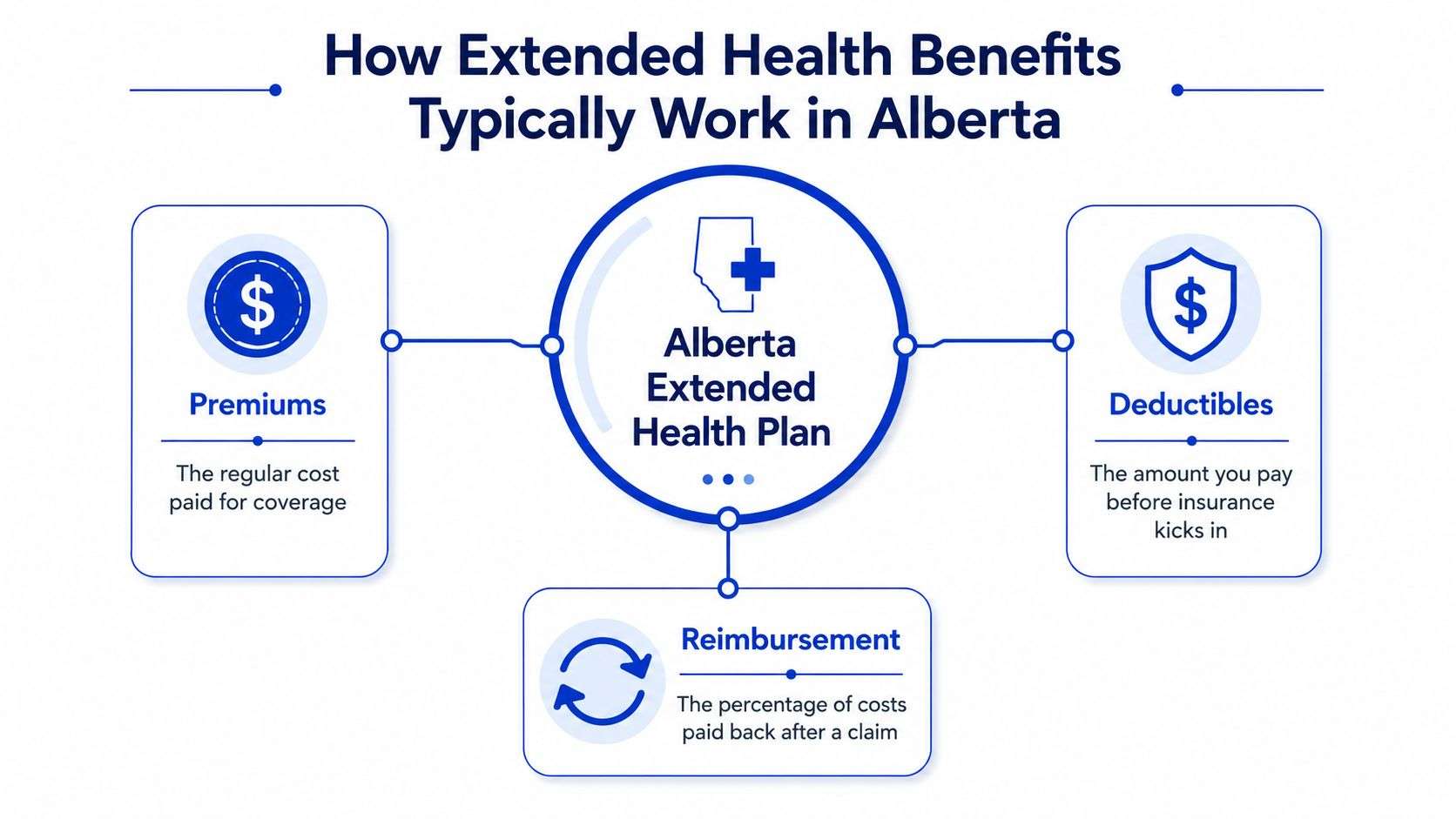
An Alberta extended health plan usually works like a partial reimbursement account, not a blank cheque. You or your employer pays premiums for the plan, then the insurer applies the plan rules when you submit a claim. Those rules can include deductibles, reimbursement percentages, annual maximums, and per-visit caps.
The pieces that matter most
A deductible is the amount you pay before the plan starts contributing. Reimbursement is the part the insurer pays back after the claim is accepted. Annual and lifetime maximums set the outer limits, while per-session caps shape what happens visit by visit.
That structure explains why two coworkers can both say they have “benefits” and still get different outcomes. They may both have Alberta Blue Cross, or both have ASEBP, yet the plan sponsor's contract can still change what gets reimbursed and how much gets paid back. The insurer processes the claim, but the exact plan design comes from the contract tied to that coverage.
For people trying to compare treatment benefits more broadly, it can help to verify your treatment coverage options before booking a clinician, especially if you are deciding whether to use benefits for counselling or another mental health service. That check sounds small, but it often prevents avoidable frustration later.
When people understand extended health as a rules-based reimbursement system, the claim process becomes easier to read. You can check whether the clinician is recognized, whether the service type fits the plan, and whether the receipt includes the right details. That is a better starting point than assuming “counselling” will automatically be paid.
Alberta Blue Cross and ASEBP Compared for Counselling Coverage
A client in Grande Prairie may hear that both Alberta Blue Cross and ASEBP cover counselling, then still have a claim denied. The usual problem is not whether the plan supports mental health care in general. The question is whether this specific clinician's designation and this specific fee fit the plan's reimbursement rules.
Alberta Blue Cross points to direct billing for eligible psychology services for people with Alberta Blue Cross coverage and those covered through ASEBP, which can reduce upfront friction when the office is set up for it (Alberta Blue Cross psychology and social work provider information). ASEBP uses a more layered setup, with EFAP-style support alongside extended health reimbursement and plan-specific caps (ASEBP wellness and diabetes page).
| Feature | Alberta Blue Cross | ASEBP |
|---|---|---|
| Access model | Can support direct billing for eligible psychology services | Uses a layered model with EFAP and extended health reimbursement |
| Short-term support | Mental health support line is available 24/7 for members on personal plans (Alberta Blue Cross personal plans) | EFAP includes four cost-free hours of health coaching per calendar year (ASEBP wellness and diabetes page) |
| Session-based help | Personal plans include 12 free counselling sessions through the Individual Assistance Program (Alberta Blue Cross personal plans) | ATA reporting on ASEBP plan design says counselling coverage increased to a maximum of $120 per session and psychology services to up to $180 per visit (ASEBP wellness and diabetes page) |
| Claim mechanics | Direct billing or reimbursement, depending on the provider | Often reimbursement after the session unless the provider bills directly |
For Grande Prairie clients, the main comparison point is not brand loyalty. It is whether the clinician's designation, the receipt format, and the session fee fit the plan's rules. A plan can look generous on paper and still deny a claim if the visit does not match the benefit category.
Useful distinction: EFAP-style support is often designed for shorter-term help, while extended health reimbursement usually supports clinical care once the initial support window has passed.
ASEBP also updated MyRetiree Plan premium rates for the 2026 to 2027 benefit year. The notice shows Extended Health Care rising by 3.5% for both members under 65 and over 65 in the Core coverage option, and by 14% under 65 and 10% over 65 in the Enhanced option, with dental changing separately by 1% in Core and 2% in Enhanced (ASEBP premium rate update). That kind of detail is a reminder that Alberta benefits plans are built from separate layers, not one all-purpose pool.
Practitioner Qualifications That Plans Typically Recognize
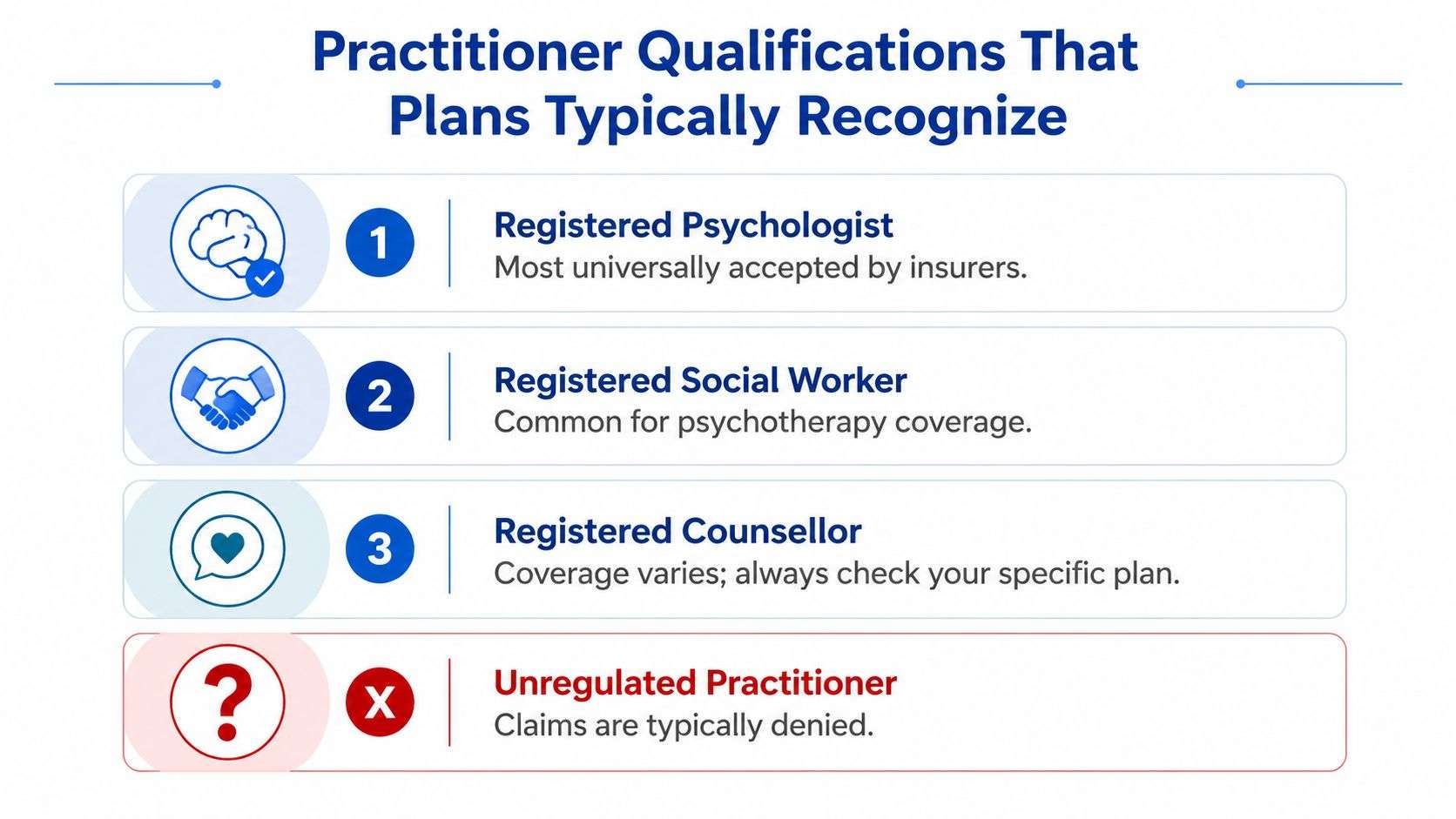
Many claims in Grande Prairie get tripped up. A person may choose a therapist because the fit feels right, the appointment time works, and the office looks professional, then learn later that the plan only reimburses certain designations. The service can be helpful and still not be payable under the specific benefit.
What to look for before booking
The designations most often recognised in extended health claims are registered psychologists, registered social workers, and some forms of registered counsellors or therapists, depending on the specific plan language. Alberta Blue Cross's provider guidance for psychology and social work shows that coverage is tied to provider type, not just to the general idea of mental health support (Alberta Blue Cross psychology and social work provider information).
Interactive Counselling's Grande Prairie material notes that most Alberta Blue Cross and ASEBP plans include mental health coverage in some form, while also making clear that receipts can be submitted for reimbursement and that the exact rule depends on the plan (Interactive Counselling Grande Prairie counselling services). That's the key point. The title on the therapist's profile matters, because the insurer is checking whether the provider fits the plan's benefit category.
A quick checklist helps:
- Check the title: Look for the clinician's exact registration, such as psychologist or social worker.
- Check the plan wording: Make sure the benefit covers that designation, not just “counselling” in a general sense.
- Check the receipt requirements: Some plans need registration numbers and service details.
- Check the service type: A therapy session, coaching call, or consultation may not all count the same way.
A clinic can offer excellent care and still be a poor match for a particular claim. That isn't a reflection on the therapist. It's usually just a mismatch between professional designation and plan language.
Receipts, Direct Billing, and Submitting Your Claim
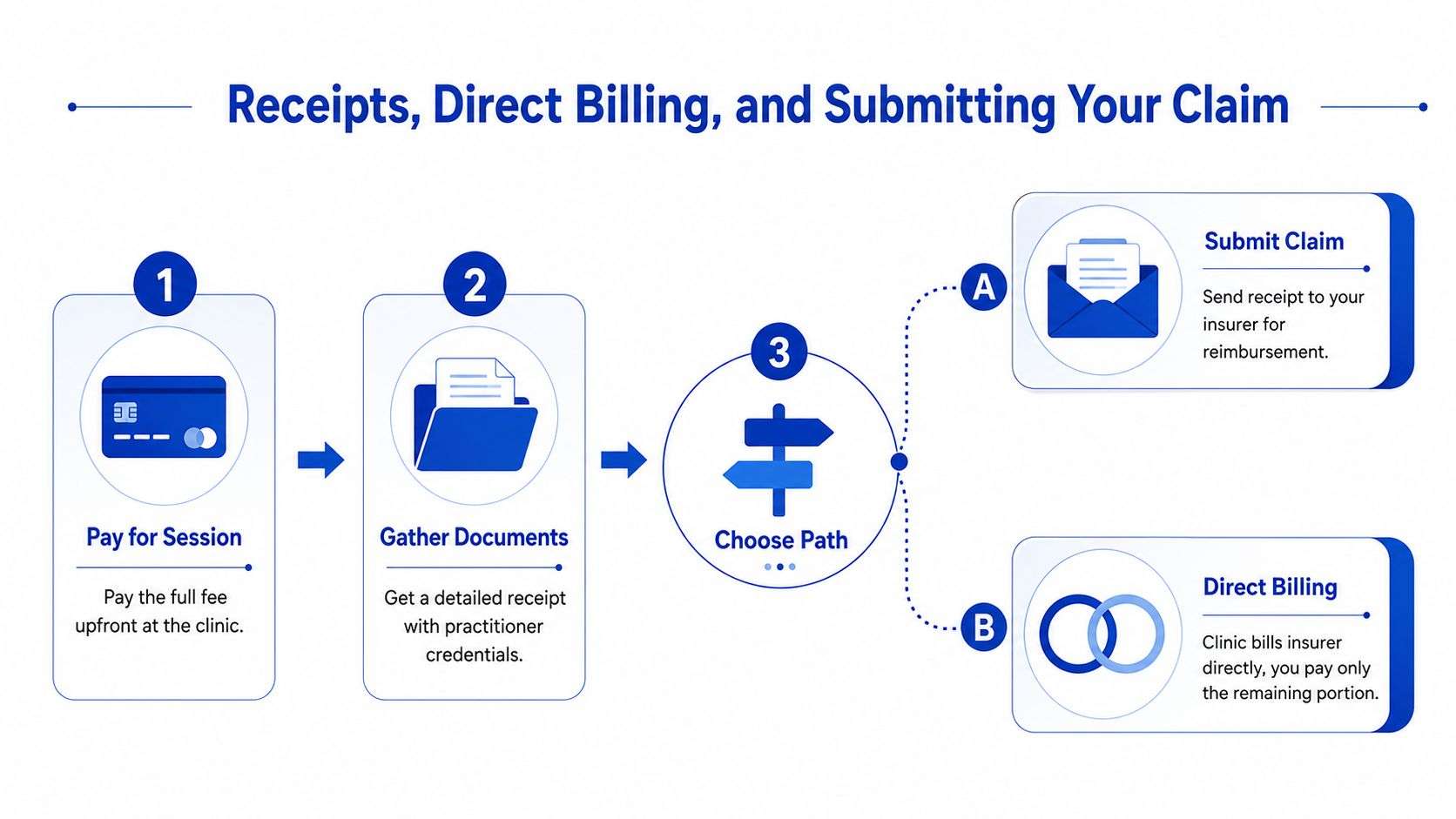
Once you know the clinician is eligible, the next issue is how the money moves. In Grande Prairie, claims usually happen one of two ways. You either pay the clinician and submit the receipt yourself, or the clinic bills Alberta Blue Cross or ASEBP directly if the office is set up for it.
What belongs on the receipt
A useful receipt usually includes the clinician's name, registration number, date of service, fee, and the service description or code. Those details matter because the insurer is not just checking that you attended an appointment. It's checking that the appointment matches the benefit category and that the provider is the right type for reimbursement.
Direct billing versus reimbursement
Direct billing means the office submits the claim electronically. Alberta Blue Cross says it provides direct billing for eligible psychology services for people with Alberta Blue Cross coverage and those covered through ASEBP (Alberta Blue Cross psychology and social work provider information). Reimbursement means you pay first, then submit the receipt later through your benefits portal or claim form.
Burden Bearers in Grande Prairie notes that direct billing is available only with a specific clinician when it offers “Blue Cross/ASEBP” billing, which shows how office workflow affects the experience at the front desk (Burden Bearers FAQ). That matters because one office may bill directly while another asks you to pay upfront and wait for reimbursement.
Alberta Blue Cross's claim form resource lists a Grande Prairie office at 780-532-3505 and customer-service hours of 6:00 AM to 6:00 PM, Monday to Friday, with statutory holidays closed (Alberta Blue Cross form resource). If a claim question comes up, that local support channel is often easier than guessing.
Before the first appointment, ask the office one direct question, “Do you direct bill Alberta Blue Cross or ASEBP for this clinician, or should I submit the receipt myself?”
Working With Interactive Counselling in Grande Prairie
If you're looking for a counselling option that can fit work, family, and insurance logistics, Interactive Counselling offers daytime, evening, and weekend availability, along with in-person, phone, and secure virtual sessions. That flexibility matters when you're trying to fit care into a benefits plan that may require a specific clinician designation or a particular receipt format.
A practical first step is to ask whether the assigned clinician can direct bill your plan. If they can't, ask what the receipt will include so you know whether your insurer will accept it. Then check your own Alberta Blue Cross or ASEBP details before the first session, because plan wording can differ even when two people have the same insurer.
Learn about counselling services
What to confirm before you book
- Clinician designation: Confirm whether the therapist is a psychologist, social worker, or another designation your plan recognises.
- Billing method: Ask whether the clinician can direct bill Alberta Blue Cross or ASEBP.
- Receipt details: Make sure the receipt will include the items your plan usually asks for.
- Session type: Check whether virtual, phone, or in-person sessions are treated the same way by your plan.
For some clients, this is the point where the process finally feels manageable. You do not need to solve the whole coverage puzzle at once. You only need to match the clinician, the claim format, and the plan language before you start.
Why Coverage Alone Rarely Solves the Counselling Question
A benefits plan can help, but it does not remove the barriers people run into. Wait times still happen. Some plans cover counselling only if the provider's designation matches the policy language. Others pay for short-term support that helps in the moment, while leaving ongoing therapy partially covered or outside the plan.
The hidden gap people run into
Alberta Health Services lists Grande Prairie Aberdeen Centre's walk-in counselling as a short-term, single-session service for emotional and mental health issues, with weekday hours and over-the-phone counselling through the ICAT line (Alberta Health Services service listing). That kind of service can bridge the time between distress and a covered appointment, especially when someone needs support sooner rather than later.
Alberta Blue Cross also offers an Individual Assistance Program for eligible personal-plan members with 12 hours of short-term counselling/coaching per year, plus a mental health specialist line that is available 24 hours a day, seven days a week (Alberta Blue Cross personal plans). Those supports are not the same as ongoing therapy, but they can help a person stay supported while they sort out what the plan will reimburse.
The practical point is simple. Coverage is only one part of access. The other parts are timing, the clinician's designation, and whether the service you need today matches what your plan will pay for.
A good plan is often layered, not single-track. One service can help with immediate coping, another with short-term coaching, and another with ongoing clinical counselling.
That is especially true in Grande Prairie, where people often combine insurer-backed supports with public options when the wait is long or the benefit limit is tight. The better question is not whether a plan mentions counselling at all. It is whether that plan will reimburse this clinician's designation at this fee, for this kind of service, with this receipt.
Frequently Asked Questions and a Gentle Next Step
How do I confirm my plan before booking?
Ask your insurer whether the benefit covers the clinician's exact designation, then ask the office whether that clinician can direct bill or whether you'll need to submit the receipt yourself.
What if my claim is denied?
Check the provider title, the receipt details, and the service type first. Most denials come from a mismatch in one of those areas, not from the counselling itself.
Are virtual sessions covered the same way as in-person sessions?
Sometimes they are, but not always. The safest move is to confirm that with your specific plan before the appointment.
How can I start without committing to long-term therapy?
Begin with one appointment, ask what the receipt will show, and use short-term supports if needed while you decide what kind of ongoing help makes sense.
If you're sorting through Alberta Blue Cross, ASEBP, receipts, and clinician designations, you don't have to do it alone. A calm first conversation can help you understand what your plan may reimburse and what kind of support fits your needs right now. When you're ready, you can learn more about your options at your own pace.
Interactive Counselling offers counselling in Grande Prairie with in-person, phone, and secure virtual appointments, plus flexible scheduling that can fit work and family life. If you're trying to understand how Alberta Blue Cross or ASEBP may apply to your situation, visit Interactive Counselling to review your options and take the next step when you're ready.
Clinically Reviewed By
Amy Mosset, MCP, RCC-S
Amy Mosset is a Master Practitioner in Clinical Counselling, Clinical Supervisor, and the owner of Interactive Counselling. She provides trauma-informed, evidence-based care and clinical supervision to registered therapists, with a focus on ethical practice, client safety, and high-quality therapeutic outcomes.