The world insists it’s the most wonderful time of the year, but for you, it just feels heavy. If the holiday season brings more pain than peace, you are not alone. The non-stop carols, twinkling lights, and intense focus on family gatherings can sharpen the edges of grief, making an already difficult experience feel isolating. Here in Kelowna, the pressure to be festive can feel particularly strong amid the cheerful holiday atmosphere. This guide is a quiet space for you—a place to acknowledge that it's okay to not be okay, especially now. Navigating the holidays while grieving isn’t about pretending the pain doesn’t exist. It’s about finding small, gentle ways to get through the season on your own terms, honouring both your loss and your need for self-compassion. Whatever you are feeling is valid. For more information, see our Kelowna grief counselling.
Why Grief Feels Heavier During the Holidays
The holiday season often creates a painful contrast for those who are grieving. While the world outside is wrapped in joy, togetherness, and tradition, you may be feeling the stark emptiness left by someone you’ve lost. Every familiar song, festive scent, or family recipe that once brought comfort can suddenly become a sharp reminder of their absence. It’s as if a spotlight is shining directly on your sorrow, making it impossible to ignore. This clash between the external expectation of cheer and your internal reality of loss can be jarring, deepening feelings of isolation. You might feel like you’re on the outside looking in on everyone else’s happiness. This emotional friction between societal joy and personal loss creates a significant weight, making a difficult time of year feel even heavier. For more information, see our counselling in Kelowna.
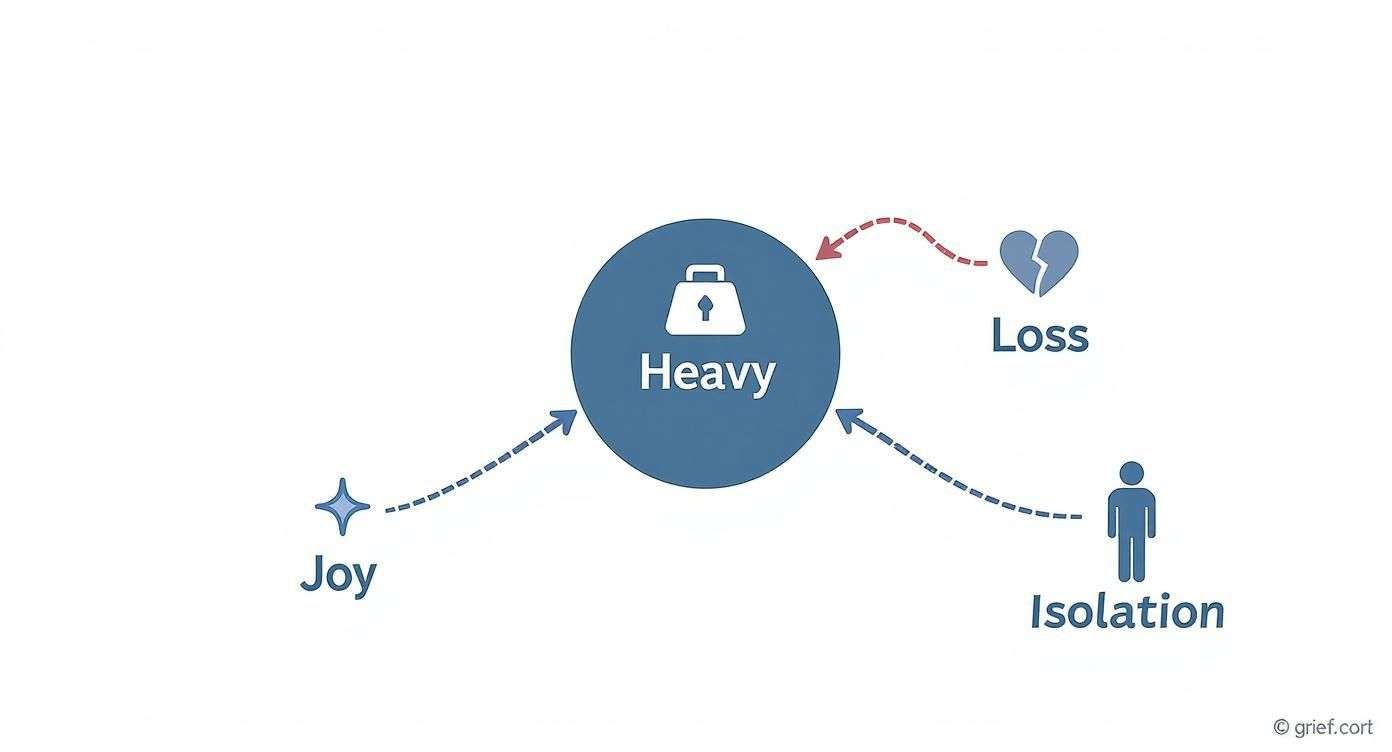
Common Triggers of Holiday Grief & Loneliness
It’s often not the big, expected moments of sadness that are the hardest to handle during the holidays. More frequently, it’s the small, unexpected things that catch you off guard and bring a wave of grief rushing back. Knowing what some of these common triggers are can help you prepare. These moments can feel deeply personal, but they are a universal part of the grieving process. Finding the right kind of supportive counselling in Kelowna can provide a safe space to process these experiences.
Here are some of the triggers that many people face:
The empty chair at the dinner table, a physical symbol of who is missing.
A specific holiday song playing in a store—one that holds a special memory.
Unpacking ornaments and realizing you’re decorating the tree without them.
Receiving a holiday card addressed to you, but without their name included.
Scrolling through social media and seeing endless photos of seemingly perfect family celebrations.
The Emotional Impact of Navigating Loss During Christmas
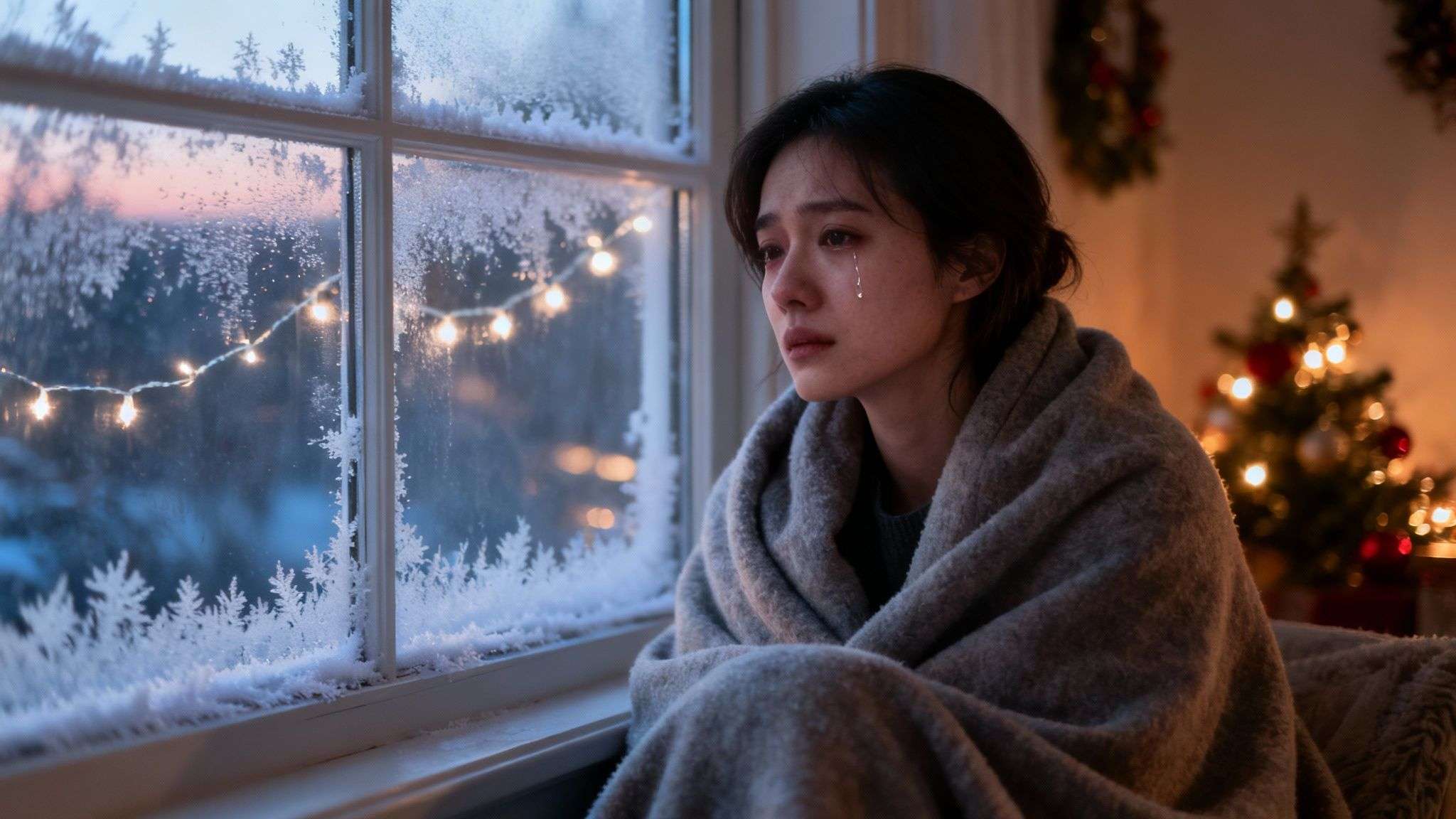
Grieving during Christmas is rarely a single, steady emotion. It’s more like a tangled mix of feelings that can shift without warning, leaving you feeling unsteady. One moment you might feel a deep sadness, and the next, a flash of anger at the unfairness of your loss. Guilt can also be a surprising and powerful part of this experience.
You might experience different kinds of guilt:
Guilt over joy: Catching yourself laughing or enjoying a moment can trigger a pang of guilt, as if being happy is a betrayal.
Guilt over sadness: You may worry that you aren't feeling "sad enough" or that you should be handling things differently.
Anxiety about events: The thought of attending family gatherings can stir up dread about how you will manage your emotions.
These feelings don’t follow a schedule; they can wash over you unexpectedly, leading to exhaustion and confusion. Remember, there is no “right” way to feel. Your emotional response, whatever it may be, is valid.
How Grief Affects Relationships & Family Gatherings
Navigating family dynamics is often challenging during the holidays, and grief adds another layer of complexity. It’s important to recognize that everyone experiences loss differently. One family member might find comfort in sharing stories and looking at old photos, while another may find it too painful and prefer to avoid the topic. Neither approach is wrong, but these mismatched coping styles can create tension and leave everyone feeling like they’re walking on eggshells. This is where learning how to communicate better in relationships can be especially helpful. Additionally, there’s often unspoken pressure to “be strong” for others, which can be incredibly draining. You may feel like you’re trying to manage your own grief while also anticipating the emotional needs of everyone around you. This emotional balancing act can leave you feeling isolated, even when surrounded by loved ones.
Practical Ways to Cope with Holiday Grief
Navigating grief during the holidays is about finding small, meaningful ways to care for yourself, not about pretending the pain doesn’t exist. If the season feels overwhelming, remember that compassionate holiday stress counselling can help you develop tools to manage these challenging moments. Being gentle with yourself is key. There's no single right way to do this; it's about discovering what gives you a little space to breathe.
Here are a few practical ideas you can adapt to fit your needs:
Give yourself permission to say no. You are not obligated to attend every gathering. Your energy is a precious resource, so protect it. It is okay to decline an invitation if you don’t feel up to it.
Create a new tradition to honour them. This can be a gentle way to keep their memory present. You could light a special candle, cook their favourite dish, or volunteer for a cause they cared about.
Plan an exit strategy for events. If you decide to go to a gathering, have a plan. Decide on a departure time in advance or arrange to text a friend if you feel overwhelmed and need to leave.

When Grief Turns Into Emotional Burnout During the Holidays
Grief is exhausting work. When you add the relentless pressure and expectations of the holiday season, it can push you beyond sadness into emotional burnout. This feels different from a typical wave of grief; it’s a profound sense of depletion. You might feel numb, irritable, or disconnected from everything and everyone around you. Everyday tasks can start to feel like monumental efforts. The thought of wrapping another gift or attending another party might seem completely impossible. Recognizing this shift from active grieving to burnout is your body and mind signalling that you’ve reached your limit. It’s a crucial moment to pause, give yourself permission to rest, and seek gentle, compassionate support without judgment.
With our counsellors across BC and Alberta and through virtual therapy across Canada, we’re here to support you. If holiday stress is affecting your well-being or relationships, our therapists can help you regain balance, set boundaries, and feel grounded again.
Frequently Asked Questions
Is it okay to skip holiday traditions after a loss?
Absolutely. Your emotional well-being is the priority. Forcing yourself through traditions that are now painful can add unnecessary stress. Giving yourself permission to change plans, adapt traditions, or skip them entirely is a healthy and compassionate way to cope with your grief during this challenging time of year.
How can I support a friend who is grieving during Christmas?
The best support is often specific and practical. Instead of saying, “Let me know if you need anything,” offer concrete help. You could say, “I’m dropping off a meal for you on Tuesday,” or, “Can I help with your holiday shopping?” Simply being present to listen without offering advice can also be incredibly comforting.
I feel guilty when I have moments of happiness. Is this normal?
Yes, this is a very common experience known as "grief guilt." Feeling a moment of joy or laughter does not mean you are forgetting your loved one or that your love was insufficient. Grief is complex, and it’s possible to hold both sorrow and happiness at the same time. Allow yourself these lighter moments without judgment.
How do I handle people who say unhelpful things about my grief?
It can be difficult when people, often with good intentions, say things that are hurtful. It helps to have a simple, polite response ready. Something like, “Thank you for your thoughts. I’m just taking things one day at a time,” can gently end the conversation. You do not owe anyone a detailed explanation of your feelings.
Should I talk about my loved one at family gatherings?
This depends entirely on what feels right for you and your family. If you want to share a memory, you could gently open the door by saying, “I was just remembering the time when…” to see if others want to join in. If it feels too painful right now, that is also perfectly okay. Trust your instincts.
Can I still find a way to honour my loved one during the holidays?
Definitely. Creating a small, meaningful ritual can be a beautiful way to keep their memory alive. You could light a candle, make their favourite holiday recipe, donate to a charity they supported, or simply take a quiet moment to share a favourite story. This can make their presence feel part of the day in a comforting way.