Taking that first step to find a therapist is a really big deal, and it's completely normal to feel a mix of hope and maybe a little bit of "where do I even begin?" The journey starts with a simple, personal check-in: what are you hoping for, and what kind of support feels right for you? Taking a moment to gently reflect on your needs can make the whole process feel so much clearer and way less overwhelming. For more information, see our anxiety counselling.
First, A Gentle Check-In: What Do You Need?
Before you dive into what can feel like an endless scroll of therapist profiles, it’s a great idea to just pause. It's totally okay if you don't have all the answers right now—most of us don't when we start. This is simply about getting curious about what’s bringing you here in the first place.
If you're feeling this way, you're definitely not alone. Many people face challenges that therapy can help with. Just acknowledging that you could use some support is a powerful and brave first move.
Starting Your Personal Roadmap
A big part of figuring out what you need is to do a bit of self-reflection. It doesn’t have to be some huge, formal process. Just start by asking yourself a few gentle questions. There are no right or wrong answers, just honest exploration.
- What's feeling tough right now? Maybe it's that knot of anxiety before work, the heavy weight of a recent loss, or feeling stuck in a relationship.
- What have you already tried? Think about what's worked, even a little, and what hasn't. This is all useful information.
- What does "better" look like? If you could wave a magic wand, what would be different in a few months? Maybe it's feeling more calm, more confident, or just more you.
- Do you have any preferences? Sometimes people feel more comfortable with a therapist of a certain gender, age, or cultural background. It’s okay to have preferences.
This exercise is really about getting to know your own needs a little better, which is a core part of the therapeutic journey itself. Taking the time for this really helps clarify what you're looking for.
Thinking About Different Therapy Styles
The world of therapy has lots of different approaches, and you definitely don’t need to be an expert to find one that fits. Here's a quick, casual look at a couple of common styles:
- Cognitive Behavioural Therapy (CBT): This approach is pretty structured and practical. It helps you notice and change unhelpful thought patterns and behaviours. It's great if you're looking for concrete tools and strategies.
- Psychodynamic Therapy: This style often explores how past experiences and relationships might be shaping your present. It's a good fit if you're curious about digging deeper to understand the roots of your feelings.
- Person-Centered Therapy: This is a very warm and supportive approach where the therapist provides a safe, non-judgmental space for you to explore your own feelings and find your own solutions.
This is just the tip of the iceberg, but it gives you an idea of the different flavours of therapy out there.
Where to Actually Look for a Therapist
Okay, you've got a clearer picture of what you're looking for. Now, where do you find these incredible people we call therapists? The good news is you don't have to just toss "how to find a therapist" into a search engine and hope for the best. There are some really solid, trusted places to start.

Online directories are usually the easiest first stop. They let you filter your search by location, the issues you’re dealing with, and other helpful criteria. This is a lifesaver for narrowing down the options right from the get-go. I know it can feel like a huge task, but finding the right person is a process. A little patience with yourself and the search goes a long way.
Key Places to Begin Your Search
Don't feel pressured to explore every single avenue. Just pick one or two that feel right to you and start there. The goal is to create a small list of promising candidates, not to build an encyclopedia of every therapist in your city.
Here are a few trusted places I always recommend to people starting their search:
- Your Doctor: Don't overlook your family doctor. They often have a trusted network of mental health professionals they can refer you to.
- Online Directories: Websites like Psychology Today are built for this. You can read detailed bios, see photos, and get a feel for a therapist's personality and style.
- Professional Associations: Organizations like the Canadian Counselling and Psychotherapy Association (CCPA) have directories of their members. This gives you peace of mind that everyone listed meets high professional standards.
- Employee Assistance Programs (EAP): Check if your workplace offers an EAP. These programs often provide a set number of free, confidential counselling sessions—a fantastic, low-barrier way to start.
- Word-of-Mouth: Sometimes a trusted friend, family member, or colleague might have a recommendation. While their therapist might not be right for you, that therapist may be able to refer you to a colleague who is.
A friendly reminder: you're not searching for the "perfect" therapist. You're looking for someone who feels like a good fit for you, right now. It’s all about the connection, not perfection.
Creating a shortlist is the first real, active step toward getting the support you deserve. If you're struggling specifically with anxiety, our guide on finding anxiety counselling near you might be a great next read. From here, we'll dive into how to screen your list and make that all-important first contact.
How to Vet Your Options and Make First Contact
Okay, you’ve pulled together a list of potential therapists. Before we go any further, just take a second to acknowledge that. Seriously, it's a huge step and often the trickiest part of the whole process. Now, let’s gently sift through your options to find the right person for you.
This next bit is just some light, low-pressure homework. When you look at profiles, you’ll see letters after their names—like MSW, PhD, or RP. These aren't just for show; they tell you that this person has completed years of specialized training and supervised practice. The journey to becoming a licensed therapist is long and demanding, which ensures you are in capable, well-trained hands. Research from sources like the California Health Care Foundation website highlights the rigorous process trainees must complete to become licensed.
What to Look For Beyond the Basics
While credentials confirm they're qualified, the real magic is in the connection. You need to find someone whose approach feels right for you.
- Read their bio, really read it. Does their personality come through? Do they sound like someone you could actually talk to?
- Check their specialities. Do they list experience with the specific things you’re grappling with, like anxiety, grief, or relationship challenges?
- Notice their therapy style. They might mention methods like CBT or a psychodynamic approach. If you’re dealing with past hurts, it’s a good idea to see if they're familiar with essential trauma-informed therapy techniques.
- Look at their photo or any videos. Sometimes, just seeing a friendly face or hearing their voice can give you a gut feeling about whether you'll click.
Remember, this isn't about finding the most impressive resume. It's about finding a human being you feel safe enough with to be vulnerable. Trust your intuition on this.
Making That First Call or Sending an Email
I get it—reaching out can feel a little intimidating. But think of it as just a simple hello. Most therapists offer a free 15-minute consultation call, which is the perfect, no-pressure way to see if you two vibe.
Stuck on what to say? Keep it simple.
“Hi [Therapist’s Name],
I found your profile on [Website] and was really drawn to your work with [mention a specialty]. I’m looking for some support with [briefly mention your reason, like anxiety or a life change].
I was hoping we could schedule a brief consultation call to see if we might be a good fit. Please let me know what times work for you.
Thanks,”
This initial chat is your chance to ask a few questions and, more importantly, get a feel for the connection. For more insight, you can explore our detailed guide on what to expect from a mental health counselor.
Sorting Out the Practical Stuff: Costs, Insurance, and Scheduling
Let's be real—the practical side of finding a therapist, like money and scheduling, is often the biggest roadblock. It can feel awkward to sort through, but figuring out the logistics is what makes therapy a sustainable part of your life. Thinking about these details upfront helps you find a solution that actually works for you.
This whole process really boils down to a few key checks: figuring out your benefits, understanding a therapist's policies, and seeing if your schedules align. This quick decision tree is a great way to visualize how to vet your options without getting lost in the weeds.
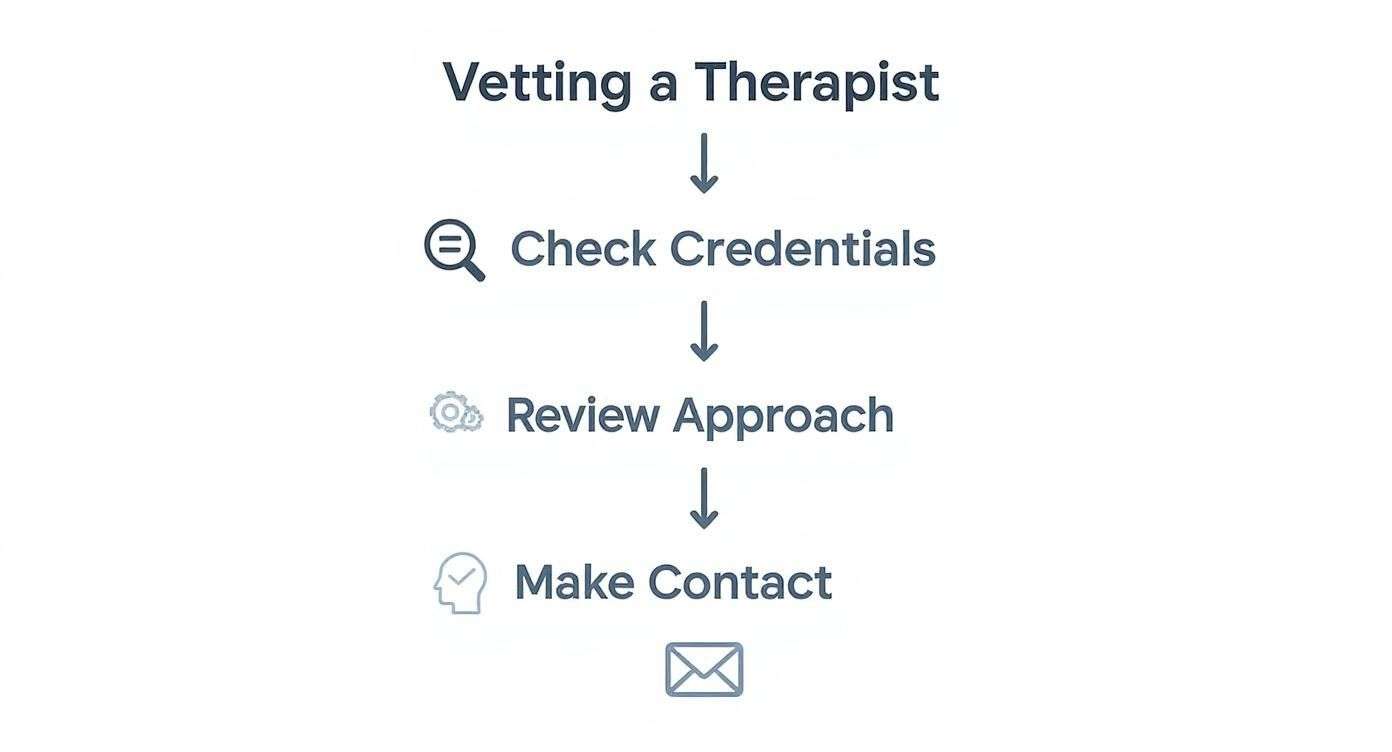
As you can see, it breaks down the screening process into manageable chunks. You check their credentials, get a feel for their approach, and then reach out when you feel a connection.
Getting to Grips with Your Insurance Coverage
If you have an extended health benefits plan, your first mission is to do a little digging into your coverage. Don't just assume you're covered—you need the specifics.
Here’s a friendly checklist of what to look for on your insurance provider's website or app:
- Annual Maximum: What's the total dollar amount your plan will cover for therapy per year? Is it $500? $1,500? This is your therapy budget.
- Covered Professionals: Does your plan specify certain credentials? It might cover a Registered Social Worker (MSW), a Registered Psychotherapist (RP), or a Psychologist (PhD). This is super important—you need a therapist with the exact letters your insurance will accept.
- Per-Session Limit: Is there a cap on how much your plan will pay back for each appointment? Some plans cover 100% up to a certain amount, while others might only cover 80%.
- Doctor's Note Required?: Some plans require a referral or note from your family doctor before they'll cover therapy sessions. It's good to know this upfront!
Don't be shy about calling your insurance provider if the online portal is confusing. Just ask them directly, "What are my benefits for psychotherapy, and which professional designations are covered?" Getting a clear answer can save you so much frustration.
Comparing Your Therapy Payment Options
Finding the right financial path is a big part of making therapy work long-term. Here’s a quick breakdown of the most common ways to pay for your sessions to help you decide what's best for your situation.
| Payment Option | How It Works | Best For… |
|---|---|---|
| Extended Health Benefits | You pay the therapist upfront and submit the receipt to your insurance company for reimbursement. | Individuals with a workplace benefits plan that covers specific counselling professionals (e.g., MSW, RP). |
| Sliding Scale | The therapist adjusts their session fee based on your income and ability to pay. | People without insurance coverage or those whose benefits don't cover the full cost of therapy. |
| Out-of-Pocket | You pay the therapist's full fee for each session without any reimbursement. | Anyone who can afford it, or those who prefer not to involve an insurance company in their mental healthcare. |
Ultimately, being upfront about your financial situation with a potential therapist is always a good idea. They’ve had these conversations before and can help you figure out a plan.
When Insurance Isn't an Option (or Doesn't Cover Enough)
So, what happens if you don't have insurance, or your coverage is pretty minimal? Don't stress. There are still plenty of ways to make therapy affordable.
- Sliding-Scale Fees: Many therapists keep a few spots in their schedule for clients who need a reduced rate. They'll work with you to set a session fee that fits your budget. It never, ever hurts to ask if a therapist you're interested in offers a sliding scale.
- Community Health Centres: Check out local non-profits or community health centres in your neighbourhood. They often provide excellent low-cost or even free counselling services.
- Training Clinics: Universities and colleges with psychology programs usually have training clinics. You can get therapy from graduate students who are supervised by licensed professionals, often at a significantly lower cost.
Many practitioners are transparent about their pricing. Make sure to check out their pages on services and rates to see what payment options they have available.
Fitting Therapy Into Your Life
Finally, we get to scheduling. It’s a real concern! The good news is that many therapists offer evening or weekend appointments to fit around a typical 9-to-5 job. On top of that, the boom in online therapy has made scheduling way more flexible. You can find a fantastic therapist who can see you right from your living room, which completely eliminates commute time. It’s all about finding a rhythm and format that clicks with your life.
How to Prepare for Your First Session
First off, give yourself a pat on the back. Booking that first appointment is a massive step, and it's totally normal to feel a jumble of emotions—everything from excitement to a healthy dose of nerves. A little prep work can go a long way in helping you feel more grounded and ready for that initial conversation.

Remember, there's no need to have a perfect script memorized. This isn't a performance; it's just the start of a conversation.
Thinking About Your First Conversation
To help calm those pre-session jitters, you might find it helpful to jot down a few thoughts. This is purely for you—no one's grading it.
- What’s bringing you here now? Think about what’s been on your mind lately. It could be specific, like burnout at work, or more of a general feeling, like you've been feeling disconnected from your partner.
- What are you hoping for? You don’t need to have life-changing goals figured out. Maybe you simply want to feel understood, or maybe you're just hoping to leave with one small, new perspective.
- What questions do you have? This is your chance to learn. You could ask things like, "What does your approach look like for someone dealing with anxiety?" or "How have you helped others navigate family conflict?"
Remember, this first session is a two-way street. You’re interviewing the therapist just as much as they’re getting to know you. Decades of research, like that found on sites such as the American Psychological Association, have shown that the strength of the therapeutic relationship is one of the biggest predictors of a positive outcome.
At the end of the day, a good connection is everything. Trust your instincts. After you leave that first session, take a quiet moment and ask yourself: Did I feel seen and heard? Did I feel comfortable enough to be myself? That gut feeling is often your best guide in knowing if you've found the right person to walk alongside you on this journey.
Common Questions About Finding a Therapist
Starting the search for a therapist can feel like venturing into the unknown, so it's only natural to have a few questions. Let's walk through some of the things people often wonder about when they're in your shoes.
How Long Does This Usually Take?
Honestly, there’s no magic number here. Some people strike gold and connect with the very first therapist they talk to. For others, it might take a few introductory calls to find that "click."
The most important thing is not to get discouraged. Think of it less like a test you have to pass and more like finding a trusted partner for your journey. It is perfectly okay to take your time.
Finding the right fit is far more important than finding someone fast.
What Is the Difference Between a Therapist and a Psychologist?
This one trips a lot of people up! The terms can get a bit confusing, so here’s a quick, casual breakdown:
- Therapist/Counsellor: This is often a catch-all term for professionals who provide talk therapy. In many places, this could be a Registered Social Worker (MSW) or a Registered Psychotherapist (RP). They're your go-to for working through life's challenges.
- Psychologist: A psychologist holds a doctorate (PhD or PsyD). They also offer therapy but have specialized training to conduct psychological testing and formal assessments for things like learning disabilities or ADHD.
- Psychiatrist: A psychiatrist is a medical doctor (MD) who specializes in mental health. They are the only mental health professionals who can prescribe medication, and some also provide therapy alongside medication management.
What If I Don’t Feel a Connection?
This is such a valid and important question. A strong therapeutic relationship is the foundation of good therapy—research consistently shows it's one of the biggest factors for success. It all comes down to trust, safety, and comfort.
If it doesn’t feel right after a few sessions, it is 100% okay to bring this up with your therapist or decide to find someone else. A good, professional therapist will understand completely. They want what's best for you and will support your need to find the right person for your care.
Finding the right support is a personal journey, and at Interactive Counselling, our team is here to help you feel seen, heard, and understood every step of the way. If you’re ready to take the next step, we invite you to connect with us.